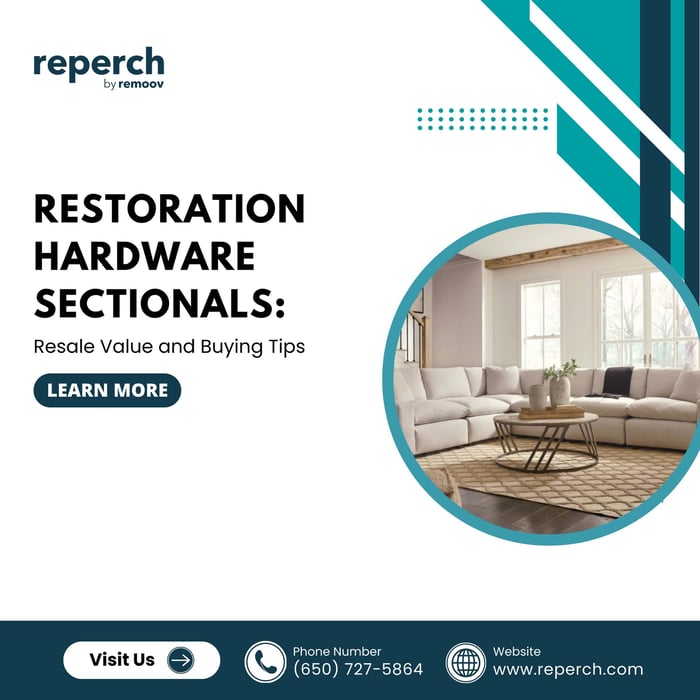
Restoration Hardware sectionals are known for oversized proportions, deep seating, neutral fabrics, and a relaxed luxury look. Their clean lines and understated colors make them suitable for a wide range of interiors, while their modular designs allow homeowners to create layouts that fit large living rooms and open-plan spaces.
The high retail price of new RH furniture has also created strong interest in the secondhand market. Buyers often look for used Restoration Hardware sectionals because they want premium materials and recognizable design without paying the full original price.
However, not every used sectional offers the same value. Collection name, upholstery, age, configuration, cushion condition, and overall care can make a major difference in resale pricing. A sectional that appears affordable may also create delivery or fit problems if its size is not carefully considered.
This guide explains how Restoration Hardware sectional resale value is determined and what buyers should inspect before making a purchase.
Why Restoration Hardware Sectionals Remain Popular
Restoration Hardware, now commonly known as RH, has built its furniture collections around a distinct design language. The broader Restoration Hardware style combines soft neutral colors, wide seating areas, natural materials, and simple silhouettes that do not depend heavily on short-term trends.
This timeless appearance is one reason RH sectionals remain desirable after years of use. A well-maintained beige, gray, cream, or brown sectional can continue to fit changing interior styles without looking outdated.
Comfort is another major selling point. Collections such as the Cloud are designed with deep seats and soft cushions, creating a casual seating experience that appeals to buyers looking for large family furniture.
RH sectionals are also commonly modular. Individual pieces can be arranged into L-shaped, U-shaped, sofa-chaise, or open configurations. This flexibility can make them attractive on the resale market, especially when all original modules are available.
Do Restoration Hardware Sectionals Hold Their Value?
Restoration Hardware furniture generally performs better in resale than many unbranded or mass-market sectionals. Buyers recognize the name, search for specific collections, and often understand the original retail cost.
That does not mean every RH sectional retains a high percentage of its purchase price. Upholstered furniture usually loses value after it leaves the showroom, and condition has a significant effect on what someone is willing to pay.
A sectional in excellent condition with neutral upholstery, complete modules, and clear proof of authenticity will usually hold more value than one with stains, missing pieces, compressed cushions, or an uncommon configuration.
Resale demand is often strongest for recognizable collections such as:
Cloud and Petite Cloud
Maxwell
Belgian
Lancaster
Italia
Modena
Popular models are easier for buyers to research and compare. Lesser-known or discontinued collections may still have value, but demand depends more heavily on design, size, and condition.
What Affects Restoration Hardware Sectional Resale Value?
Several factors determine how much a used RH sectional may be worth.
Collection and Model
The collection name matters because certain designs have stronger recognition. The Cloud sectional, for example, is widely associated with deep seats, feather-wrapped cushions, and a relaxed appearance.
A popular model may attract more attention, but buyers will still compare its condition with similar listings. A famous collection name cannot fully offset serious wear or missing modules.
Configuration
Standard L-shaped sectionals and sofa-chaise combinations are often easier to place than extremely large U-shaped layouts. They fit a wider range of living rooms and may also be easier to transport.
Oversized configurations can still be valuable, but the buyer pool is smaller. A large sectional may require a spacious home, wide entryways, and professional moving assistance.
Modular pieces should include the original connectors or clips. Missing attachment hardware can make the sectional difficult to assemble securely.
Upholstery
Neutral linen, performance fabric, velvet, and leather can all affect value differently.
Neutral colors generally appeal to more buyers because they are easier to coordinate with rugs, walls, and other furniture. Highly customized colors or patterns may reduce the size of the resale audience.
Fabric condition is especially important. Stains, fading, odors, pet hair, and tears can reduce value quickly. Leather may age attractively when properly maintained, but cracking, peeling, scratches, and animal damage are harder to overlook.
Cushion Condition
Cushions are among the most important areas to inspect on a used RH sectional.
Deep, soft sectionals require regular fluffing and rotation. Over time, cushions may become compressed, uneven, or flat. This is especially noticeable on feather-filled or feather-wrapped seating.
Minor flattening may improve after proper fluffing, but permanent compression can affect both comfort and appearance. Buyers should also check whether cushion covers are removable and whether any inserts have been replaced.
Frame and Structure
A sectional may look attractive in photographs while hiding structural problems.
The frame should feel stable when you sit down. Listen for creaking and check whether the sections sit evenly. Loose arms, broken supports, sagging seats, or damaged legs may indicate more serious wear.
Structural damage is often more expensive and difficult to address than cosmetic issues.
Age and Maintenance
Age matters, but condition is usually more important.
A carefully maintained sectional that is eight years old may be a stronger purchase than a three-year-old piece that has been exposed to pets, smoke, spills, or heavy daily use.
Ask how the sectional was used, whether it was professionally cleaned, and whether the cushions were rotated regularly. The answers can help explain its current condition.
How to Confirm That an RH Sectional Is Authentic
Restoration Hardware furniture is often imitated, so buyers should confirm that the sectional is genuine before paying a premium price.
Start by checking beneath the cushions, frame, or upholstery for a manufacturer label. The tag may include the collection name, production date, fabric code, or other identifying information.
Original purchase receipts, order confirmations, and product specifications are also useful. These documents can confirm the model, configuration, and upholstery selected by the first owner.
When paperwork is not available, compare the sectional’s proportions, arm shape, leg style, seat depth, and cushion design with official product images or archived listings.
Be cautious when a seller uses phrases such as “RH-inspired,” “Restoration Hardware style,” or “similar to Cloud.” These descriptions usually indicate that the furniture is not an authentic RH piece.
Measure Before Buying a Used RH Sectional
Restoration Hardware sectionals are often larger than they appear in photos. Their deep seats, wide arms, and generous modules can overwhelm a smaller room.
Measure the full space where the sectional will be placed. Do not rely only on wall length. Consider seat depth, walking clearance, coffee table space, heating vents, windows, and door swing.
Marking the dimensions on the floor with painter’s tape can help you visualize how much space the furniture will occupy.
The delivery route is equally important. Measure:
Exterior and interior doors
Hallways and staircases
Elevators
Tight corners
Ceiling height near stairs
Entryways into the final room
Even modular sectionals can have large individual pieces. A deep corner module or chaise may not fit through a narrow doorway despite being disconnected from the rest of the sectional.
Inspect the Upholstery and Cushions Carefully
Photos are useful, but an in-person inspection provides a clearer picture of condition.
A detailed secondhand sofa buying guide can provide a broader inspection checklist, but buyers should pay particular attention to stains, odors, cushion support, frame stability, and signs of hidden upholstery damage.
Look at the sectional in natural light when possible. This makes stains, fading, discoloration, and fabric wear easier to see.
Check the front, back, sides, and area beneath the cushions. Damage may be hidden against a wall or under a throw blanket.
Smell the upholstery as well. Smoke, mildew, pet odors, and heavy fragrance can be difficult to remove completely. A sectional may look clean but still require costly professional treatment.
Sit on every section to compare support. The cushions should feel reasonably consistent, and the frame should not shift or produce unusual sounds.
Zippers, seams, and removable covers should also be inspected. Broken zippers or split seams may be repairable, but the cost should be considered before purchase.
Compare the Used Price With Overall Condition
The original retail price can provide context, but it should not determine the used value by itself. Following reliable secondhand furniture pricing tips can help buyers compare the asking price with the sectional’s age, condition, materials, configuration, and likely cleaning or repair expenses.
A seller may emphasize that a sectional originally cost several thousand dollars. However, resale pricing should reflect its current condition, age, demand, configuration, and moving requirements.
Compare several similar listings before making an offer. Focus on the same collection, approximate size, upholstery, and condition.
A lower price may be justified when the sectional requires professional cleaning, new cushion inserts, repair work, or replacement hardware.
Shopping through a curated secondhand furniture marketplace such as Reperch can make it easier to compare condition details, dimensions, pricing, and delivery options before purchasing.
Consider Delivery and Moving Costs
RH sectionals are heavy, and many configurations require more than two people to move safely.
Before buying, ask whether the pieces separate and whether the original connectors are included. Request the dimensions and weight of the largest module.
When deciding between local pickup vs. delivery, consider the sectional’s size, weight, number of modules, required moving equipment, and the width of every doorway along the route. Professional delivery may increase the total cost, but it can reduce the risk of damage to the furniture, walls, floors, and entryways.
The complete purchase cost should include:
Sectional price + delivery + moving assistance + cleaning + repairs
A sectional with a very low asking price may not be a bargain after these expenses are added.
Is a Used Restoration Hardware Sectional Worth Buying?
A used Restoration Hardware sectional can be worth buying when it is authentic, structurally sound, correctly sized, and priced according to its condition.
It can be a particularly strong choice for buyers who appreciate deep seating and neutral luxury design but want to avoid the cost and potential wait associated with ordering new furniture.
The purchase may be less suitable for small rooms, narrow apartments, or households that prefer firm, low-maintenance seating. Feather-filled cushions require regular care, while certain fabrics may show stains and wrinkles more easily than performance upholstery.
The best used sectional is not simply the least expensive option. It is one that fits the room, remains comfortable, includes all necessary modules, and does not require major restoration.
Final Thoughts
Restoration Hardware sectionals can retain strong secondhand appeal because of their recognizable designs, comfortable proportions, and premium positioning. Popular collections in neutral colors often attract buyers even after years of use.
Still, resale value depends on more than the brand name. Cushion condition, upholstery, configuration, authenticity, structure, and delivery requirements all affect whether a sectional is worth the price.
By confirming the model, measuring the space, inspecting every module, and calculating the complete purchase cost, buyers can find an RH sectional that offers both comfort and long-term value.