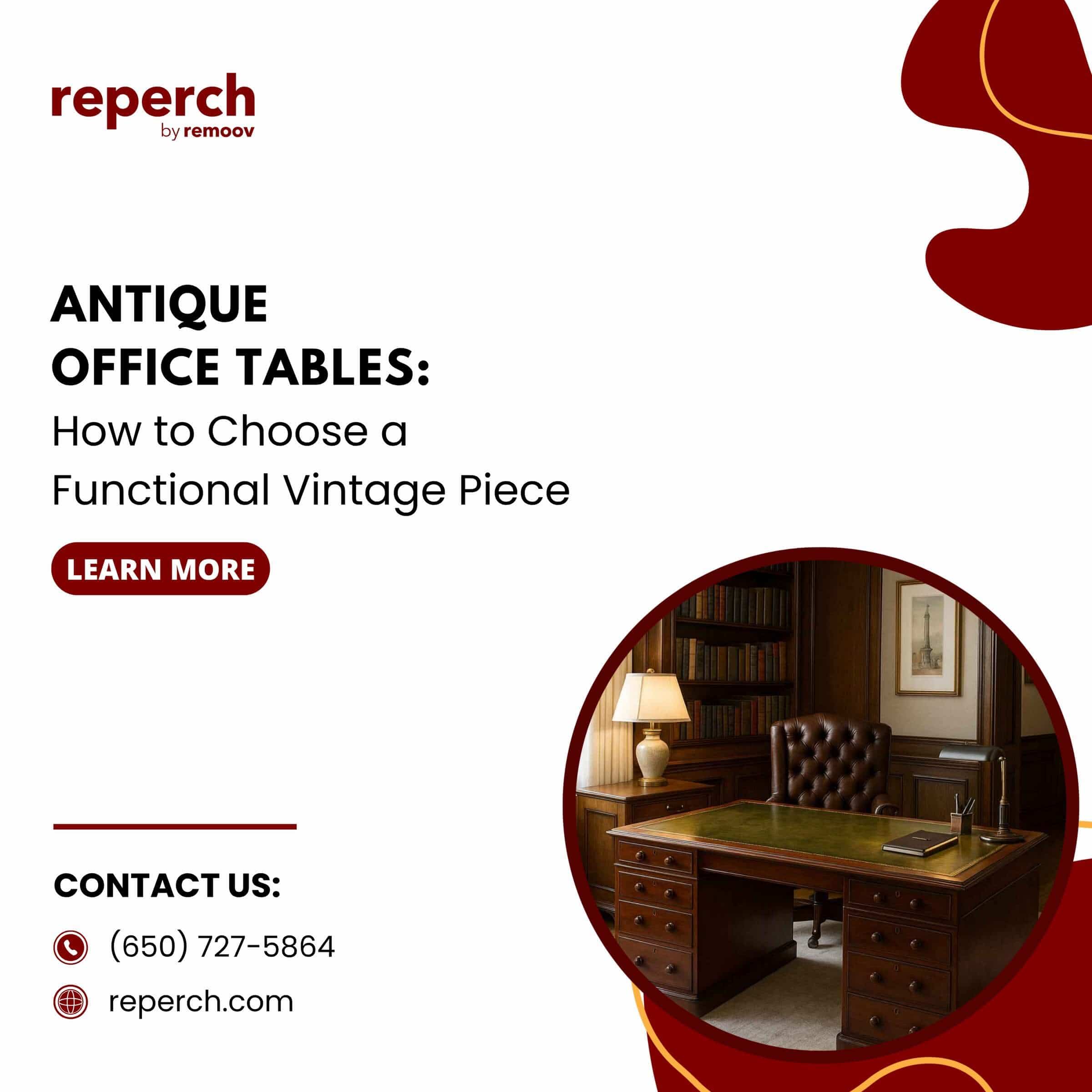
Antique office tables can do something newer furniture often struggles to do. They bring real presence into a room. A good one can make a home office feel warmer, more grounded, and far more personal than a standard desk bought flat-packed and assembled in an afternoon.
But choosing one well is not only about appearance.
A beautiful antique office table still has to work for the way you live today. It needs enough surface space for your daily tasks. It needs to fit the room properly. It may need storage, or it may need a simpler form if you prefer to keep the space light and open. And if you are shopping secondhand, the condition of the piece matters just as much as its style.
That is where many buyers get stuck. They find a table they love visually, then realize too late that it is too small for a laptop and paperwork, too delicate for daily use, or too damaged to justify the price.
The best antique office tables strike a balance between charm and practicality.
If you are looking for a vintage piece that adds character without making your workspace harder to use, here is how to choose one that truly works.
Why Antique Office Tables Still Appeal
There is a reason people keep coming back to older desks and office tables. They tend to feel more individual. The wood has more depth. The proportions are often more thoughtful. Small details like dovetail drawers, worn brass pulls, carved legs, or a rich finish can make the entire room feel different.
That difference matters in a workspace.
A home office is not just a place to get things done. It is somewhere you spend real time, sometimes every day. When the furniture has warmth and character, the room often feels less temporary and more settled. Antique office tables can help turn a work zone into an actual part of the home.
It also helps that many older pieces were built to last.
Not every antique table is a masterpiece, of course, but many were made with solid wood, sturdier joinery, and more durable construction than lower-end furniture sold today. That makes secondhand shopping especially appealing if you want something with more substance.
Antique vs. Vintage: What Is the Difference?
People often use these words interchangeably, but they are not exactly the same.
An antique office table is generally at least 100 years old. A vintage office table is usually younger, often somewhere between 20 and 99 years old. Both can be worthwhile. Both can have strong design value. But knowing the difference helps set your expectations.
A true antique may carry more historical charm, but it may also require more care. A vintage piece may give you the same warmth and individuality while being a little easier to use in everyday life.
For many buyers, the goal is not strict category purity. It is finding a table with age, quality, and character that still functions well in a current home office.
Start With Function Before Style
This is the step people are most likely to skip.
Before you fall in love with a particular antique office table, ask how you actually work. Do you mostly use a laptop? Do you spread out papers? Do you need room for a second screen, a notebook, and a lamp? Do you want drawers built in, or would you rather use separate storage elsewhere? Thinking through practical used office furniture choices can help you focus on pieces that look good and still support your daily routine.
A table that works beautifully for letter writing may not work nearly as well for a full workday on a computer.
That does not mean you need something huge. It simply means your workspace needs should guide the search. A narrow, elegant writing table might be perfect if your setup is minimal. A larger desk with drawers or a broader top may be better if your work tends to spread.
When people choose on looks alone, they often end up with a piece that is attractive but frustrating.
Common Types of Antique Office Tables
There is no single version of an antique office table. A few common types come up often, and each suits a different kind of room and routine.
Writing Tables
These are often the easiest to live with in a modern home. A writing table usually has a flat top and a relatively open base, sometimes with one or two drawers. It tends to feel lighter than a full pedestal desk and can work especially well in bedrooms, small offices, or multipurpose rooms.
If you want antique office tables that feel elegant without dominating the room, this is often a smart place to start.
Pedestal Desks
These offer more storage and more visual weight. A pedestal desk typically has drawers on both sides with a knee space in the middle. If you need built-in organization, this type can be very practical, but it also takes up more space and often feels more formal.
Secretary and Drop Front Styles
These work well when space is limited or when you want the office area to feel more contained. They can be beautiful, but they are not always ideal if you need a wide, open work surface for everyday tasks.
Console or Small Desk Tables
Some antique tables were not strictly designed as office furniture, but they can still work that way today. A narrow console-style table, for example, can become a simple workstation if your setup is light and the room is small.
The key is not what the table was called originally. It is whether it functions well for you now.
Size Matters More Than People Think
A table can be stunning and still be wrong for the room.
Before buying, measure carefully. That means width, depth, and height. A table that looks perfectly proportioned in a listing photo may be far smaller in real life. Likewise, a grand antique desk may overpower the room once it is actually in place.
Depth matters especially in office furniture.
If the table is too shallow, your laptop, papers, or monitor may feel cramped. If it is too deep, it may eat up more room than the space can comfortably spare. Height matters too. Some older tables sit differently than newer desks, and that affects chair fit and daily comfort.
If the office is part of another room, like a bedroom or guest room, scale matters even more. The best piece should feel integrated, not crowded in. In tighter layouts, planning a small home office space can help you decide whether an antique office table has the right width, depth, and visual weight for the room.
Check the Construction Carefully
When buying antique office tables secondhand, structure is everything.
A beautiful finish means very little if the table wobbles or the drawers barely function. Start by checking whether the frame feels stable. Gently test for rocking or looseness. Look at the joints. Older furniture often shows its quality in the way it was built, with dovetail joinery, solid wood parts, and strong drawer construction.
Drawers deserve special attention.
Open and close each one. They should move reasonably well, even if they do not glide like new furniture. If they scrape badly, sag, or sit unevenly, that may mean the table needs more repair than you expected.
Also inspect the underside if possible. Repairs, reinforcements, cracks, or signs of wood movement can tell you a lot about the piece’s true condition.
Think About Materials and Finish
Many antique office tables are made from walnut, oak, mahogany, cherry, or other quality woods. The material affects both appearance and durability.
A warm walnut or mahogany piece can make a room feel richer and more formal. Oak often feels sturdy and classic. Painted vintage pieces can feel softer and lighter, especially in more casual spaces.
The finish matters too.
Some wear is normal and even attractive. A little patina can make the table feel lived in and authentic. Deep scratches, water rings, lifting veneer, or severe sun fading are different. Those issues do not always make a piece unusable, but they should affect the price and your expectations.
If the table has veneer, inspect it closely. Veneer is not automatically a problem. Many excellent antique tables use it beautifully. But veneer that is bubbling, peeling, or badly chipped can be harder to live with and more expensive to repair.
Decide How Much Storage You Really Need
This is where form and function meet most directly.
Some people assume more drawers are always better. Not necessarily. A large desk with multiple drawers can be practical, but it can also feel bulky. If your workspace is mostly digital and you only need room for a few essentials, a simpler antique office table may actually work better.
On the other hand, if you handle paper files, office supplies, chargers, notebooks, and reference materials every day, built-in storage can make life easier.
The best choice depends on how you work, not just how the piece looks.
Consider Daily Comfort
Not every antique table is ideal for all-day office use, and it is better to know that before bringing one home.
Legroom matters. Chair height matters. Table depth matters. If the apron is too low or the drawers sit in the way, the table may feel awkward after an hour or two. Pairing the table with comfortable used office seating can also make a big difference if you plan to use the space for longer work sessions.
This is especially important if you work from home full time.
Some buyers solve this by using an antique office table for lighter work, such as writing, reading, planning, or occasional laptop use, while reserving a more ergonomic setup elsewhere. Others choose a larger vintage desk that better supports long hours.
Either way, comfort deserves a real place in the decision.
How to Make an Antique Office Table Work in a Modern Home
One of the best things about antique office tables is that they do not require a fully traditional room to look right. In fact, they often look best when mixed with simpler, more current pieces.
A classic wooden office table paired with a clean-lined chair, modern task lamp, or restrained art can feel balanced and intentional. The antique piece brings warmth and personality. The newer elements keep the room from feeling too themed.
This mix tends to feel more natural than trying to recreate a period office exactly.
It also makes the table easier to live with. You can enjoy the beauty of the piece without making the whole room revolve around it.
What to Avoid When Buying
A few mistakes come up again and again when people shop secondhand for office furniture.
The first is buying for looks alone. A table can be gorgeous and still wrong for your workflow.
The second is underestimating repairs. Minor wear is one thing. Structural instability, major veneer loss, bad drawer issues, or severe finish damage are another. If you are not prepared to restore the piece, do not pay as though those problems are minor. Asking the right questions when buying used furniture online can help you catch condition issues before the table arrives.
The third is ignoring scale. An antique office table may be lovely, but if it is too large, too small, or too shallow, it will never feel quite right in the room.
And finally, do not assume old automatically means valuable. Some pieces are special because of age or craftsmanship. Others are simply old. Choose the table for its quality, usability, and fit in your home, not just because it has years behind it.
Why Secondhand Is Such a Good Way to Buy One
Antique office tables are one of the clearest examples of why secondhand furniture shopping can be so worthwhile. You often get better materials, more individuality, and more lasting design than you would from buying new at the same price point.
You also get options that do not look like everyone else’s desk.
That matters in a home office, where even one good piece can shape the whole room. A secondhand office table can make the space feel collected and personal instead of generic.
And because these tables often come from earlier eras with different construction standards, a good one can sometimes outlast furniture bought new today.
Why Reperch Is a Smart Place to Shop
Antique office tables are the kind of furniture that make secondhand shopping feel rewarding. They are practical, but they also change the atmosphere of a room. A well-chosen one can make your office feel less temporary and much more intentional.
That is exactly why they fit so well with Reperch.
Shopping secondhand through Reperch makes it easier to find furniture with more character, more quality, and more staying power than many modern office pieces. A good antique office table does not only give you a place to work. It helps create a room you actually want to spend time in.
That is not a small difference.
Final Thoughts
Choosing an antique office table is really about balance. You want age and charm, but you also want something that still works for your daily life. You want a piece that adds style to the room, but not at the expense of comfort or practicality.
That is why the best approach is to start with function, then let style narrow the field.
Measure carefully. Think about how you work. Check the structure, drawers, materials, and finish. Be honest about how much storage you need and how much repair you are willing to take on.
When you find the right one, an antique office table becomes more than just a desk. It becomes one of the pieces that gives the room its depth, its warmth, and its sense of permanence.