A vintage desk with a hutch can solve two problems at once. It gives you a place to work, and it gives you somewhere to put everything that usually ends up scattered across that workspace. That combination is a big reason these pieces still make so much sense today. A lot of vintage desks look good in a room until real life starts happening around them. Papers pile up. Chargers, notebooks, pens, and small office supplies take over the top. Decorative pieces compete with practical ones. Before long, the desk that looked clean and intentional starts to feel crowded.
That is where a hutch helps.
By building shelves, cubbies, or upper storage into the desk itself, vintage desks with hutch storage give you more function without needing a second piece of furniture. It also brings more personality into a room than a plain work surface ever could. Some feel warm and traditional. Some lean mid-century. Some feel cottage-inspired or classic. Whatever the style, these desks tend to look more substantial and more thoughtful than a standard desk with nothing above it.
If you have been considering one for a home office, bedroom, guest room, or study nook, this guide covers what makes vintage desks with hutches so useful, how to choose the right style, and what to check before buying one secondhand. When comparing options, it also helps to think about finding quality used office furniture so the piece works well for both storage and daily use.
What Is a Vintage Desk With a Hutch?
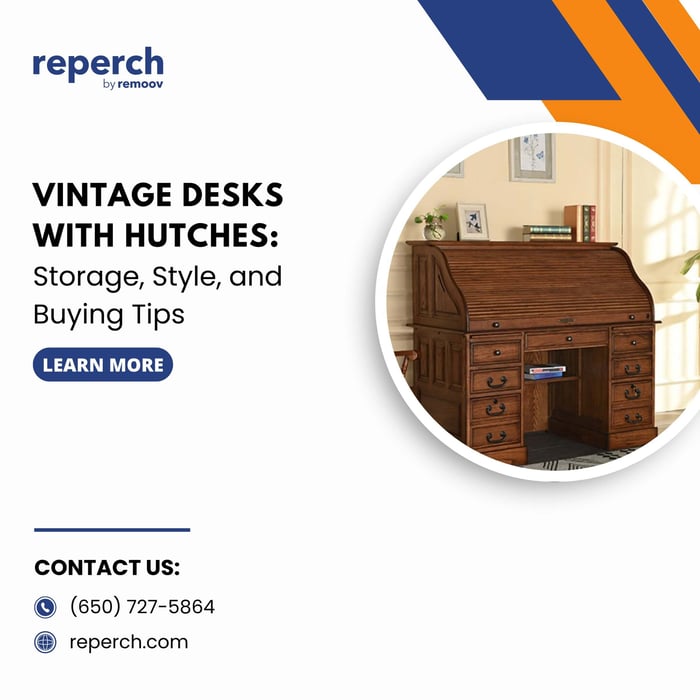
A vintage desk with a hutch is exactly what it sounds like: a desk with an upper section attached or paired with it that adds shelves, small drawers, cabinets, cubbies, or display space above the main work surface.
That upper portion is what changes the piece from a simple desk into something far more versatile.
In some designs, the hutch is fairly open and light, with just a few shelves for books and decor. In others, it is much more storage-focused, with pigeonholes, drawers, or cabinet doors that help organize office supplies and paperwork. Some pieces are formal and decorative. Others are practical and compact. The best ones manage to be both.
The word vintage usually means the desk is older, but not quite antique. In most furniture conversations, vintage pieces are generally between about 20 and 99 years old. That means vintage desks with a hutch could come from several different decades and reflect very different design styles depending on when they were made.
Why Vintage Desks With Hutches Still Work So Well
There is a reason these desks keep showing up in secondhand shops and why people still actively look for them. They solve storage problems in a way that feels built in rather than improvised.
Instead of buying a desk and then adding wall shelves, filing cabinets, baskets, organizers, and tabletop storage, a desk with a hutch starts with some of that work already done. That makes the overall setup feel more cohesive.
They also make a room feel finished more quickly.
A plain desk can sometimes feel temporary until you style the wall around it. A vintage desk with a hutch already has height, structure, and visual presence. It can act as both workspace and furniture statement at the same time.
That matters even more in smaller homes or multipurpose rooms.
If your office is part of a bedroom, guest room, hallway nook, or living space, it helps when one piece of furniture can do more than one job. A vintage desk with a hutch gives you vertical storage, display space, and a defined work zone without spreading everything across the room.
The Storage Benefits of a Desk With a Hutch
The biggest advantage is obvious, but it is worth looking at more closely. Storage above the desk changes the way the whole piece functions.
Better Use of Vertical Space
A standard desk uses mostly horizontal space. Once the top fills up, that is it. A desk with a hutch adds vertical storage, which is especially useful in smaller rooms where floor space matters more than wall height.
This makes it easier to keep your essentials close without taking over the desk surface itself.
Easier Organization
Many vintage hutches include drawers, shelves, and cubbies that naturally separate items by type. Office supplies can go in one area. Papers and folders can go in another. Books, decor, and a small lamp can sit elsewhere. Even if the hutch is simple, just having different zones helps reduce clutter.
Less Need for Extra Furniture
A good vintage desk with a hutch may remove the need for a separate bookcase, organizer cart, or wall shelving. That can make a room feel calmer and more intentional, especially if you are trying to keep the office area from spilling into the rest of the space. In smaller homes, a smart study nook furniture setup can help make one compact area feel more useful and organized.
Display and Practical Storage in One Piece
Not every item at your desk needs to be hidden away. A hutch gives you room to mix function and style. You can keep a few books, framed art, or a small plant up top while still using the other shelves for more practical storage. That helps the workspace feel more personal without becoming messy.
Common Styles of Vintage Desks With Hutches
Because these desks span many decades, the style range is broad. That can actually be a good thing because it means there is usually a version that suits your space.
Traditional Wooden Desks With Hutches
These often feel the most classic. They may have multiple drawers, warm wood tones, carved details, and upper storage with small cubbies or cabinet doors. They tend to work well in traditional homes, cottage interiors, and spaces that want a more timeless look.
Mid-Century Inspired Hutches
Some vintage desks with hutches have cleaner lines and a lighter silhouette. These may use walnut tones, slim supports, and more open shelving rather than lots of decorative detail. If you want something that still feels vintage but not overly formal, these can be a strong choice.
Secretary-Style Variations
Some hutched desks lean toward the secretary desk family, where the upper portion feels more architectural and the work area is compact but beautifully integrated. These can be great if you want a piece that feels decorative as well as useful.
Compact Student or Writing Desks
These tend to be smaller and simpler. They may have just one or two upper shelves and a modest work surface. They are especially useful in bedrooms, apartments, and smaller office corners where you need the extra storage but cannot fit a large furniture piece.
How to Choose the Right Size
A desk with a hutch can be incredibly useful, but it can also overwhelm a room if the scale is wrong. This is one of the most important things to think through before buying. If floor space is limited, comparing it with wall-mounted desk ideas can help you decide whether a full-hutched desk or a lighter workspace makes more sense.
Measure Height as Carefully as Width
People usually remember to measure floor space, but a hutch changes the height of the piece a lot. You need to know not only whether the desk fits the wall, but also whether the room can handle the full vertical presence of it.
In a small room with low ceilings, a very tall hutch can feel heavy fast.
Check the Work Surface Depth
Some vintage desks are beautiful but not especially deep. That may be fine if you are using a laptop, writing by hand, or doing light computer work. It may be less practical if you need room for a monitor, keyboard, paperwork, and daily storage all at once.
Think About Chair Clearance
The desk still needs to work like a desk. Make sure the chair fits comfortably beneath it and that your knees have enough room. Some older desks look great but feel less comfortable in everyday use if the drawer layout is too restrictive.
Keep Room Balance in Mind
A desk with a hutch already has a lot of visual weight. If the rest of the room is also filled with large furniture, the piece can feel too dominant. In smaller spaces, sometimes a narrower desk with a lighter, more open hutch works better than a big, enclosed version.
What to Check Before Buying One Secondhand
This is where shopping carefully really matters. A vintage desk with a hutch can be a fantastic find, but it is also the kind of piece where condition affects function more than people expect. Looking closely at secondhand furniture construction details can help you judge the frame, drawers, shelves, veneer, and overall stability before you bring it home.
Check That the Desk and Hutch Actually Belong Together
Sometimes sellers combine two pieces and present them as one unit. That is not always a problem, but it helps to know whether the hutch is original to the desk or simply sitting on top. Look at the fit, proportions, wood tone, hardware, and construction details.
A true matched piece usually feels cohesive from top to bottom.
Inspect the Structure
A desk with a hutch carries more weight and more height than a standard desk, so stability matters. Check whether the piece wobbles, whether the hutch sits securely, and whether the desk base feels strong enough to support everything above it.
Test the Drawers and Doors
Open every drawer. Check every shelf support. If the hutch has cabinet doors, make sure they close properly. Sticking drawers, sagging shelves, or loose upper storage can become frustrating very quickly once the piece is in use.
Look for Veneer Damage and Surface Wear
Many older desks use veneer beautifully, but veneer can chip, lift, or bubble over time. Pay extra attention to the desk top, drawer fronts, and shelf edges. Water damage on a desk surface is especially important because this is the part you will use most.
Check the Back Panel
The back often gets ignored, but it matters, especially if the desk will sit where the rear or side is visible. A damaged or badly repaired back panel can affect both appearance and structure.
Consider Cable Reality
Vintage desks were not designed around modern cable management. That does not mean they are unusable, but it does mean you should think ahead. If you need room for chargers, a monitor, printer, or other tech, make sure the hutch will not create an awkward setup.
Is a Vintage Desk With a Hutch Good for Daily Use?
Often, yes. But it depends on how you work.
If your workday mostly involves a laptop, writing, reading, light paperwork, and a few office supplies, many vintage desks with hutches can work beautifully. If you need a large dual-monitor setup, a printer station, big reference materials, and lots of open desk space, some smaller vintage pieces may feel limiting.
The best way to think about it is this: these desks are usually strongest when you want storage, character, and a more integrated furniture look, not when you want the broadest modern workstation possible.
For many people, that tradeoff is worth it.
How to Style a Vintage Desk With a Hutch
One of the nicest things about these pieces is that they already bring a lot of presence into the room. That means you do not need to force the styling.
Keep the Desk Surface Practical
Try not to crowd the main work area. Leave enough open space to actually use the desk comfortably. A lamp, notebook, and one or two essentials are often enough.
Let the Hutch Do the Decorative Work
This is where books, framed photos, ceramics, a small plant, or storage boxes can help the desk feel personal. The trick is to keep it balanced. A few useful items and a few decorative ones usually work better than filling every shelf.
Mix Closed and Open Storage
If the hutch has both shelves and drawers, use that to your advantage. Put the practical clutter in closed storage and let the open areas breathe a little. That balance helps the whole piece feel organized rather than overloaded.
Match the Tone of the Room
A warm wood desk with hutch can bring richness into a neutral room. A painted vintage piece can soften a bedroom or cottage-style office. The best setups usually repeat the wood tone or color somewhere else in the room so the desk feels integrated rather than isolated.
Where These Desks Work Best
A vintage desk with a hutch can work in more than just a formal office.
Home Offices
This is the most obvious fit. If you want a workspace that feels more like furniture and less like equipment, vintage desks with a hutch can anchor the room beautifully.
Bedrooms
These desks are especially useful in bedrooms because the hutch adds storage without taking up extra floor space. They work well in rooms where the desk needs to feel tidy and visually integrated when you are not actively using it.
Guest Rooms
A guest room with a desk often ends up feeling like an afterthought. A vintage desk with a hutch can make it feel more intentional, giving the room both character and practical function.
Hallway Nooks and Small Corners
If you have a wall niche or unused corner that needs a compact workspace, a smaller hutched desk can define that area surprisingly well.
Why Secondhand Is the Best Way to Shop for One
A desk with a hutch is exactly the kind of furniture piece where secondhand shopping often makes more sense than buying new. Many newer versions feel lighter, flatter, and more temporary. Older pieces usually offer better materials, better detailing, and a stronger furniture presence.
You also get more individuality.
A secondhand desk with a hutch often feels like a real piece of furniture rather than a generic office product with shelves attached. That matters when the workspace is part of a home, not a separate corporate office.
And because these pieces can be expensive to ship and harder to move, secondhand local shopping sometimes creates opportunities to find great quality for much less than you would pay for a new equivalent.
Why Reperch Is a Smart Place to Find One
Vintage desks with hutches are exactly the kind of piece that shows the value of secondhand furniture. They are useful, yes, but they also add shape, storage, and style in a way that new furniture often struggles to match.
That is why they make sense at Reperch.
Shopping secondhand through Reperch makes it easier to find furniture that feels more substantial, more personal, and more lasting than the typical desk-and-shelf setup. A good vintage desk with a hutch can turn a basic work area into a real part of the home.
That is a much better starting point than trying to build warmth into a workspace after the fact.
Final Thoughts
A vintage desk with a hutch offers something a lot of home workspaces need more of: structure. It gives you storage without spreading it across the room, style without needing much extra decoration, and function without feeling purely utilitarian.
The key is buying with your real needs in mind.
Pay attention to the desk surface, the hutch storage, the room size, and the condition of the piece itself. Make sure the upper section feels secure, the drawers work, and the overall proportions suit the way you actually plan to use it.
When you find the right one, vintage desks with a hutch do more than hold your workday together. It helps the whole room feel calmer, more finished, and much easier to live with.