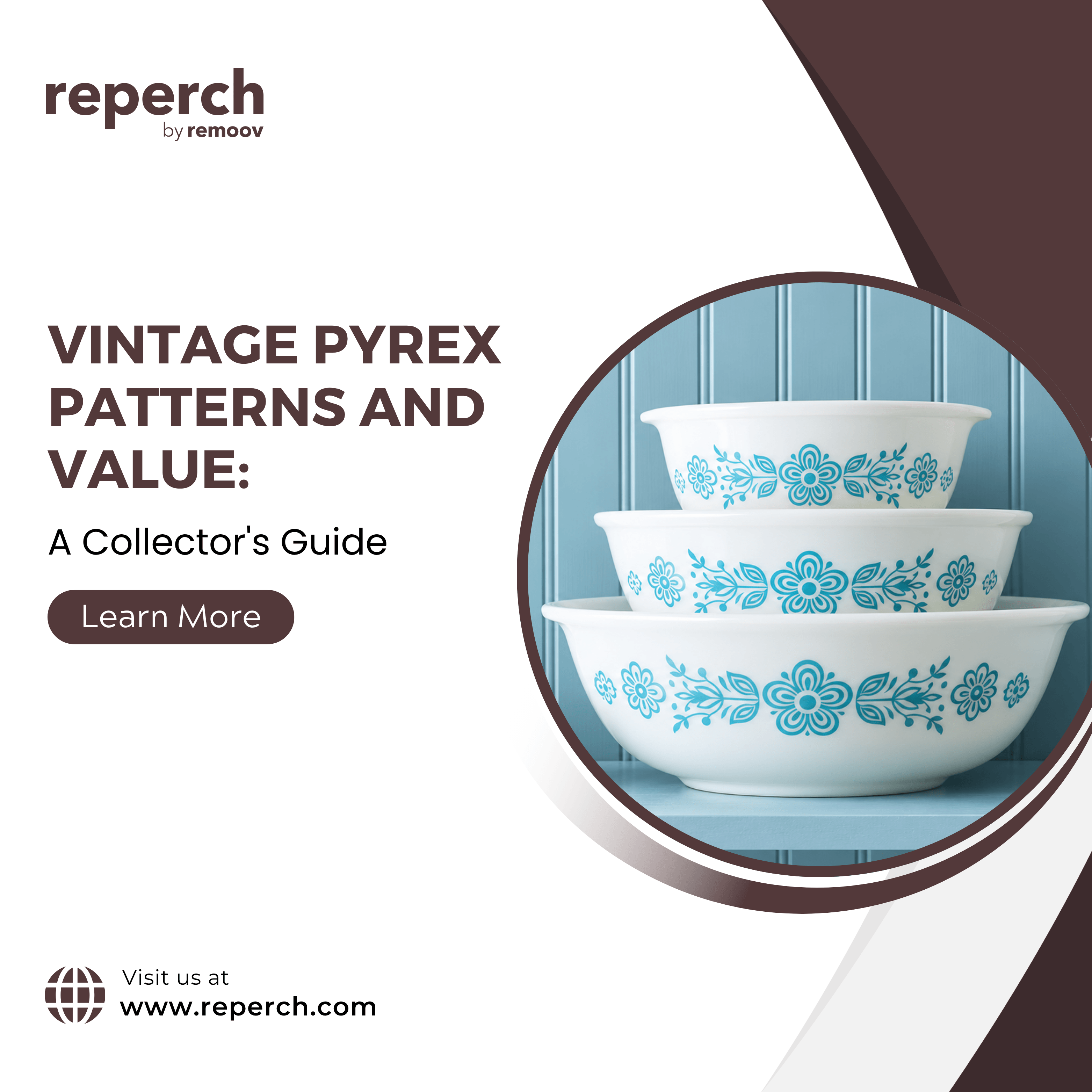
A colorful vintage Pyrex bowl tucked away in a kitchen cabinet might be worth a second look. Those turquoise mixing bowls, pink casseroles, and floral refrigerator dishes that once filled American kitchens have become popular collectibles. Some are easy to find at thrift stores, while others are rare enough to attract serious attention from collectors.
What makes vintage Pyrex interesting is that it was never intended to be precious. Families used these dishes for everyday cooking, serving, and storing leftovers. Decades later, their distinctive colors and patterns have turned ordinary kitchenware into pieces of design history.
However, not every old Pyrex dish is valuable. The pattern, age, condition, and original accessories all influence its appeal. Understanding vintage Pyrex patterns and value can help you identify an unfamiliar bowl, recognize desirable designs, and make better decisions when buying or selling secondhand kitchenware.
What Makes Vintage Pyrex Different From Modern Pyrex?
Pyrex first appeared in 1915 when Corning Glass Works introduced heat-resistant glass cookware for home kitchens. Early products were primarily clear glass dishes designed for practical cooking and baking.
The colorful kitchenware most collectors associate with vintage Pyrex appeared later. In 1945, Corning introduced its famous Primary Colors mixing bowls, which featured bright red, yellow, green, and blue finishes. Decorative patterns followed, bringing floral illustrations, geometric shapes, and playful motifs into kitchens throughout the 1950s, 1960s, and 1970s.
Many of these patterned pieces were made from opaque opal glass rather than the clear glass used in earlier cookware. Their colors reflected changing interior design preferences, from pastel pink and turquoise to the warmer greens and golds associated with the 1970s.
Modern Pyrex products can differ in materials, manufacturing methods, and intended uses. For collectors, the important distinction is not simply whether a dish is old, but whether it belongs to a recognizable historical production line.
How to Identify Vintage Pyrex
Identifying an older Pyrex piece usually involves examining several details together. The pattern provides a useful starting point, but the backstamp, shape, model number, and glass finish can help confirm what you've found.
Examine the Backstamp
Most familiar vintage American Pyrex dishes have markings molded into their undersides. These commonly include the Pyrex name, sometimes accompanied by a model number, capacity, country of manufacture, or additional instructions.
Backstamp designs evolved over time, making them useful for estimating a manufacturing period. However, markings alone rarely establish an exact production year because some styles were used across multiple product lines.
The familiar uppercase PYREX logo appears on many vintage American pieces, but capitalization isn't a reliable dating method by itself. Branding and manufacturing practices have varied by product and market.
Look for Model Numbers
Model numbers can help identify a dish's shape and size, especially when you're trying to find its original lid or complete a matching set.
Several common examples are worth recognizing:
- 401–404: Round nesting mixing bowls
- 441–444: Cinderella mixing bowls
- 471–474: Round casserole dishes
- 501–503: Refrigerator storage dishes
These numbers identify particular dish forms rather than decorative patterns. Two bowls may carry the same model number while featuring entirely different colors.
For an accurate identification, compare the number with the dish's shape, decoration, and documented production examples.
Identify the Dish Shape
The shape of a vintage Pyrex piece can be as recognizable as its decoration.
Cinderella mixing bowls have extended handles and pouring features that distinguish them from ordinary round bowls. Refrigerator dishes, often called fridgies, typically have rectangular shapes and matching glass lids.
Covered casseroles, divided dishes, and chip-and-dip sets also appear in different patterns. Recognizing the correct form is important because collectors may value one shape more highly than another featuring the same decoration.
Popular Vintage Pyrex Patterns Collectors Recognize
Vintage Pyrex patterns reflect several decades of changing American kitchen design. Some became everyday favorites because they were produced in large quantities, while others have remained desirable for their distinctive colors and illustrations.
Butterprint
Introduced in 1957, Butterprint features farm-inspired illustrations with roosters, agricultural motifs, and figures dressed in traditional clothing. Its turquoise-and-white color combination is particularly recognizable.
Butterprint appeared on mixing bowls and other kitchenware, making it a favorite among collectors interested in coordinated pieces. Orange Butterprint is generally less common than the familiar turquoise variation, although rarity depends on the particular item.
Gooseberry
Gooseberry also appeared in the late 1950s and features decorative berries, leaves, and branches arranged in a repeating design.
Pink-and-white Gooseberry is especially popular with collectors who enjoy pastel kitchenware. Black-and-white versions are also well known, and some less common color variations attract additional interest.
When examining Gooseberry, compare both the background color and printed design. Two similar-looking pieces may belong to different color combinations with different levels of availability.
Snowflake and Pink Daisy
Snowflake patterns are strongly associated with the colorful kitchenware of the 1950s and 1960s. Their repeating winter-inspired motifs appeared on various dish forms, including designs in turquoise and white.
Pink Daisy has a softer floral appearance and remains particularly appealing to collectors interested in mid-century pastel colors.
For both patterns, the condition of the decoration matters. Bright, clearly defined printing is generally preferable to faded or heavily scratched examples.
Spring Blossom and Butterfly Gold
Spring Blossom, often called Crazy Daisy by collectors, became a familiar sight in kitchens during the 1970s. Its green floral design works well with the avocado-colored decorating trends of the period.
Butterfly Gold features warmer yellow, orange, and brown tones, reflecting another popular direction in 1970s kitchen design.
These patterns are relatively accessible compared with rare promotional designs. They can be a good starting point for someone who wants an attractive vintage collection without focusing entirely on expensive pieces.
Rare Vintage Pyrex Patterns Worth Knowing
Some Pyrex patterns are difficult to find because they were produced for limited periods, distributed through special promotions, or never widely released.
Lucky in Love
Lucky in Love is one of the best-known rare Pyrex patterns. Its decorative combination of pink hearts and green clover motifs makes it immediately different from familiar everyday patterns.
Surviving examples are exceptionally scarce, and authenticated pieces can attract significant collector interest.
Because valuable designs may be misidentified or reproduced, buyers should request detailed photographs and compare any suspected example with documented originals.
Atomic Eyes and Starburst
Atomic-inspired Pyrex patterns reflect the growing popularity of geometric and space-age decoration during the mid-twentieth century.
Atomic Eyes is recognized for its distinctive eye-like motifs, while certain Starburst designs feature bold atomic-era graphics.
Although these names are sometimes grouped together in casual listings, collectors distinguish between specific designs, dish shapes, and promotional releases.
Orange Butterprint and Barcode
Orange Butterprint is an uncommon variation of the familiar farm-themed design. Its distinctive color makes it appealing to collectors who already own more common Butterprint pieces.
Barcode, also known as Blue Stripe, is associated with a striking striped design produced in 1966. Some unusual variants are particularly difficult to find.
With rare patterns, accurate identification is essential. A high asking price doesn't prove authenticity, and the same design name may be used incorrectly across online listings.
What Determines Vintage Pyrex Value?
The difference between an ordinary vintage bowl and a valuable collectible often comes down to several small details. Two dishes from the same decade may have dramatically different prices because one is common while the other belongs to a limited production line.
Rarity and Collector Demand
Scarce patterns can attract higher prices, but rarity doesn't guarantee strong demand. Some common designs remain popular because collectors appreciate their colors, nostalgia, or usefulness.
A complete set in a familiar pattern may therefore be more appealing than an incomplete item from a less recognizable collection.
When evaluating a piece, compare completed sales involving the same pattern, shape, size, and color combination. This provides a more realistic understanding of value than looking at advertised prices alone.
Condition and Original Decoration
Collectors generally prefer pieces with bright colors, intact patterns, and minimal damage.
Faded printing, extensive scratching, chips, and cracks can reduce a dish's desirability. Repeated dishwasher use is especially damaging to many decorated vintage pieces because it can dull the surface and gradually wear away the design.
Inspect rims and handles carefully, since small chips may be difficult to notice in photographs. Hold the dish under good lighting to reveal scratches or uneven decoration.
Matching Lids and Complete Sets
Completeness can also influence value. A full nesting bowl set often attracts more interest than individual bowls, particularly when the original colors and sizes are present.
Matching lids are important for covered casseroles and refrigerator dishes. Original cradles, accessories, and packaging may add interest when they can be reliably associated with the piece.
However, missing accessories don't automatically make a dish worthless. Some individual bowls remain highly collectible because of their pattern or unusual color.
How Much Is Vintage Pyrex Worth?
Vintage Pyrex prices vary widely. Common pieces may sell for relatively modest amounts, while unusual patterns, complete sets, and rare promotional items can attract significantly higher offers.
These broad ranges are useful only as starting points, not confirmed current valuations.
| Type of vintage Pyrex | Illustrative resale range |
|---|---|
| Common individual mixing bowl | 10–35 |
| Common patterned casserole | 20–60 |
| Complete everyday mixing bowl set | 75–200 |
| Desirable patterned piece in excellent condition | 50–200+ |
| Rare promotional or unusual design | Several hundred dollars or more |
The actual selling price depends on recent demand, condition, authenticity, location, and the availability of comparable pieces.
For valuable items, search completed auction results and sold listings rather than relying on unusually high active asking prices. An expensive listing doesn't necessarily indicate that buyers are willing to pay that amount.
Where to Find Vintage Pyrex Without Overpaying
Thrift stores, estate sales, antique shops, and secondhand marketplaces are popular places to search for vintage Pyrex. Each offers different opportunities, particularly when you're trying to find a missing bowl or complete a particular set.
Estate sales can be interesting because kitchenware may have remained together in the same household for decades. It's sometimes possible to find coordinated bowls, matching lids, and older accessories that would otherwise be sold separately.
Prices vary depending on how familiar the seller is with collectible kitchenware. Understanding the differences between estate sales and other secondhand shopping options can help you decide where to look for older household pieces.
When comparing secondhand kitchenware on Reperch or other resale platforms, inspect each listing carefully. Photographs should show the pattern, rim, base, and overall condition rather than only an attractive front view.
If you're searching for a particular design, keep a record of its model numbers and color variations. This makes it easier to recognize the correct piece without relying entirely on the seller's description.
How to Avoid Misidentified Vintage Pyrex
Not every dish advertised as vintage Pyrex has been correctly identified. Sellers sometimes confuse similar patterns, incorrectly describe reproduction designs, or list individual pieces as belonging to complete original sets.
Decorative decals applied later can also create confusion, especially when an ordinary dish is made to resemble a rare pattern.
When buying vintage items online, request clear photographs of the backstamp, rim, handles, and entire decorative surface. These details help reveal problems that may not appear in carefully arranged listing images.
For expensive pieces, compare the design with reliable collector references and documented historical examples. Pay particular attention to pattern placement and whether the decoration matches the dish form.
If the seller cannot provide additional photographs or explain the item's condition, it's reasonable to continue searching rather than risk an expensive mistake.
How to Clean and Preserve Vintage Pyrex
Cleaning vintage Pyrex properly helps protect the decorative finish and maintain the appearance collectors appreciate.
Handwashing with mild dish soap, warm water, and a soft sponge is generally preferable to machine washing. Avoid harsh cleaners, abrasive pads, and scrubbing methods that could scratch or wear away the painted design.
Dry pieces thoroughly before storing them, and place a soft protective layer between stacked bowls to reduce scratching.
Also avoid sudden temperature changes. Vintage glassware can break if subjected to thermal stress, particularly when its original condition is uncertain.
For rare or damaged pieces, display is generally preferable to cooking. Chips, cracks, and missing care instructions are reasons to avoid exposing a dish to oven temperatures or other demanding kitchen conditions.
Displaying a Vintage Pyrex Collection at Home
A collection of colorful bowls can add personality to a kitchen without requiring an elaborate display. Open shelves allow the patterns to remain visible, while enclosed cabinets help protect older pieces from dust and accidental damage.
Grouping dishes by color or design period creates an organized appearance. Turquoise Butterprint bowls work well alongside other cool-toned kitchenware, while Butterfly Gold and Spring Blossom complement warmer interiors.
Choosing between a china cabinet or hutch depends on whether you prefer protected display space or convenient access to frequently used dishes.
Leave enough room between pieces to prevent accidental contact, particularly when displaying glass lids or stacked bowls.
For collectors, the goal isn't necessarily to own every pattern. A smaller group of well-preserved pieces can be just as appealing as a large collection, especially when each item has a meaningful connection to its owner.
Final Thoughts
Vintage Pyrex remains collectible because it combines recognizable design, everyday usefulness, and a connection to American kitchen history. Familiar patterns such as Butterprint, Gooseberry, and Spring Blossom continue to attract interest, while rare promotional designs appeal to more specialized collectors.
Understanding vintage Pyrex patterns and value requires looking beyond the brand name. Backstamps, model numbers, colors, condition, and original accessories all contribute to accurate identification.
Whether you're examining inherited kitchenware or searching for a particular bowl, a little research can help you recognize what makes each piece interesting and preserve it for years to come.
Frequently Asked Questions
Which vintage Pyrex patterns are worth the most?
Rare promotional designs and unusual color variations, including Lucky in Love and certain Atomic Eyes and Butterprint pieces, can attract high collector interest. Actual value depends on authenticity, condition, and recent sales.
How can I tell if my Pyrex is vintage?
Check the backstamp, model number, shape, and decorative pattern. Compare those features with documented production information to estimate when the piece was manufactured.
Is vintage Pyrex always valuable?
No. Many common mixing bowls and casseroles remain affordable. Scarcity, pattern popularity, condition, and complete sets influence collectible value.
Can vintage Pyrex go in the dishwasher?
Handwashing is recommended for decorated vintage Pyrex because dishwasher detergents and repeated machine cleaning can damage printed patterns and reduce surface gloss.
Is vintage Pyrex safe to use for cooking?
Some undamaged vintage pieces may remain usable according to their original instructions, but their suitability depends on their composition, condition, and intended purpose. Avoid cooking with chipped, cracked, or uncertain pieces.
Are complete Pyrex sets worth more than individual bowls?
Complete original sets can attract stronger collector interest, especially when all bowls or matching lids are present. However, rare individual pieces may still be highly valuable.