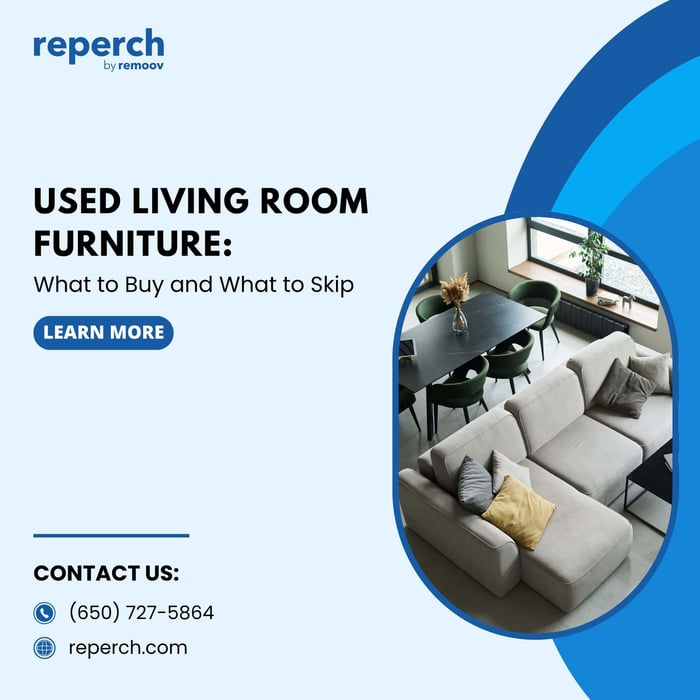
Buying used living room furniture can be one of the smartest ways to furnish a home. It can save money, help you avoid flimsy fast furniture, and bring in pieces with more character than anything you would find in a boxed showroom set. A great secondhand coffee table or media console can make a room feel warmer, more layered, and more personal right away.
But not every used piece is a good find.
Some items are worth the hunt because they offer real value, strong materials, and long-term usefulness. Others can end up costing more in cleaning, repairs, transport, or frustration than they were ever worth in the first place. That is why knowing what to buy and what to skip matters just as much as finding a good price.
If you have been shopping for used living room furniture, this guide will help you sort the smart buys from the risky ones. The goal is not just to find furniture for less. It is to choose pieces that fit your space, hold up over time, and actually improve the way your living room looks and feels.
Why Used Living Room Furniture Is Worth Considering
A living room usually needs some of the biggest and most noticeable furniture in the home. Sofas, coffee tables, sideboards, media units, bookshelves, and accent chairs all take up visual space, so they affect the room immediately. Buying those pieces new can get expensive fast, especially if you want quality materials and a look that does not feel generic.
That is where secondhand shopping has a real advantage.
Used furniture often gives you access to better construction for the same budget. A pre-owned solid wood table may cost less than a brand-new particleboard version. A vintage chair with a strong frame may have more personality than a mass-produced one at a similar price. Even when a piece has a little wear, that wear can sometimes add charm instead of taking away from it.
There is also the style factor. Living rooms tend to look better when everything does not match too perfectly. Mixing used furniture into the room helps create a more collected look, which often feels more natural and more inviting than buying a full matching set at once.
Still, secondhand shopping only works well when you are selective. Some pieces are easy wins. Others are better left behind.
Start With Function Before You Start Shopping
Before deciding what to buy used, it helps to think about what your living room actually needs.
Some rooms need comfortable seating for everyday lounging. Others need storage, a better layout for entertaining, or a few strong pieces to make the space feel finished. If you start browsing without a plan, it is easy to get distracted by a good deal that does not truly help the room.
A cheap chair is not a smart purchase if you have nowhere to put it. A beautiful coffee table is not useful if it is the wrong scale. A vintage cabinet is not a bargain if it creates more clutter than function.
That is why the best secondhand shopping starts with a short list. Figure out what the room is missing first. Then shop for those categories with intention. It saves time, helps you avoid impulse buys, and makes it easier to spot the pieces that are actually worth bringing home.
What to Buy: Solid Wood Coffee Tables and Side Tables
If there is one category that is almost always worth checking secondhand first, it is tables.
Coffee tables and side tables are usually safer used purchases because they do not involve upholstery, hidden cushioning, or complicated moving parts. You can inspect them fairly quickly, and minor wear often matters less because these pieces are expected to show a little life over time.
Solid wood is where the value really shows. Older wood tables often have better materials, better craftsmanship, and more warmth than cheaper new ones. Scratches can sometimes be touched up. Hardware can be replaced. A finish can be refreshed. Even when the piece is not perfect, the bones are often strong.
These are also the kinds of items that can make a living room feel much more grounded. A wood coffee table adds weight and texture to the center of the room. A small side table beside a chair can make the layout more practical without taking up much space. These pieces do a lot of work visually, so finding them used can be a smart move.
What to Buy: Media Consoles, Cabinets, and Bookcases
Storage pieces are another category where used furniture can really shine.
A good media console, low cabinet, or bookcase brings function to the living room while also helping the space feel complete. These pieces often cost a lot new, especially if you want something sturdy and attractive rather than flat-packed and temporary. That makes them great candidates for secondhand shopping.
When looking at used storage furniture, check how the drawers open, whether the doors line up, and how sturdy the frame feels overall. A little wear on the finish is usually manageable. Loose legs, warped panels, or major structural issues are a different story.
One of the best things about buying these pieces used is that you can often find styles with more detail and character. Instead of another generic entertainment unit, you might find a low vintage cabinet, a wood credenza, or a bookshelf that brings more depth into the room. Those pieces can help the living room look less like a furniture catalog and more like a home.
What to Buy: Accent Chairs With Strong Frames
Used accent chairs can be excellent finds, especially when the frame is strong and the shape is timeless.
Wood-framed lounge chairs, club chairs, and occasional chairs are often worth considering because they can add seating and personality without requiring the same level of commitment as a full sofa. They are also easier to work into a room one at a time, which makes them useful if you are furnishing in stages.
The key is to focus on the frame first. If the chair feels sturdy, balanced, and well made, it may be worth buying even if the fabric shows some light wear. But if the chair wobbles, sags badly, or has visible structural problems, it is usually not worth the trouble unless you already know exactly how you plan to restore it.
Used chairs are often a better bet when the upholstery is clean, odor-free, and still in good enough condition to use right away. Reupholstery can cost much more than people expect, so it should feel like a choice, not a rescue mission.
What to Buy: Ottomans and Benches in Good Condition
A well-kept ottoman or small bench can be a very useful used purchase for a living room. These pieces can add flexible seating, a soft surface, or even storage depending on the design. They are often less expensive than major seating pieces and easier to work into different room layouts.
Still, condition matters. Because upholstered items can trap odor, dust, and wear, you want to inspect them carefully. If the fabric looks clean, the seams are solid, and there are no signs of pests, staining, or strong smells, they can be a smart buy. If not, it is often better to move on.
What to Skip: Heavily Worn or Questionable Upholstered Sofas
Sofas are where secondhand shopping gets trickier.
That does not mean you should never buy a used sofa. A high-quality sofa in excellent condition can absolutely be worth it. But this is one category where you need to be far more selective. Sofas are large, expensive to move, difficult to deep-clean thoroughly, and more likely to hide issues that are not obvious in photos.
A sofa with a sturdy frame and clean upholstery can be a great find. A sofa with heavy odors, deep stains, sagging cushions, pet damage, or suspicious wear is usually one to skip. Even if the price looks tempting, the cost of cleaning, repairing, or regretting it can erase the savings quickly.
This is especially true if you are buying online and have not seen the piece in person. Upholstery is one area where smell and feel matter just as much as appearance. If you cannot inspect it properly, it is harder to know what you are really getting.
What to Skip: Particleboard Furniture That Was Cheap to Begin With
One of the easiest categories to walk away from is low-quality furniture made from particleboard or weak composite materials.
If a piece was cheaply made when it was new, it usually does not improve with age. It may look fine in photos, but the drawers may stick, the surfaces may be swollen from moisture, or the edges may already be peeling. These pieces often do not hold up well through multiple moves, and many are simply not worth the effort of hauling home.
Used shopping is most rewarding when it helps you access better quality than your budget would normally allow. That is why it usually makes more sense to hold out for solid wood, sturdy joinery, or at least something with visible durability instead of settling for something that already feels worn out.
What to Skip: Furniture With Strong Odors
Smell is one of the biggest deal-breakers in secondhand furniture.
Smoke, mildew, pet odor, and other lingering smells can sink deep into upholstery, cushions, wood, and drawers. Even if the piece looks beautiful, those smells can be very difficult to remove fully. In some cases, they never really go away. If you do end up bringing home a piece with a minor issue, this guide on how to remove lingering odors from secondhand furniture safely can help.
This is where in-person inspection matters. Photos cannot tell you if a chair smells like smoke or if a cabinet has a musty interior. If a seller avoids the question, gives vague answers, or seems defensive about condition, that is usually a sign to move on.
A good used piece should feel like a smart purchase, not a cleaning project you are already dreading.
What to Skip: Anything With Signs of Pests or Infestation
This one is simple. If there are signs of pests, skip it.
That includes visible bugs, dark spotting in upholstery seams, wood dust that suggests boring insects, damaged undersides, or anything that gives you reason to question what might be hiding inside the piece. No discount is worth bringing that risk into your home.
When in doubt, walk away. There will always be another chair, another table, another dresser, another sofa. A good deal should never come with that kind of uncertainty.
What to Skip: Oversized Pieces That Do Not Fit the Room
Sometimes the furniture itself is fine, but it is still the wrong buy.
A massive sectional may look like a bargain until it takes over your entire living room. A deep media unit may leave no breathing room. A pair of bulky recliners may crowd the layout and make the room feel smaller than it is. Used furniture is often non-returnable, which means bad fit can become a long-term frustration.
That is why measuring matters so much. Measure the room, the wall, the doorway, the stairwell, and the piece itself. If it only works in theory, it probably does not work. A piece should fit the room comfortably and leave enough space for traffic flow, side tables, and the rest of your layout.
What to Check Before You Buy
Even the categories that are usually worth buying still need a close look. Before saying yes to any used living room furniture piece, inspect the basics.
Check for structural stability first. Does it wobble, lean, or shift under weight? Look at the joints, legs, corners, and underside. Open drawers and doors. Sit on chairs. Test the surface. Look for cracks, water damage, broken hardware, or signs of a weak repair.
Then think about practicality. Can you move it easily enough? Will it fit through the door? Does it suit your current room, or are you buying it just because it seems like a deal? A piece can be beautiful, affordable, and still wrong for your home.
The best used furniture buys are the ones that pass both tests. They are well made, and they make sense for the space.
A Better Approach to Buying Used Furniture
Used living room furniture is not about buying whatever is cheapest. It is about buying what is worth it.
The pieces most worth buying tend to be the ones with strong materials, practical use, and enough quality to justify bringing them into your home. Solid wood tables, media consoles, sturdy accent chairs, and storage pieces usually offer great value. Heavily worn upholstery, smelly furniture, cheap particleboard pieces, and anything with signs of pests are usually better left behind.
A little patience helps too. When you know what your room needs and what standards matter to you, it becomes much easier to say no to the wrong pieces and wait for the right one.
How Reperch Helps You Shop Used Living Room Furniture More Confidently
Shopping for used furniture can be exciting, but it can also feel hit or miss when you are sorting through random listings and trying to judge quality from a few photos. That is one reason Reperch is such a useful place to start.
Reperch makes it easier to find used living room furniture that feels more curated and more worth your time. Instead of scrolling endlessly and hoping something good appears, you can focus on pieces that already bring together style, function, and character. That makes it easier to build a living room with furniture that feels intentional, not improvised.
For shoppers who want value without sacrificing taste, Reperch also helps bridge the gap between budget and quality. A strong secondhand coffee table, accent chair, or storage piece can do a lot for a room, especially when it has been chosen with care. That is often how the best living rooms come together, not through one big matching purchase, but through well-chosen pieces that feel collected over time.
Final Thoughts
Buying used living room furniture can be one of the smartest ways to create a home that feels warm, stylish, and lived in without overspending. The key is knowing where the real value is. Pieces with solid construction, useful function, and timeless appeal are often worth the search. Pieces with hidden problems, weak materials, or a poor fit for your space usually are not.
When you shop with a clear plan, pay attention to condition, and focus on quality over impulse, secondhand furniture becomes a much better investment. A few well-chosen pieces can bring far more character and staying power to your living room than a rushed purchase ever will.