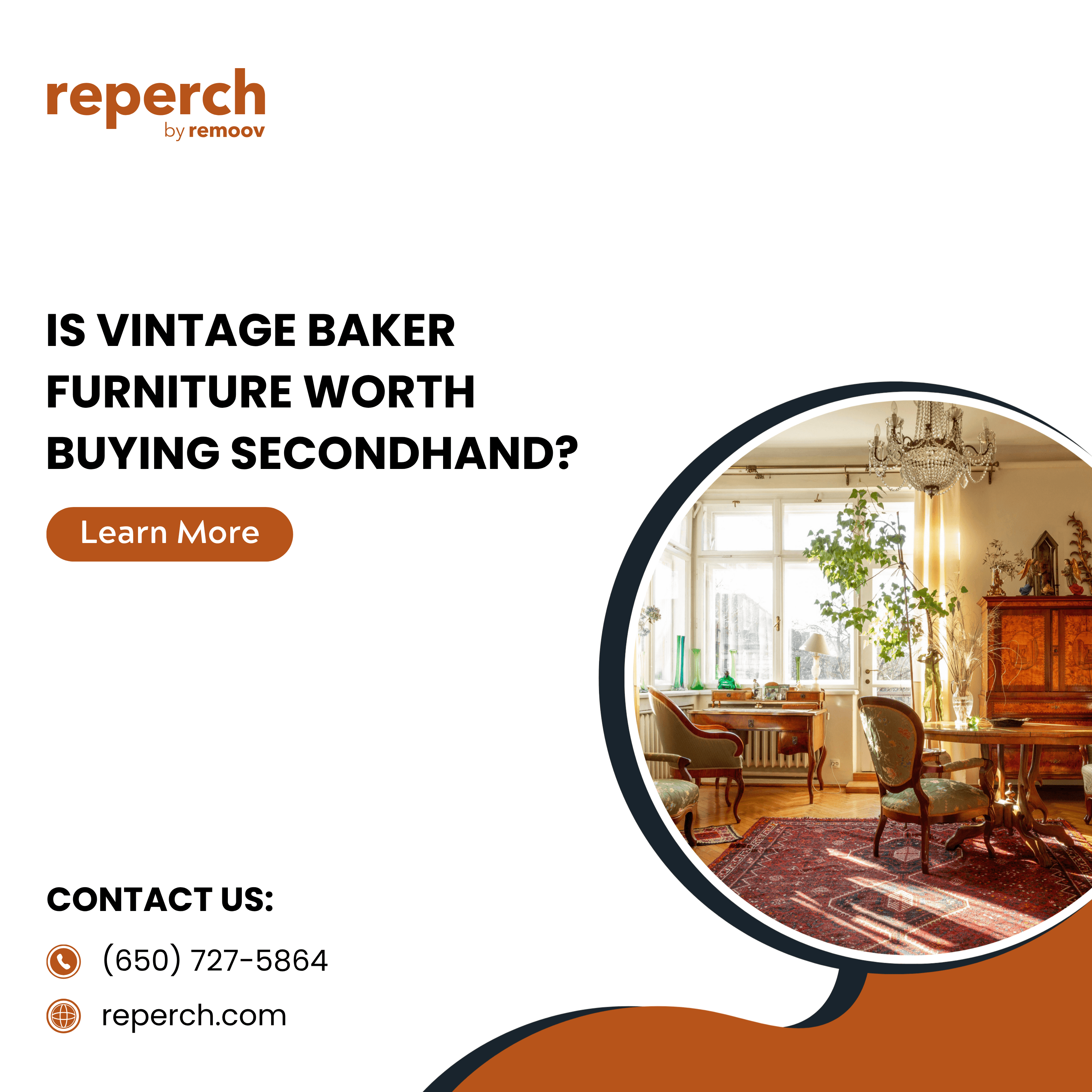
Vintage Baker furniture has a reputation that makes secondhand shoppers stop and look twice. A Baker dining table, beautifully finished cabinet, or upholstered armchair might cost far less than a comparable new luxury piece, yet still have the craftsmanship and design that made the brand desirable in the first place. But does an old Baker label automatically mean you've found something worth buying?
Not necessarily. Baker has produced furniture across several generations, from elaborate traditional pieces to clean-lined mid-century designs and more understated designer collections. Some have become favorites among collectors, while others appeal mainly to people looking for well-made furniture at a reasonable price. Condition, originality, and the particular collection matter just as much as the manufacturer's name.
If you're considering a vintage Baker piece, it's worth understanding what sets the brand apart, which collections deserve attention, and how to recognize a fair deal. Here's what to know before bringing one home.
What Makes Baker Furniture Special?
Baker's history stretches back to 1890, when Dutch immigrant Siebe Baker established a woodworking business in Allegan, Michigan, near Grand Rapids. Over time, the company became one of the established names in American luxury furniture, producing pieces influenced by European antiques, Asian design, and modernist movements.
What makes Baker interesting is its willingness to move between styles. During one period, the company might produce an elaborate mahogany cabinet inspired by an English country estate. In another, it might introduce streamlined furniture developed with a celebrated designer.
That variety is part of the appeal, particularly for secondhand buyers who don't want their homes to look as though everything came from the same furniture collection.
Baker's reputation is also tied to its attention to materials, finishes, proportions, and decorative details. These qualities can make older pieces worth preserving, although construction methods and quality vary by period and product.
Is Vintage Baker Furniture Good Quality?
Generally, Baker has a strong reputation for quality craftsmanship. However, that doesn't mean every piece bearing its label is identical in construction or condition.
A vintage Baker dining cabinet might feature carefully matched wood veneers, intricate inlays, and substantial joinery. An upholstered chair from another collection may depend more heavily on its internal frame, springs, cushioning, and fabric condition.
Both could have been expensive when new, but they require different inspections today.
Woodwork and Construction
One reason buyers seek older Baker furniture is the craftsmanship found in many of its wooden pieces. Well-executed veneers, shaped edges, decorative inlays, and detailed finishes are common across its traditional collections.
It's worth remembering that veneer isn't a sign of poor quality. Fine furniture makers have used decorative veneers for centuries to create patterns and surfaces that would be difficult to achieve with solid lumber alone.
Knowing the difference between solid wood vs. veneer can help you evaluate a Baker cabinet without dismissing it simply because its panels aren't solid wood throughout.
Examine the underside, interior compartments, and drawer construction. Well-fitted components and secure joints are encouraging signs, while cracks, separating connections, and swollen panels deserve closer attention.
Upholstery and Comfort
Baker's upholstered furniture can also be attractive secondhand, especially when the frame and suspension remain in good condition.
However, fabric that looks beautiful in a photograph may conceal worn padding or sagging supports. Sit on the piece when possible, check for uneven cushioning, and listen for unusual creaking.
Reupholstery isn't necessarily a problem. Some older chairs have been recovered several times, and a professionally restored piece may be perfectly suitable for everyday use.
The important question is whether the underlying construction remains sound and whether the asking price reflects the work already completed or still required.
Which Vintage Baker Furniture Collections Are Worth Looking For?
Baker produced so many different designs that it's more useful to identify the collection than to judge the entire brand as one category.
Some collections appeal to traditional interiors, while others fit naturally into contemporary homes.
Stately Homes Collection
The Stately Homes Collection is among Baker's best-known traditional lines. Introduced in the early 1980s, it drew inspiration from historical furniture associated with prominent European estates.
These pieces often feature formal proportions, decorative veneers, detailed craftsmanship, and finishes intended to evoke historical interiors.
Collectors interested in classical furniture may appreciate the collection, but its larger pieces can be difficult to accommodate in smaller homes.
A Stately Homes cabinet could be a remarkable purchase if you love its design and have the right space. It may be less practical if you want lightweight furniture that can be moved frequently.
Charleston Collection
The Charleston Collection draws on traditional American furniture associated with Charleston, South Carolina.
Its designs often feature elegant proportions, polished wood surfaces, and decorative details influenced by historical Southern interiors.
Look for recognizable collection markings, original hardware, and consistent finishes. Pieces that have been heavily altered may be less attractive to buyers seeking an original example.
Mid-Century Baker Furniture
Not all vintage Baker furniture looks traditional.
The company's mid-century offerings included designs associated with Finn Juhl and T.H. Robsjohn-Gibbings, bringing a different visual language to its catalog.
These pieces can appeal to buyers who prefer simple silhouettes, sculptural forms, and furniture that feels appropriate in a modern living room.
Designer attribution matters considerably here. A genuine documented piece associated with a particular designer shouldn't be valued the same way as an unidentified cabinet that merely resembles mid-century furniture.
Barbara Barry and Thomas Pheasant Collections
Baker's collaborations with Barbara Barry and Thomas Pheasant brought a more restrained approach to luxury furniture.
Barbara Barry's designs often use graceful shapes, comfortable proportions, and understated finishes. Thomas Pheasant's work frequently combines classical influences with modern simplicity.
These collections are worth considering if you want premium furniture without an overly ornate appearance.
However, a designer name is only one part of the value equation. The condition, materials, and individual design still need to justify the price.
How to Identify Authentic Vintage Baker Furniture
Because Baker has produced such a wide variety of furniture, visual style alone isn't a reliable way to confirm authenticity.
Start by looking for a manufacturer label, stamp, or identifying mark.
Labels may appear inside drawers, on the back of cabinets, beneath tables, or underneath upholstered furniture.
Some historical Baker labels feature crown and tulip imagery, references associated with the company's heritage. Markings changed over time, and their presence or absence should be interpreted alongside other evidence.
The principles of how to read maker's marks on vintage furniture can help when comparing labels and trying to establish a piece's manufacturer or production period.
Check Collection Names and Model Details
If a listing identifies a particular Baker collection, ask for clear photographs of any labels or markings that support the description.
Compare the furniture's dimensions, hardware, and decorative details with documented examples or historical catalogs.
Some collections included distinctive labels or collection-specific features that can make identification easier.
Be cautious with vague descriptions such as "Baker style" or "possibly Baker." These phrases don't establish that the furniture was manufactured by the company.
Missing labels aren't automatically evidence of a reproduction, either. Older furniture may have been refinished, repaired, or reupholstered, resulting in lost markings.
When a seller is asking a substantial premium for a supposedly rare piece, professional authentication may be worthwhile.
What Is Vintage Baker Furniture Worth?
Vintage Baker furniture can retain meaningful resale value, but the amount varies enormously.
A large traditional dining cabinet might have cost thousands of dollars when new yet attract a limited number of local buyers today. A smaller designer side table could be easier to sell because it fits more homes and has stronger demand.
This makes original retail price a poor starting point for determining current value.
What Affects Baker Furniture Resale Prices?
The biggest factors include the specific collection, condition, designer attribution, and local demand.
Original finishes and hardware can be important, particularly for collectors. However, furniture purchased primarily for practical use may remain desirable after careful restoration.
Size is another consideration. Large cabinets, dining tables, and bedroom sets require transportation and considerable space. Those limitations can affect what buyers are willing to pay.
A secondhand furniture pricing guide can help you compare condition, quality, and repair costs instead of assuming every luxury brand retains a fixed percentage of its original price.
How to Find a Fair Price
Search for completed sales of the same model or closely comparable pieces.
Try to match the collection, approximate age, finish, dimensions, and condition. An asking price from an antique dealer may be considerably higher than a local private-sale transaction.
Don't rely on unusually high listings as evidence of typical value.
A reasonable price is one that makes sense for the particular furniture, its condition, and the amount you're prepared to spend on transportation or repairs.
What Should You Inspect Before Buying Vintage Baker Furniture?
A Baker label can justify taking a closer look, but it shouldn't replace a proper inspection.
For wooden furniture, check that the frame remains stable and that doors or drawers open smoothly. Examine veneer edges for lifting, especially around corners and surfaces exposed to moisture.
Look underneath for repairs, added brackets, loose hardware, and signs of insect activity.
For upholstered furniture, inspect the fabric, cushions, and accessible frame components. Persistent smoke or mildew odors can be difficult to remove, even after professional cleaning.
Understanding how to spot quality in secondhand furniture is particularly helpful when distinguishing ordinary age-related wear from damage that could shorten a piece's useful life.
When Restoration Makes Sense
Minor scratches, worn finishes, or outdated upholstery don't always make a Baker piece a poor purchase.
A structurally sound chair with tired fabric may be a worthwhile restoration project. A cabinet with light finish damage might only need careful conservation.
Major structural problems are different.
Extensive veneer loss, severe water damage, and unstable joints can require expensive professional work. Before purchasing, ask whether the expected restoration cost still leaves you with a good-value piece.
Avoid refinishing a potentially collectible item without researching its originality. Removing an important historical finish may reduce its appeal to collectors.
How Does Baker Furniture Compare With Other Luxury Brands?
Baker is often considered alongside established luxury furniture makers such as Century, Henredon, and Kittinger.
These brands have different histories and design strengths, but their secondhand products can overlap in price and appearance.
Baker may appeal particularly to buyers who appreciate formal reproductions, designer collaborations, and refined finishes.
However, a comparable piece from another respected manufacturer could offer better value if its construction, condition, or dimensions suit your needs more closely.
Compare actual pieces rather than treating brand reputation as the deciding factor.
An excellent Baker chair isn't necessarily a better purchase than a well-maintained chair from another manufacturer, especially when the latter provides similar comfort for considerably less.
Can Vintage Baker Furniture Work in a Modern Home?
Absolutely. In fact, some of the most interesting interiors combine older furniture with newer, simpler pieces.
A traditional Baker sideboard can add character to a dining room furnished with contemporary chairs. A Barbara Barry accent chair may work naturally beside a modern sofa, while an ornate Baker cabinet can become the focal point of an otherwise understated room.
The trick is giving distinctive furniture enough space to be appreciated.
You don't need an entire room filled with matching traditional pieces. Often, one well-chosen cabinet, table, or chair provides the visual interest you're looking for.
This approach is especially useful when styling vintage furniture for a modern home. Repeating a wood tone or coordinating upholstery colors can help furniture from different periods feel connected.
Where to Buy Vintage Baker Furniture Secondhand
Vintage Baker pieces appear at estate sales, antique stores, consignment shops, specialty dealers, and online secondhand marketplaces.
Estate sales can be particularly useful when you're looking for matching collections, while specialist dealers may provide more information about a piece's history.
Online listings offer broader selection, but photographs don't always reveal damage or restoration work.
Ask for images of the labels, undersides, interiors, and any areas showing wear. Confirm measurements and delivery arrangements before paying.
Reperch also offers secondhand furniture, including vintage and designer pieces when available. Comparing different manufacturers, materials, and conditions can help you determine whether a particular Baker listing represents good value.
Inventory changes regularly, so availability shouldn't be assumed.
When Is Vintage Baker Furniture Not Worth Buying?
Sometimes the smartest decision is to leave a piece behind, even when the manufacturer has an excellent reputation.
A badly damaged cabinet with extensive veneer problems might require more money to restore than you're comfortable spending.
An upholstered sofa with a failing frame or severe odors could also become an expensive project.
The same applies to a piece that's too large for your room or difficult to transport into your home.
Be especially cautious when the seller asks a high collector price without evidence supporting the claimed designer, collection, or age.
Vintage Baker furniture should appeal to you because of its quality and usefulness, not simply because its name appears on a label.
Final Verdict: Is Vintage Baker Furniture Worth Buying?
Yes, vintage Baker furniture can be an excellent secondhand purchase, particularly when you find a well-maintained piece from a collection that suits your home.
The brand's design history, craftsmanship, and variety make it worth considering alongside other established furniture manufacturers.
However, not every Baker piece is a collector's item, and not every vintage example remains in excellent condition.
Look closely at the construction, identify the collection when possible, compare realistic resale prices, and account for restoration or transportation costs.
If the furniture is sturdy, attractive, and reasonably priced, it may provide years of enjoyment without the cost of buying new luxury furniture.
Frequently Asked Questions
Is Baker Furniture considered high-end?
Yes. Baker is an established American luxury furniture manufacturer known for traditional reproductions, designer collaborations, and detailed craftsmanship. Quality and specifications vary across collections and production periods.
How can you tell if Baker Furniture is vintage?
Look for manufacturer labels, collection names, construction details, and identifiable design features. Historical catalogs and documented examples may help establish the approximate production period.
Does vintage Baker Furniture hold its value?
Some pieces retain meaningful resale value, particularly desirable designs in good condition. However, resale prices vary by collection, originality, demand, and location.
Is Baker Furniture made of solid wood?
Baker has used solid wood, decorative veneers, engineered components, and other materials depending on the piece. High-quality veneer construction is common in luxury furniture and isn't automatically inferior to solid wood.
What are the most collectible Baker Furniture collections?
Collector interest can include Stately Homes, Charleston, and selected mid-century or designer-associated pieces. Actual value depends on the individual model, authenticity, condition, and market demand.
Is it worth restoring old Baker Furniture?
Restoration can make sense when the structure is sound and the finished piece will justify the cost. For collectible examples, preserving original materials and finishes may be more desirable than extensive refinishing.