The difference between contemporary vs modern furniture is easy to overlook, especially when both styles feature clean lines, simple silhouettes, and uncluttered spaces. You might see a low-profile sofa advertised as modern in one furniture store and contemporary in another. At first glance, the descriptions seem interchangeable, but they refer to two different approaches to furniture design.
Modern furniture is rooted in a historical design movement that developed during the early to mid-20th century. Contemporary furniture, on the other hand, reflects the styles and ideas influencing interiors today. While modern design follows recognizable principles established decades ago, contemporary design continues to change as materials, preferences, and creative influences evolve.
Understanding these differences makes it easier to identify furniture, choose pieces that complement your home, and avoid buying something that doesn't fit your intended style. The distinction becomes especially useful when shopping secondhand, where original modern pieces, vintage reproductions, and newer contemporary furniture often appear alongside one another.
What Is Modern Furniture?
Modern furniture refers to designs influenced by the Modernist movement, which developed in the late 19th and early 20th centuries and became especially influential during the decades that followed.
Modernist designers moved away from the elaborate decoration associated with many earlier furniture styles. Instead, they emphasized useful forms, efficient construction, and materials that suited the purpose of each piece. The idea was to create furniture that worked well without relying on unnecessary ornamentation.
This approach influenced everything from living room seating to dining tables and bedroom storage. Designers experimented with new manufacturing techniques while also exploring the natural beauty of wood, leather, and other materials.
Recognizable Features of Modern Furniture
Modern furniture is often identified by its straightforward construction and carefully considered proportions. A wooden sideboard might have a rectangular body, tapered legs, and minimal hardware, while a lounge chair could combine molded plywood with leather upholstery.
Common characteristics include:
- Clean lines and uncomplicated silhouettes
- Functional designs with limited ornamentation
- Natural wood, leather, plywood, and metal
- Warm neutrals and earthy colors
- Tapered legs, geometric forms, and balanced proportions
These features don't mean every modern piece looks identical. Modernism included several influential movements, each with its own interpretation of simplicity and function.
For example, the Bauhaus design style emphasized practical forms and industrial materials, helping establish a design language that continues to influence furniture today.
What Is Contemporary Furniture?
Contemporary furniture describes pieces that reflect current design preferences rather than one particular historical movement.
Because of that, its appearance is constantly evolving. Furniture considered contemporary today may look quite different from what designers described using the same term twenty years ago.
Contemporary interiors frequently borrow elements from Modernism, but they also incorporate influences from other movements and cultures. A contemporary living room might combine a minimalist sofa with a sculptural coffee table, textured upholstery, and dramatic lighting.
Rather than following a fixed set of historical rules, contemporary design allows for greater experimentation with form, materials, and visual contrast.
What Does Contemporary Furniture Look Like?
Many contemporary furniture designs favor open spaces, streamlined forms, and visually interesting details.
Sofas may feature oversized cushions, curved backs, or low seating positions. Tables might have asymmetrical bases, while accent chairs introduce unusual shapes or bold upholstery.
Material combinations are particularly varied. Wood and stone can appear beside glass, steel, boucle, or other textured fabrics.
The contemporary style guide provides additional inspiration for creating interiors that feel current without relying entirely on temporary decorating trends.
It's important to remember that contemporary doesn't always mean futuristic or extremely minimalist. A room can include natural materials, comfortable textures, and traditional influences while still reflecting contemporary design.
Contemporary vs Modern Furniture: The Key Differences
Although the two styles overlap visually, their underlying design philosophies are distinct.
| Feature | Modern Furniture | Contemporary Furniture |
|---|---|---|
| Historical context | Rooted in 20th-century Modernism | Reflects current, evolving styles |
| Design philosophy | Function, simplicity, purposeful construction | Flexibility, experimentation, current influences |
| Shapes | Clean geometry, organic forms, balanced proportions | Clean lines, curves, sculptural or asymmetrical forms |
| Colors | Earth tones, warm neutrals, selected bold accents | Neutrals, contrasting tones, changing accent colors |
| Materials | Wood, leather, plywood, tubular steel, fiberglass | Wood, metal, glass, stone, and varied upholstery |
| Overall character | Historically grounded and recognizable | Adaptable and responsive to changing preferences |
These are useful tendencies, not strict rules. Both styles can feature the same materials or colors, and many furniture pieces comfortably fit into either setting.
The clearest way to distinguish them is to consider the design's historical inspiration rather than focusing exclusively on its appearance.
How Furniture Shapes Reveal the Difference
One of the easiest ways to distinguish modern and contemporary furniture is by studying its silhouette.
Modern designers frequently explored geometric simplicity and organic forms. Their furniture often has carefully defined proportions, visible structural elements, and shapes intended to make everyday use comfortable.
A mid-century lounge chair, for example, might feature a molded wooden shell, a curved backrest, and a relatively light visual profile.
Contemporary furniture can be similarly streamlined, but it also makes room for more dramatic proportions.
A modern-style armchair might have slim wooden legs and a clearly defined frame. A contemporary version could have a rounded, oversized body with a nearly invisible base.
Neither approach is inherently more functional or comfortable. Their differences come from how designers interpret proportion, structure, and visual impact.
The Influence of Mid-Century Modern Furniture
Mid-century modern design is one of the most recognizable expressions of Modernism. It became particularly prominent during the 1940s, 1950s, and 1960s, combining practical construction with attractive, approachable forms.
Furniture from this period frequently features tapered wooden legs, low cabinets, curved seating, and an emphasis on open space.
Understanding mid-century modern furniture can help you recognize why some vintage designs still look surprisingly relevant in contemporary interiors.
These pieces have influenced so much newer furniture that identifying their original era sometimes requires researching the manufacturer, materials, and production details.
Colors and Materials: What Makes Each Style Different?
Both modern and contemporary furniture can use neutral colors, but the overall effect often differs.
Modern interiors frequently include warm wood tones, earthy browns, olive green, muted orange, and cream. These colors complement natural materials and create spaces that feel inviting without excessive decoration.
A walnut dining table surrounded by simple upholstered chairs is a good example. The materials contribute much of the room's character without requiring elaborate decorative details.
Contemporary interiors are less tied to a specific palette. Black, white, and gray remain common, but today's designs also incorporate deep greens, warm beiges, rich browns, and expressive accent colors.
Natural Materials vs. Material Experimentation
Modern design embraced both natural materials and the industrial materials becoming increasingly available during the 20th century.
Wood, plywood, leather, tubular steel, and fiberglass all played important roles. Designers were interested in how these materials could be shaped into practical, efficiently produced furniture.
Contemporary design builds on that experimentation rather than replacing it.
You might find a contemporary dining table combining natural stone with a sculptural metal base, or an upholstered chair that uses thick textured fabric to soften a geometric frame.
The materials themselves rarely identify a furniture style. Their proportions, finishes, construction, and overall presentation provide stronger clues.
Modern vs. Contemporary Furniture in Different Rooms
The distinction becomes clearer when you compare complete room arrangements rather than individual furniture pieces.
Living Room
A modern living room might feature a walnut media console, a streamlined sofa, a rectangular coffee table, and a leather lounge chair. The arrangement feels balanced, with visible floor space and relatively little decoration.
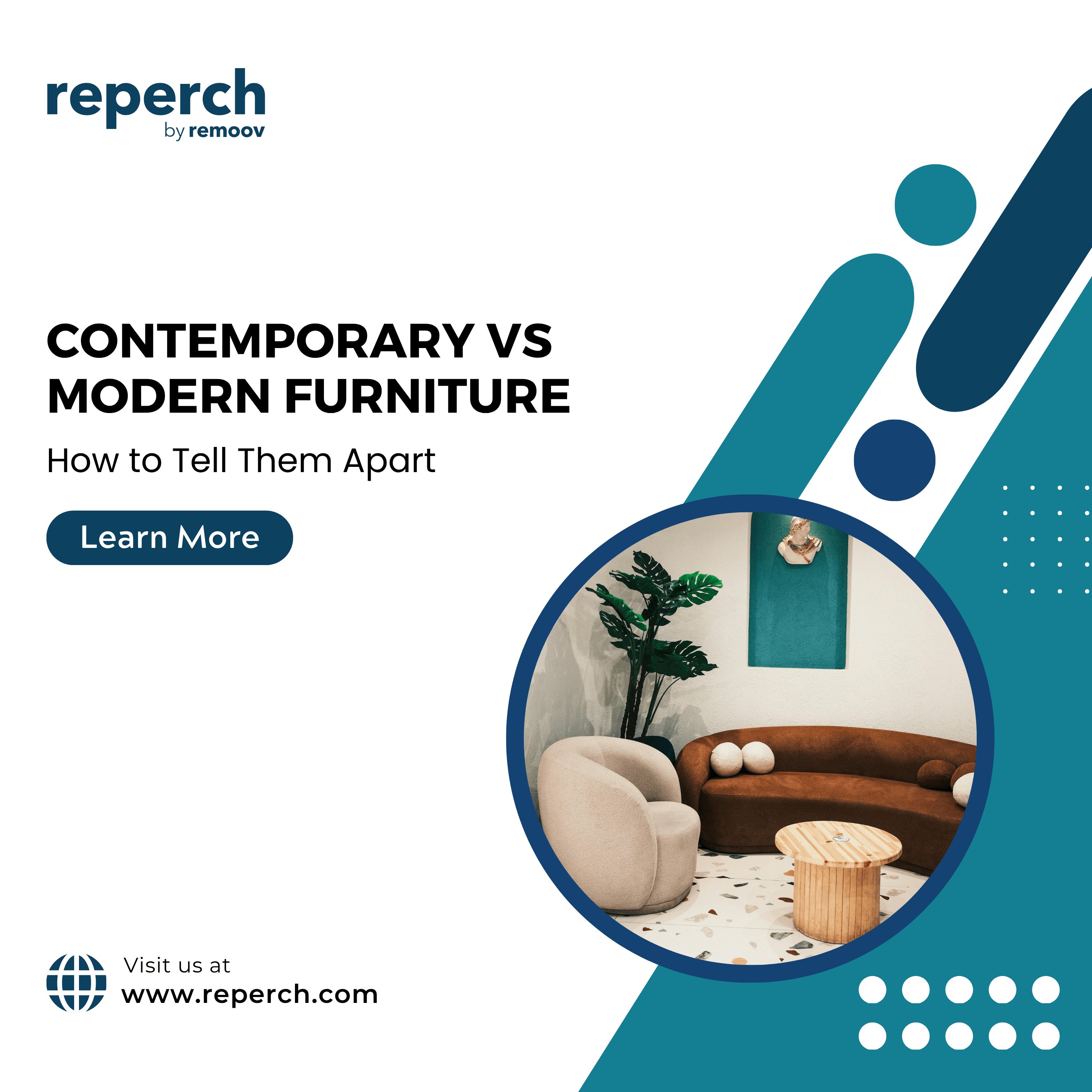
A contemporary living room could use a curved sectional, a rounded stone coffee table, and an oversized accent chair. The layout may feel softer, more sculptural, or more experimental.
Both rooms can look uncluttered, but their furniture creates different visual experiences.
Dining Room
Modern dining furniture often emphasizes balanced proportions and practical construction.
Think of a rectangular wooden table paired with molded chairs or seating with slim metal frames. Materials and silhouettes work together without competing for attention.
Contemporary dining spaces may combine an oval table with an unconventional pedestal base, upholstered dining chairs, and statement lighting.
There's also greater freedom to combine different materials and shapes without following a historically recognizable design formula.
Bedroom
A modern bedroom might feature a low wooden bed frame, matching nightstands, and storage furniture with minimal hardware.
Contemporary bedrooms can introduce upholstered platform beds, rounded bedside tables, textured headboards, or contrasting finishes.
In both cases, comfort and practicality should guide the final selection. A furniture style is only successful when it supports how you actually use the room.
Can You Mix Modern and Contemporary Furniture?
Yes, and combining these styles can create a home that feels personal without appearing inconsistent.
Because contemporary design often draws inspiration from Modernism, many pieces already share compatible proportions, materials, or visual details.
A vintage modern sideboard can sit comfortably beside a newer contemporary sofa. Likewise, a contemporary dining table may work well with classic molded chairs.
The key is finding something that connects the pieces.
Create Consistency Through Materials and Color
Start with a consistent foundation, such as warm wood furniture, neutral upholstery, or a restrained selection of finishes.
For example, a modern walnut coffee table can complement a contemporary cream sofa when surrounding accessories repeat similar warm tones.
You don't need identical furniture, but repeating a few materials or colors helps the room feel intentional.
Another useful technique is balancing visual weight. A substantial contemporary sofa may look better beside a delicate modern accent chair than another oversized piece.
If you're uncertain about creating that balance, the principles of mixing vintage and modern furniture can help connect pieces from different periods without making a room feel disorganized.
Which Style Is Better for Your Home?
Neither modern nor contemporary furniture is universally better. The choice depends on your preferences, budget, and how you want your rooms to function.
Modern furniture may appeal to people who appreciate recognizable design history, natural materials, and pieces that maintain a consistent visual identity.
It's also attractive to secondhand shoppers interested in vintage craftsmanship and distinctive designs from earlier decades.
Contemporary furniture may be a better fit if you enjoy experimenting with current styles, varied textures, and unconventional shapes.
However, remember that these categories don't determine furniture quality.
A contemporary sofa can be exceptionally well constructed, while a poorly maintained vintage modern chair may need significant repairs. Materials, joinery, comfort, and condition deserve attention regardless of appearance.
It's also worth considering how frequently you like to redecorate. A historically grounded modern piece may remain consistent with your preferred aesthetic, while contemporary designs can give you more flexibility to explore changing tastes.
How to Shop for Modern and Contemporary Furniture Secondhand
Shopping secondhand offers an opportunity to compare furniture from different decades and design traditions.
However, online descriptions aren't always precise. A seller may describe a recently manufactured sofa as mid-century modern because it has tapered legs, even though the piece is simply inspired by that period.
Similarly, contemporary furniture may be advertised as modern because of its clean lines.
Instead of relying on labels, examine the furniture itself.
Look at the shape, construction, materials, dimensions, and manufacturer's information. If the piece is advertised as vintage or designer-made, investigate its production history before paying a premium.
You can compare modern furniture with contemporary furniture through Reperch's secondhand collections to see how these styles overlap and differ in actual furnishings.
Inventory changes, so consider each piece individually rather than assuming every item in a style category shares the same characteristics.
When purchasing used furniture, prioritize stability, upholstery condition, functioning hardware, and overall durability. A well-selected piece should meet your practical needs as well as your design preferences.
Common Mistakes When Identifying Modern and Contemporary Furniture
The most common mistake is assuming that modern means new.
A chair manufactured in the 1950s may be modern in design, even though it's now vintage. Conversely, a recently produced chair can follow a historical modernist style.
Another misconception is that contemporary furniture must have bright colors or unusual shapes. Many contemporary designs remain simple, neutral, and restrained.
It's also inaccurate to assume modern furniture uses only natural materials. Designers working within Modernism experimented extensively with industrial materials and manufacturing techniques.
Finally, don't judge a furniture piece by one feature alone. Tapered legs, curved arms, or a neutral color palette can appear across several styles.
The combination of form, materials, historical influence, and construction provides a more reliable identification.
Final Thoughts
The main difference between contemporary vs modern furniture comes down to history and design philosophy. Modern furniture reflects a defined movement that emphasized simplicity, function, and purposeful construction. Contemporary furniture responds to the present, combining influences from multiple periods while continuing to evolve.
You don't need to choose one style exclusively. Some of the most inviting interiors combine classic modern pieces with contemporary furniture, creating rooms that feel both familiar and fresh.
Whether you're furnishing an entire home or adding a single secondhand piece, focus on quality, comfort, proportions, and how the furniture works within your existing space. Understanding the design differences simply makes those decisions easier.
Frequently Asked Questions
What is the main difference between modern and contemporary furniture?
Modern furniture refers to designs rooted in the Modernist movement, particularly the early to mid-20th century. Contemporary furniture reflects current design approaches and changes over time.
Is mid-century modern furniture considered contemporary?
Mid-century modern belongs to the historical Modernist tradition, but its designs frequently appear in contemporary interiors. New furniture can also borrow mid-century characteristics without being an original period piece.
Is contemporary furniture always more expensive than modern furniture?
No. Prices depend on the manufacturer, materials, construction, condition, and demand. Both styles include affordable mass-produced pieces and expensive designer furniture.
Can modern and contemporary furniture go together?
Yes. Their shared appreciation for clean lines and practical design makes them relatively easy to combine. Repeating colors, materials, and proportions can create a cohesive room.
Is contemporary furniture the same as minimalist furniture?
Not necessarily. Contemporary design often uses minimalist elements, but it can also feature bold colors, sculptural forms, textured materials, and decorative details.
Which furniture style is more timeless?
Historically established modern designs are often described as timeless because their forms remain recognizable across decades. Contemporary furniture can also have lasting appeal, although its defining trends evolve.