Heywood-Wakefield furniture has a look that's hard to forget once you've seen it. The warm blonde wood, rounded edges, curved drawer fronts, and simple shapes make these pieces stand out from other vintage furniture. You might come across a Heywood-Wakefield dresser at an estate sale, spot a dining set in a secondhand shop, or inherit a cabinet that's been in the family for decades.
But identifying the real thing isn't always straightforward. Some original pieces have lost their labels, while others have been refinished, repaired, or fitted with replacement hardware. Plenty of furniture from the same period also shares the brand's familiar mid-century appearance.
And then there's the question of value. Some Heywood-Wakefield pieces attract serious collector interest, while others sell for relatively modest amounts. Knowing what you have, when it was made, and how much original character remains can make a significant difference.
Here's how to recognize authentic Heywood-Wakefield furniture, understand its history, and determine what a particular piece might be worth today.
What Is Heywood-Wakefield Furniture?
Heywood-Wakefield is an American furniture name with roots in the 19th century. The company became known for wicker and rattan furniture before developing the streamlined wooden designs that collectors frequently associate with it today.
Its most recognizable pieces emerged during the 1930s and remained popular through the following decades. Rather than relying on heavy carving or decorative details, these designs featured smooth surfaces, soft curves, and practical proportions.
A Heywood-Wakefield bedroom set might include a rounded dresser, matching nightstands, and a simple wooden bed. Dining furniture often featured gently curved chair backs, sculpted legs, and light-colored wood finishes.
These characteristics fit naturally into the broader mid-century modern style, which favored functional furniture, innovative shapes, and designs suited to everyday living.
Although the company's history extends well beyond the mid-century period, its blonde wood furniture remains especially recognizable among vintage collectors.
How to Identify Authentic Heywood-Wakefield Furniture
There isn't one foolproof detail that confirms every genuine piece. The most reliable approach is to examine several features together.
An original manufacturer's mark is useful, but the construction, materials, finish, and hardware can also reveal important information.
1. Look for the Heywood-Wakefield Eagle Stamp
One of the easiest ways to identify later vintage Heywood-Wakefield furniture is through its distinctive eagle logo.
The company introduced this mark in 1949. It features an eagle with the manufacturer's name and can often be found stamped directly into the wood.
Depending on the furniture type, check the upper drawer of a dresser, the underside of a table, or an accessible structural component.
The stamp may be faint, particularly if the furniture has been refinished or heavily cleaned.
However, don't reject a piece simply because you cannot find the eagle. Furniture produced before the logo's introduction often carried paper labels that could easily disappear after decades of use.
Learning how to read maker's marks on vintage furniture can help you interpret stamps, labels, and other identifying details without relying on a single clue.
2. Examine the Wood and Original Finish
Wood is one of the strongest clues when identifying the company's well-known Streamline furniture.
Early examples used maple and birch. By around 1940, birch had become the principal wood used in the company's streamlined wooden furniture.
Unlike many other manufacturers, Heywood-Wakefield generally avoided veneers in these lines, although certain table designs incorporated Formica surfaces.
The famous blonde appearance came largely from the factory finishes rather than the natural color of untreated wood.
Two finishes are particularly familiar to collectors:
- Wheat: A warm golden-blonde finish that can deepen with age.
- Champagne: A lighter finish with a subtle pinkish or blush undertone.
Earlier furniture may have Amber or Bleached markings. These can provide useful evidence when combined with the piece's construction and design.
Years of sunlight, cleaning, and natural aging can change how the original finish appears. A vintage Wheat dresser may look considerably darker today than it did when first manufactured.
Color alone is therefore not enough to establish authenticity.
3. Inspect the Screws and Hardware
Sometimes the smallest details are more revealing than the furniture's overall appearance.
Heywood-Wakefield increasingly used Phillips-head screws during the development of its streamlined furniture. Their shape and placement can help support an identification.
Look beneath the cabinet, inside drawers, and around original fittings.
Older pieces may contain hardware that differs from later examples, and previous owners sometimes replaced screws during repairs.
For that reason, a single slotted screw shouldn't automatically disqualify an otherwise convincing piece.
Drawer pulls also deserve attention. Many classic Heywood-Wakefield cabinets featured distinctive wooden handles that complemented their smooth, rounded forms.
Replacement plastic or metal pulls may look out of place, especially when the mounting holes suggest that different hardware was originally installed.
Original fittings can be particularly important when evaluating a collectible piece.
4. Check Drawer Construction and Interior Markings
Pull out a drawer and examine the underside and back.
Some Heywood-Wakefield case pieces contain handwritten pencil numbers that helped identify drawer placement during manufacturing.
These markings may include a sequence of numbers separated by a dash.
The numbers shouldn't be confused with proof of authenticity by themselves, but they can support other evidence.
Look at the drawer runners, internal dividers, and cabinet backing as well. Certain models used shaped wooden drawer guides, while the materials separating individual drawers changed over the production years.
Construction details become especially valuable when a paper label has disappeared or the original finish has been altered.
A useful companion is understanding joinery in secondhand furniture, since original joints and carefully assembled components can reveal how a vintage cabinet was built.
5. Search for Model Numbers and Date Stamps
Some Heywood-Wakefield furniture includes model information or inspection and shipping dates stamped onto the back or underside.
These markings can help narrow down the production period.
If you find a number, photograph it before cleaning the surface. Faint markings can become difficult to read when viewed from another angle.
Compare the information with vintage manufacturer catalogs, documented collector references, or photographs of known examples.
Matching the model number, dimensions, drawer configuration, and original details provides stronger evidence than identifying a piece solely by its shape.
Popular Heywood-Wakefield Furniture Pieces to Look For
Not every Heywood-Wakefield piece attracts the same interest. Some designs are easier to find, while others appeal to collectors because of their unusual shapes or distinctive construction.
Dressers and Bedroom Furniture
Dressers are among the most recognizable pieces associated with the company's mid-century designs.
Many feature rounded corners, broad drawer fronts, wooden pulls, and warm blonde finishes.
Matching bedroom sets can be appealing, especially when the pieces retain their original hardware and have consistent finishes.
A complete set may also attract buyers who want to furnish an entire room rather than search for individual matching items.
Dining Tables and Chairs
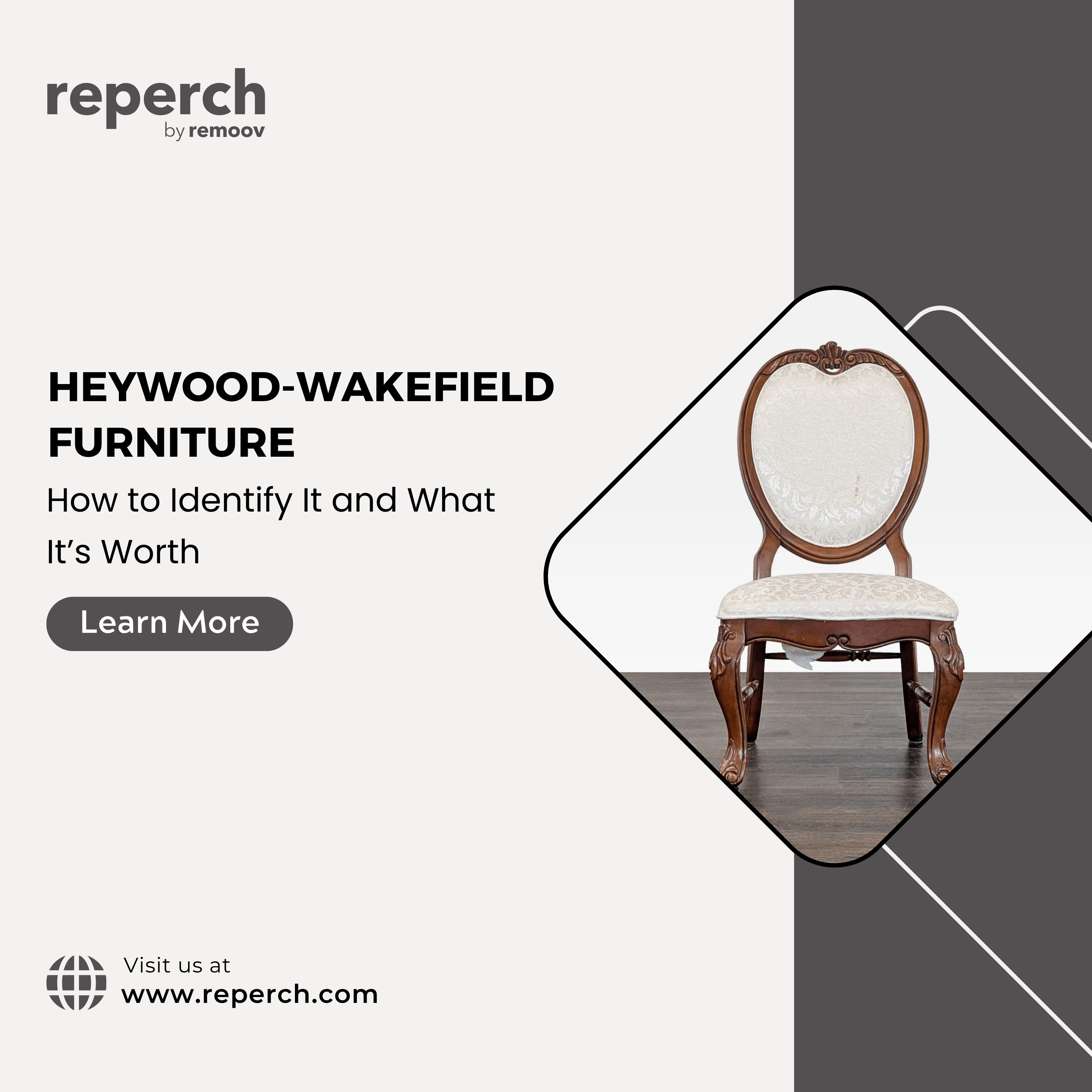
Heywood-Wakefield dining furniture includes extension tables, compact dining tables, and chairs with distinctive wooden backs.
The company's curved and sculptural chair designs are particularly recognizable.
Before purchasing a set, inspect the chair joints, seats, and table extension mechanism. Missing leaves or damaged chairs can affect both usability and resale value.
Matching sets may command more interest than mismatched groups, although condition remains important.
Desks, Bookcases, and Occasional Tables
Desks, bookcases, coffee tables, and end tables also appear regularly in vintage furniture markets.
Some desks feature rounded corners and integrated storage, giving them a distinctive appearance without elaborate decoration.
Smaller tables can be easier to place in contemporary homes, which may broaden their appeal.
However, collectible value isn't determined by size alone. An uncommon design in excellent condition may attract more interest than a larger, heavily damaged cabinet.
What Is Heywood-Wakefield Furniture Worth Today?
The value of vintage Heywood-Wakefield furniture varies considerably.
There is no single price that applies to every dresser, table, or chair bearing the company's name.
Some ordinary pieces sell for a few hundred dollars, while desirable examples or complete sets can reach substantially higher amounts. Exceptional auction results may be far above what a typical local buyer would pay.
For context, documented sales have included a vintage Heywood-Wakefield desk at approximately $1,400, while a specialist auction record for a chair and ottoman reached $7,920 in 2025.
These are individual examples, not standard prices or reliable estimates for other pieces.
What Influences Resale Value?
Several factors determine what a buyer may be willing to pay.
Condition: A sturdy dresser with working drawers generally appeals to more buyers than one with broken runners, loose joints, or significant water damage.
Originality: Original handles, finishes, labels, and structural components can make a piece more attractive to collectors.
Rarity: Less common models or distinctive shapes may attract stronger interest, particularly when the design can be verified.
Completeness: Matching chairs, extension leaves, and coordinated bedroom pieces can affect demand.
Location: Large furniture is expensive to transport. A valuable cabinet may sell for less locally if the buyer pool is limited.
The best way to evaluate a piece is to find comparable completed sales with similar model numbers, condition, and original details.
A secondhand furniture pricing guide can help you account for condition, repairs, and local demand rather than relying entirely on asking prices.
Does Refinishing Affect Heywood-Wakefield Furniture Value?
Refinishing is one of the most important considerations for collectors.
Many vintage Heywood-Wakefield pieces originally had specialized factory finishes that contributed to their familiar appearance.
When those finishes are stripped away, the exposed wood may look very different.
A refinished cabinet can still be attractive and useful, but collectors may prefer examples that retain their original surfaces.
The effect on value depends on the piece, the quality of the restoration, and the buyer's priorities.
Should You Restore an Original Finish?
If the finish is scratched or lightly worn, cleaning and careful conservation may be preferable to stripping everything down.
Avoid aggressive sanding, particularly around stamped identification marks and distinctive curved details.
If major restoration is necessary, consider consulting someone experienced with Heywood-Wakefield furniture.
A knowledgeable restorer may be able to preserve more of the original appearance than a general-purpose refinishing project.
For furniture intended primarily for everyday use, a well-executed restoration may still be a sensible choice.
The important thing is understanding the trade-off between practical improvement and originality.
How to Spot Heywood-Wakefield Reproductions
Not every blonde wood cabinet with rounded edges is an original Heywood-Wakefield piece.
Other manufacturers produced furniture inspired by similar design ideas, and modern reproductions can resemble vintage examples.
Some contemporary pieces are also manufactured under the Heywood-Wakefield name, making it important to distinguish between vintage production and later furniture.
Look beyond the overall silhouette.
Compare manufacturer markings, hardware, construction details, dimensions, and finishes with documented examples.
A seller describing a cabinet as "Heywood-Wakefield style" may simply mean that it resembles the brand's designs.
That's not necessarily a bad purchase, but it shouldn't automatically be priced as a verified original.
When buying remotely, request detailed photographs before agreeing to pay. The advice in shopping for vintage furniture online is especially useful when evaluating identification claims and condition from photographs.
If a high-priced piece cannot be authenticated through available evidence, an experienced vintage furniture dealer may be able to provide a more informed assessment.
Where to Buy or Sell Heywood-Wakefield Furniture
Estate sales, antique shops, vintage furniture dealers, and online resale marketplaces are common places to encounter Heywood-Wakefield pieces.
Estate sales can be particularly interesting because furniture may remain in the same household for decades, sometimes with matching pieces or original documentation.
Specialist dealers may offer better identification information, although their asking prices can reflect restoration, storage, and retail overhead.
Reperch also offers secondhand furniture, including vintage and mid-century designs when available. Comparing dimensions, condition, and construction across different listings can help establish what represents good value.
If you're selling, photograph the full piece, the underside, identification marks, drawer interiors, and any visible damage.
Be transparent about refinishing and replacement hardware. Buyers interested in collectible furniture often want that information before discussing price.
How to Care for Vintage Heywood-Wakefield Furniture
Good maintenance can help preserve both the appearance and usefulness of an older piece.
Keep furniture away from prolonged direct sunlight, which can gradually alter wood and finish colors.
Avoid leaving standing water, hot dishes, or damp plant pots on finished surfaces.
For everyday cleaning, use a soft, dry cloth or an appropriate gentle method recommended for the existing finish. Avoid harsh solvents and abrasive products.
Check drawer runners and joints periodically, especially on furniture used frequently.
If a structural repair becomes necessary, address it before the damage spreads. A loose drawer runner or chair joint is generally easier to deal with early than after repeated use causes further deterioration.
Is Heywood-Wakefield Furniture a Good Investment?
Heywood-Wakefield remains appealing because its designs combine recognizable mid-century style with practical household furniture.
That doesn't mean every piece will appreciate in value.
Collectible furniture prices can change with decorating trends, regional demand, and overall condition.
For someone furnishing a home, the greatest value may come from purchasing a durable vintage piece that looks good and serves a useful purpose.
Collectors may place more emphasis on rarity, original finishes, and verified production details.
Neither approach is wrong. It's simply important to know whether you're buying something to use, restore, collect, or resell.
Final Thoughts
Heywood-Wakefield furniture has earned its place in American furniture history through distinctive forms, light wood finishes, and practical designs that still feel at home in modern interiors.
Identifying authentic pieces requires more than recognizing blonde wood or curved drawer fronts. Manufacturer marks, construction details, hardware, finishes, and model information all help establish what you're looking at.
When it comes to value, condition and originality often matter as much as the design itself.
Whether you've found a dresser at an estate sale or inherited a dining set, taking the time to research its details can help you appreciate what you own and make a more informed buying or selling decision.
Frequently Asked Questions
How can I tell if my Heywood-Wakefield furniture is authentic?
Look for the eagle stamp on later vintage pieces, earlier paper labels, original wood finishes, distinctive construction details, and model or date markings. Compare several clues with documented manufacturer references.
Is all Heywood-Wakefield furniture marked?
No. Early furniture frequently used paper labels that could become damaged or disappear. Missing identification marks don't automatically mean a piece is a reproduction.
What wood is vintage Heywood-Wakefield furniture made from?
Its well-known Streamline furniture initially used maple and birch, with birch becoming the principal material around 1940. Other Heywood-Wakefield furniture lines and production periods may use different materials.
What are the most recognizable Heywood-Wakefield finishes?
Wheat and Champagne are especially associated with vintage blonde wood furniture. Earlier pieces may also carry Amber or Bleached finish markings.
Is Heywood-Wakefield furniture valuable?
Some pieces are collectible and can sell for substantial amounts, particularly desirable models in excellent condition. However, resale prices vary significantly by design, condition, originality, and location.
Does refinishing lower Heywood-Wakefield furniture value?
It can, especially when collectors prefer an original factory finish. However, professional restoration may improve the usefulness and appeal of badly damaged furniture.