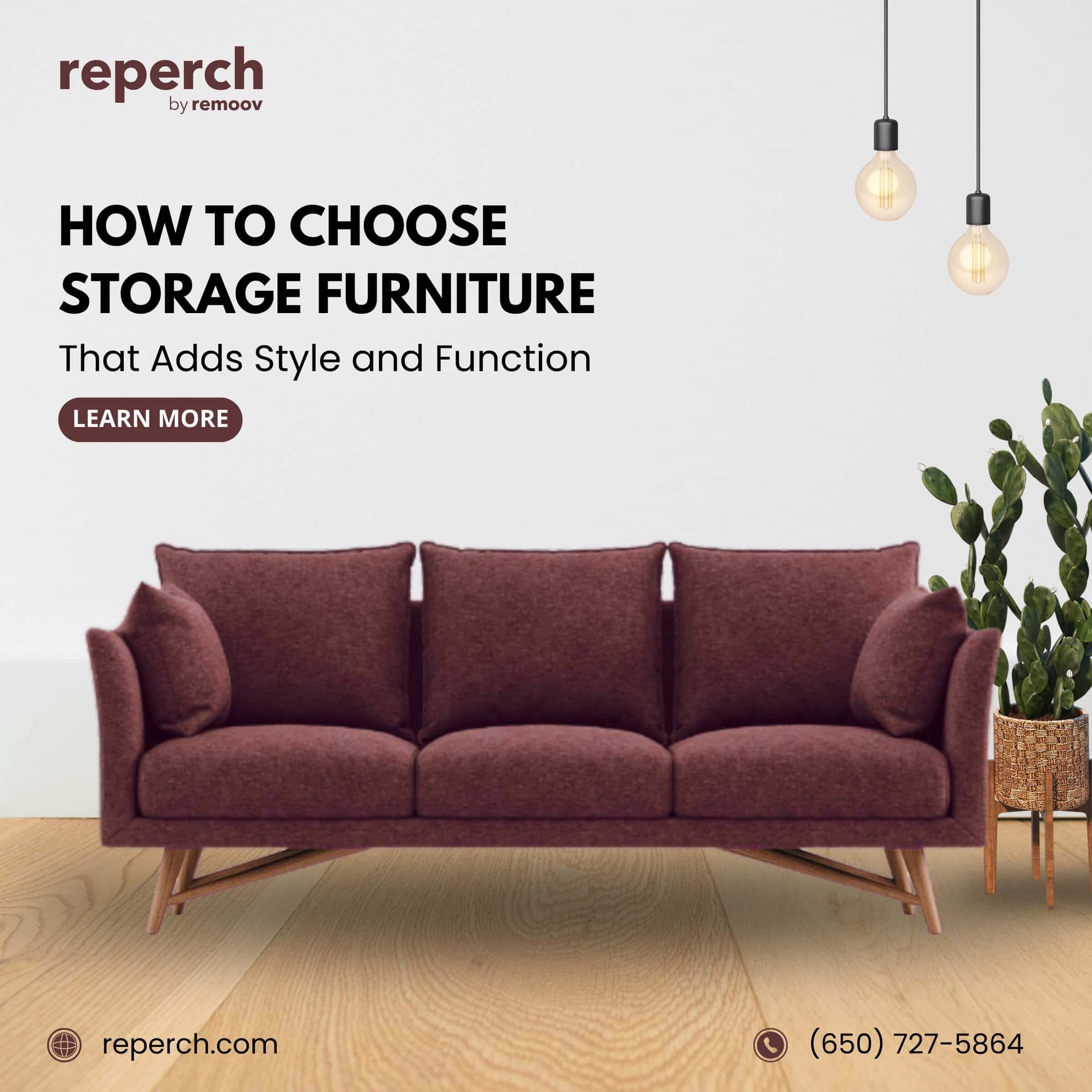
Storage furniture should do two jobs at once. It should make your home easier to live in and make the room look better, not heavier or more crowded. The best pieces feel like they belong in the space, hide the clutter you do not want to see, and still give you a surface to style with intention.
This guide walks you through how to choose storage furniture that actually fits your home and your routine. You will learn how to assess what you need to store, how to pick the right format for each room, what materials hold up best, and how to avoid the most common mistakes that make storage feel messy instead of helpful. Along the way, you will also see where Reperch fits in when you want storage that looks good and feels practical, without the usual secondhand guesswork.
Start With the Real Problem You Are Trying to Solve
Before you shop, be clear about what is creating clutter in the first place. Storage furniture works best when it is chosen for a specific purpose, not because it looks nice in a photo.
Ask yourself what you are trying to fix:
Do you need a place to hide cables, remotes, and gaming gear
Do you need closed storage for kids’ items that pile up fast
Do you need more drawer space for clothes because the closet is small
Do you need a surface plus storage for entertaining, like a sideboard
Do you need display space that still looks calm, like a bookcase with doors
When you shop with a clear target, you buy fewer pieces and the room ends up feeling more finished.
Measure the Space the Smart Way
Storage furniture is one of the easiest ways to accidentally crowd a room. The mistake is measuring only the wall and forgetting how people move through the space.
Measure three things:
The area where the piece will sit
The clearance you need around it for walking
The space required for doors, drawers, and lids to open
A few practical checks that prevent regret:
If it has drawers, make sure they can fully extend without hitting a sofa, bed, or table
If it has doors, confirm the swing direction will not block walkways
If it is a media console, confirm depth does not eat the room’s main path
If it is tall, check nearby windows, vents, and wall art placement
If you cannot picture it, mark the footprint with painter’s tape. It is one of the fastest ways to see whether the piece will feel balanced or bulky.
Choose the Right Type of Storage for How You Live
Not all storage furniture works the same way. The best option depends on what you store and how often you need access.
Open storage works best when
Open shelves are ideal for items you use and want to see.
Good for:
books and décor
baskets that hold loose items
frequently used media gear with ventilation needs
The key is to keep open storage edited. If every shelf is packed, the room looks busy even if it is technically organized.
Closed storage works best when
Closed cabinets and drawers are best when you want the room to feel calm.
Good for:
cables, chargers, remotes
toys and games
paperwork, extra linens, seasonal items
anything that looks messy when visible
If your goal is a cleaner-looking room, closed storage usually wins.
Mixed storage is usually the best of both
A piece that combines drawers or cabinets with a few open shelves tends to work best in real homes because it balances function and style without forcing everything on display.
Pick Storage Furniture by Room
Storage should match the room’s daily habits. A piece that is perfect in a dining room can be annoying in a bedroom.
Living room
Most living rooms need a mix of hidden and accessible storage.
Strong choices:
Media console or TV stand with doors for hiding cords and devices
Sideboard or low cabinet for games, throws, and extra items
Storage ottoman for blankets and quick cleanups
Bookcase with closed lower cabinets to keep the bottom half calm
Living room storage is one of the best categories to buy pre-owned because many people sell consoles and cabinets during moves or after switching to wall-mounted TVs. Reperch can help you find quality used storage pieces that feel intentional, not random, so your living room looks cleaner without paying new furniture prices.
Bedroom
Bedroom storage is about daily efficiency. If the storage is awkward to access, it becomes clutter again.
Strong choices:
Two nightstands with drawers if you want surfaces to stay clear
Dresser that fits the wall and still allows drawers to open fully
Storage bench at the end of the bed for linens or off-season items
Underbed storage options if closet space is limited
A quick rule that helps: choose nightstands that sit close to mattress height so they feel natural to use.
Dining room
Dining storage is often the difference between a table that feels styled and a table that becomes a dumping ground.
Strong choices:
Sideboard or buffet for dishes, serving pieces, linens
Bar cabinet if you entertain and want bottles and glassware contained
Display cabinet only if you are willing to keep it curated
Reperch fits nicely here because secondhand sideboards and buffets can offer higher quality materials and better build than many new budget pieces, especially if you prioritize solid construction and stable frames.
Entryway
Entryways need storage that supports fast routines.
Strong choices:
Slim console with drawers for keys and small items
Shoe cabinet with doors to hide visual clutter
Bench with storage so the space stays functional
If the entryway is tight, focus on vertical storage and pieces with smaller depth.
Home office
Office storage is about keeping surfaces clear.
Strong choices:
Desk with drawers for daily supplies
Filing cabinet or closed shelf unit for paperwork
Bookcase with baskets for flexible organization
If you work from home often, avoid storage that forces you to stack items on top. That is how clutter returns.
Materials That Hold Up Best for Storage Furniture
Storage furniture gets opened, slammed, dragged, and loaded. Materials matter, especially for drawers, shelves, and doors.
Solid wood
Best for long-term durability, refinishing potential, and heavy use.
Look for tight joints and sturdy drawer construction.
Veneer over plywood
A strong middle ground when well-made. It can hold up very well and often feels more stable than cheaper engineered wood.
MDF or particle board
Can work for light use, but edges chip more easily and moisture can cause swelling. Avoid for pieces that will be moved often or used heavily.
Metal
Great for strength and minimal maintenance, especially for shelving and office storage. Check welds and stability.
Glass or acrylic
Best for display, not heavy storage. They can make small rooms feel lighter, but they show fingerprints and need care.
Make Storage Look Like Part of the Design
Storage furniture should not feel like it was added as an afterthought. A few simple styling choices make a big difference.
Use the rule of repetition
Repeat one or two finishes so storage looks intentional.
Examples:
warm wood + black metal
walnut + brass accents
white + natural oak tones
Keep one section visually quiet
If the piece has a top surface, do not fill it completely. Leave breathing room so the room feels calm.
Use baskets as “invisible organizers”
Baskets make open shelves feel tidy because they hide the small stuff. This is one of the easiest ways to make open storage work in real homes.
Balance scale with nearby furniture
A long low console needs something above it to balance, like art, a mirror, or a pair of lamps. A tall cabinet should not be the only vertical element in the room.
Common Mistakes That Make Storage Feel Worse
Storage furniture can backfire when the wrong format or size gets chosen.
Avoid these common issues:
Buying storage that is too deep for the space
Choosing open shelves when you actually need hidden storage
Ignoring drawer and door clearance
Mixing too many wood tones and finishes with no plan
Overfilling every shelf and surface
Buying a piece that does not match what you truly need to store
If the room still feels messy after adding storage, the issue is usually not the amount of storage. It is the type of storage.
How Reperch Helps You Choose Storage With Less Guesswork
Storage furniture is one of the best categories to shop pre-owned because many great pieces are sold for reasons that have nothing to do with quality. People move, redecorate, or replace large units with built-ins. That creates a steady supply of strong options if you know what to look for.
Reperch helps you shop storage furniture in a more practical way, especially when you want pieces that feel cohesive with your home. When you have your measurements and a clear purpose, Reperch makes it easier to focus on storage that fits your room, supports daily life, and looks like it belongs there.
Quick Storage Furniture Checklist Before You Buy
It solves a specific storage problem in your home
The size fits your wall and your walkways
Doors and drawers can open fully
The storage type matches your lifestyle, open, closed, or mixed
Materials feel sturdy for daily use
It supports the room’s style through consistent finishes
Final Thoughts
Good storage furniture should make your home feel lighter, not more crowded. Start with what you need to store, measure with real movement in mind, choose the right storage format for each room, and prioritize pieces that balance function with calm design.
When you do that, storage stops being a clutter solution and becomes part of the style of the room, which is exactly how it should feel.