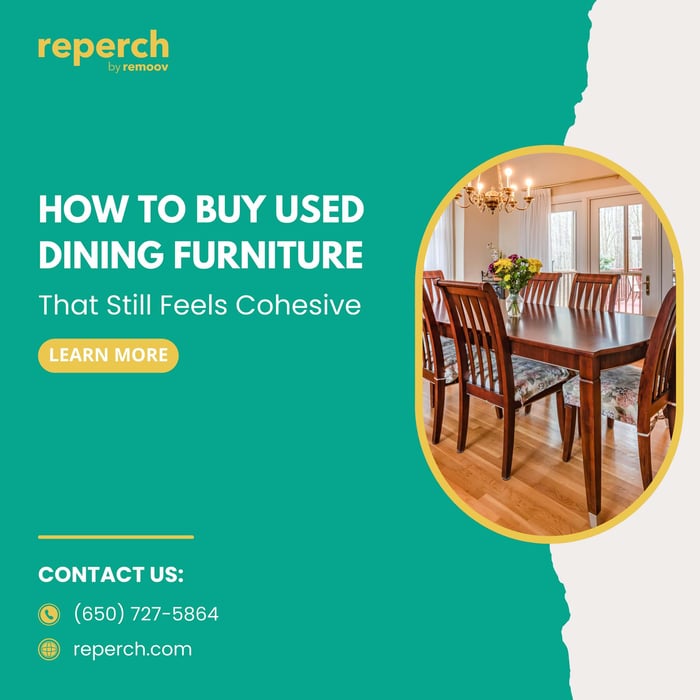
Buying used dining furniture is one of the smartest ways to upgrade your home for less. Dining tables, chairs, and sideboards are expensive new, and secondhand options often give you better materials and better craftsmanship for the same budget.
The challenge is making it look intentional. A table from one seller, chairs from another, and a sideboard from a third can start to feel random fast.
The goal is not to make everything match perfectly. The goal is to create a dining space that feels cohesive, comfortable, and pulled together, even if every piece came from a different place. This guide shows you how to do it step by step, with practical checks you can use while shopping and tips for building the look through Reperch.
Define what “cohesive” means in a real dining room
A cohesive dining setup is not a showroom set. It is a space where pieces share a few consistent details so your eye reads the room as one story.
Cohesion usually comes from repeating:
a wood tone or undertone
a metal finish
a chair silhouette
a color palette
a texture, like leather or linen
You only need two or three of these threads. If you try to match everything, the room can feel flat. If nothing repeats, the room feels accidental.
Start with the table as your anchor
The dining table should almost always be your anchor. It is the largest item, the hardest to replace, and the piece that sets the tone.
When shopping secondhand, focus on a table that:
fits your space and your daily routine
feels stable and solid
has a surface you can live with
has a shape that works for your room
On Reperch, starting with the table helps you shop with direction. Once the table is chosen, everything else becomes easier to filter because you have a reference point for finish, scale, and style.
Quick table sizing check
Before you buy, measure:
the room footprint where the table will sit
the clearance behind chairs for moving around
any tight delivery turns on the way in
A great used table is not a great deal if it blocks walkways or cannot fit through your door.
Choose one cohesion strategy before you buy chairs
Most dining rooms look best when you commit to one of these three chair strategies.
Strategy 1: A true set
Same maker, same style, same finish.
This looks instantly cohesive, but it can be harder to find in the right size and condition.
Strategy 2: A near set
Chairs match in silhouette but may vary slightly in finish or upholstery.
This gives the collected, designer look and is often easier to build secondhand.
Strategy 3: A mixed look with one repeating thread
Different chairs that share one strong connection, such as:
all wood chairs in the same undertone
all chairs with black frames
all chairs with the same upholstery color
This is the most flexible option and often works best when you are sourcing through Reperch over time.
Match undertones, not exact wood species
One of the biggest mistakes in secondhand dining rooms is mixing wood tones that clash.
You do not need identical wood species. You need undertones that play well together.
A simple way to think about it:
Warm undertones: oak, cherry, mahogany, teak
Cool undertones: ash, grey-washed finishes, charcoal stains
Neutral undertones: walnut
If your table is warm, pick chairs that feel warm as well. If your table is cool, avoid bringing in warm honey tones that fight it.
If you want to mix woods on purpose, make it intentional by repeating the second wood tone at least twice in the room, such as a chair and a sideboard, or chairs and a shelf.
Keep the metal finishes consistent
Metal finishes are the easiest detail to repeat, and they make a dining setup feel designed quickly.
Pick one main finish:
matte black
brushed brass
brushed nickel
chrome
antique bronze
Then use it at least twice, ideally three times, across the dining area:
chair legs
light fixture
sideboard hardware
picture frames
mirror frame
If you are buying a table with metal legs, let that finish guide your choices for chairs, lighting, or hardware.
Make scale your non-negotiable rule
Scale is what makes a dining set feel cohesive even when styles vary.
If the table is heavy and chunky, delicate skinny chairs can look out of place. If the table is sleek and light, bulky upholstered chairs can overpower it.
Use these quick checks:
chair seat height should work with table height
chair width should fit the table spacing comfortably
table thickness and chair visual weight should feel balanced
chair back height should feel consistent if chairs are mixed
A good rule for spacing is to aim for comfortable elbow room at the table. If chairs are too wide, the room will feel crowded even if the table itself fits.
Use comfort as part of cohesion
A dining room looks cohesive when the chairs feel consistent in comfort and function, not just in style.
Before buying used chairs, test:
wobble on a flat floor
stability when leaning back slightly
seat comfort for at least a minute
joint strength underneath the seat
A room full of mismatched chairs can still feel cohesive if every chair is sturdy and comfortable. A room with “matching” chairs that wobble or feel miserable will never feel finished.
If you are sourcing chairs through Reperch, look for listings that make it easy to assess condition and pick pieces that feel solid for everyday use.
Decide what you want to match and what you want to vary
The easiest way to build a cohesive used dining setup is to choose one thing to match and one thing to vary.
A few combinations that work well:
Match chair silhouette, vary upholstery
Match wood undertone, vary chair styles slightly
Match upholstery color, vary chair frames
Match metal finish, vary wood tone slightly
This keeps the room interesting without looking random.
Use a sideboard or buffet as the bridge piece
In many dining rooms, the sideboard is what makes the whole setup feel intentional. It connects the dining table and chairs and gives you a place to repeat finishes.
If you are building a secondhand dining look, a sideboard can:
repeat the table wood tone
bring in the chair metal finish
add storage that reduces visual clutter
create a strong focal line in the room
This is another place where Reperch helps. Instead of trying to find everything at once, you can build the room in phases, table first, chairs next, then a sideboard that ties it together.
Cohesion is also lighting and layout
Even perfect furniture can look random if the room setup is off.
A few easy ways to make used dining furniture feel cohesive:
use one rug to anchor the zone if the dining area is part of an open plan space
keep the pendant or ceiling fixture aligned with the table
repeat an accent color in art and textiles
avoid cluttering the table with too many unrelated decor items
If the dining room shares space with the living room, cohesion becomes even more about repeating color and finishes across both zones. A shared wood tone and one shared metal finish can make the whole open area feel like one home instead of two competing rooms.
Smart secondhand shopping rules for dining furniture
Used dining furniture is a high-value category, but it is also high-use. Shop with a simple system.
Inspect before you commit
Check:
table wobble
leg joints and underside supports
chair joints and stretchers
drawer function for sideboards
water rings and swelling on surfaces
Ask the right questions
If buying from a seller, ask:
has it been used daily or occasionally
any wobble or repairs
any smoke or pet exposure for upholstered chairs
why it is being sold
Factor transport early
Dining tables are large and awkward. Plan:
pickup vehicle
straps and blankets
door and stair measurements
help for lifting
A great deal becomes stressful when you realize you cannot move it safely.
Where Reperch fits in
Buying used dining furniture feels easier when you can shop with a plan instead of chasing random listings.
Reperch is especially helpful for building a cohesive dining setup because you can:
start with an anchor table that fits your space
add sturdy chairs that match your comfort and style needs
look for a sideboard that repeats your key finishes
build a coordinated look over time instead of trying to find a perfect set in one day
This approach also makes it easier to invest in quality where it matters most, like a solid wood table or durable chairs, while still saving compared to buying new.
Quick checklist you can use while shopping
Before you buy used dining furniture, confirm:
the table fits your room and delivery path
chair seat height works with the table
wood undertones do not clash
one metal finish repeats at least twice
chairs feel stable and comfortable
any sideboard drawers and doors work smoothly
you have a transport plan
Final thoughts
A cohesive dining room does not require a matching retail set. It requires a few clear decisions.
Start with an anchor table, choose a simple cohesion strategy for chairs, match undertones and finishes, and prioritize scale and comfort. Then use a bridge piece like a sideboard and a few repeated details to make everything feel intentional.
If you shop patiently and build the room in phases, you can create a dining space that looks collected, feels comfortable, and works for everyday life, while still getting the value of secondhand through Reperch.