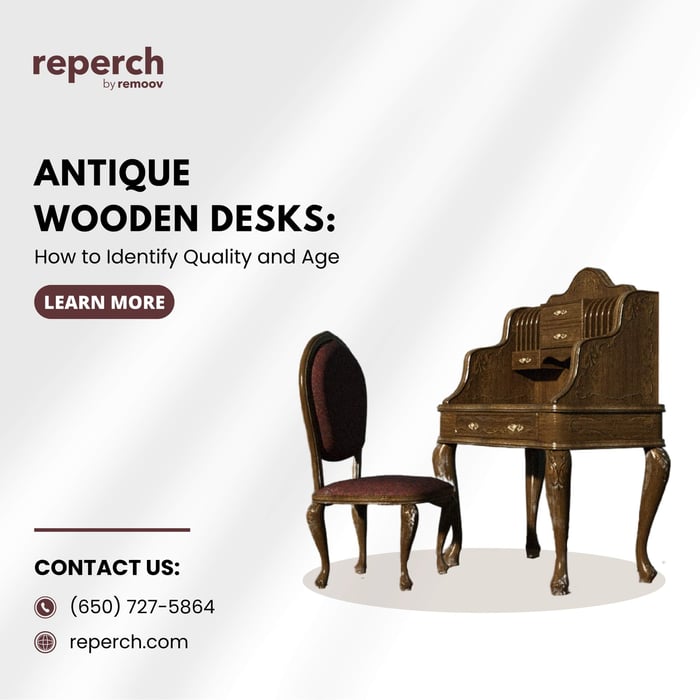
Antique wooden desks have a kind of presence that newer furniture often cannot match. They bring weight, warmth, and history into a room all at once. A good one can make a home office feel more grounded, give a bedroom corner more purpose, or turn a study into a space that feels thoughtful instead of temporary.
That is part of why they remain so desirable.
People are drawn to antique wooden desks for different reasons. Some love the craftsmanship. Some want a piece that feels more personal than a standard office desk. Others are interested in the history and want to know whether the desk they found is actually old, genuinely well made, and worth bringing home.
That is where things get more complicated.
Not every old-looking desk is truly antique. Not every antique desk is high quality. And not every solid-looking wooden desk has the age, construction, or condition that makes it a smart buy. Some pieces are beautifully made and have aged well for more than a century. Others are later reproductions or heavily altered pieces that only borrow the look.
If you want to shop more confidently, it helps to know what to examine.
This guide breaks down how to identify quality and age in antique wooden desks, what features matter most, and what to check before you buy. If you are comparing older pieces online, understanding how to shop for vintage furniture can also help you review photos, measurements, condition notes, and seller details more carefully.
What Counts as an Antique Wooden Desk?
In the furniture world, an item is generally considered antique when it is around 100 years old or older. That means a desk from the early 1920s or before would typically qualify.
That age threshold matters, but it is only the starting point.
Two desks can both be old and still feel very different in value and quality. One may have excellent joinery, beautiful wood, and a well-preserved structure. Another may have heavy wear, poor repairs, or later parts that affect both function and desirability. That is why learning to read the details matters so much.
A desk being antique does not automatically make it a great piece. What matters is how it was made, how it has held up, and whether it still offers the kind of structure and presence that make antique furniture worth owning.
Why Antique Wooden Desks Stand Out
The best antique wooden desks tend to offer something hard to find in newer furniture at the same price point: substance.
They often have stronger materials, better proportions, and more thoughtful construction. Even a simpler antique desk can feel more grounded than a flat-pack alternative because the wood, joinery, and detailing give it real depth. Drawer fronts feel thicker. Legs feel steadier. Surfaces look richer. Hardware often has more character.
There is also the visual side.
Antique desks usually age in a way that adds appeal rather than removing it. The wood develops patina. The finish softens. The edges show gentle wear. Small signs of use can make the desk feel more authentic and lived in instead of worn out.
That combination of beauty and practicality is what keeps people coming back to them.
Start With the Wood
One of the first clues to both quality and age is the wood itself.
Older desks were often made from woods such as mahogany, oak, walnut, cherry, rosewood, and other durable hardwoods. Some were made from solid wood throughout. Others used high-quality veneers over strong secondary woods. A veneer is not automatically a bad sign. In many antique pieces, beautiful veneers were used intentionally to showcase grain patterns and decorative surfaces in a refined way.
The key is quality.
Good wood tends to show depth, variation, and richness. It should not look flat or overly artificial. Grain should feel natural. Color should not be too uniform. On a well-aged desk, the finish may have mellowed over time rather than sitting like a thick plastic coating on the surface.
Look underneath the desk or inside drawers if you can. These less-exposed areas often tell you more than the polished top. You may see differences in tone, signs of age, tool marks, or secondary woods that help you understand how the desk was made.
Very thin, cheap-looking veneer, peeling laminate, or obvious manufactured board are all warning signs if you are looking for a true antique wooden desk.
Learn to Read the Construction
Construction is one of the strongest indicators of quality.
A well-made antique desk should feel sturdy and thoughtfully built. That does not mean every line will be perfectly machine-clean. In fact, some small irregularities can be a sign of handwork. What matters more is the overall integrity of the piece. Learning about spotting quality in secondhand furniture can also help you evaluate joinery, materials, and structural details before buying.
Start with the drawers.
Older, better-made desks often have dovetail joints on the drawers. Hand-cut dovetails may look slightly uneven, while later machine-cut dovetails tend to be more regular. Both can still be signs of quality, but they help place the desk in a broader timeline. Drawer bottoms, drawer sides, and runners can also tell you a lot about the desk’s age and build.
Then look at the frame.
Is the desk solid when you touch it? Do the legs and sides feel integrated into the structure, or does the whole thing shift too easily? Are the joints secure? A good antique desk may show age, but it should still feel like a strong, coherent piece of furniture.
Also pay attention to the underside and back. Antique desks were not always finished the same way on hidden surfaces, but the construction should still feel intentional. Rough patches alone do not mean low quality, especially if they reflect age and handwork. What matters is whether the structure feels sound.
Check the Hardware Carefully
Hardware tells a surprisingly useful story.
Drawer pulls, knobs, escutcheons, locks, hinges, and screws can all offer clues about age and authenticity. Original hardware often adds value because it helps preserve the desk’s character. Replaced hardware is not always a deal breaker, but it should make you pause and look more closely.
Ask yourself a few questions.
Does the hardware match the style of the desk? Do all the pieces look consistent with one another? Are there extra holes that suggest later replacements? Do the locks and escutcheons appear appropriate for the period?
Screws can also be revealing. Very modern screws in a desk that is supposed to be much older may suggest repairs or later assembly. That does not necessarily make the piece undesirable, but it can change how you judge age and value.
Hardware is one of those details people overlook until it feels obviously wrong. When it is right, it usually supports the desk quietly. When it is wrong, it can disrupt the whole impression.
Pay Attention to Wear and Patina
Real age usually leaves clues.
Antique wooden desks should not look brand new. It should show some evidence of time, use, and handling. The challenge is learning the difference between natural age and damage, or between real patina and artificial distressing.
Patina is one of the most appealing parts of old wood furniture. It is the softened finish, slight darkening, edge wear, and depth that builds over decades. Good patina makes a desk feel richer and more believable. It does not usually look random or theatrical. It looks earned.
Natural wear often shows up where you would expect it.
You may see gentle rub marks around drawer pulls, softened edges where hands have touched the desk over the years, or slight variation in tone where sunlight affected the wood differently. Those kinds of details usually add character.
Damage is different.
Deep cracks, unstable legs, major veneer loss, water swelling, and serious structural repairs affect more than appearance. Those are not the same thing as honest age. When shopping, it helps to ask yourself whether the desk looks well used or simply worn down. Those are not the same.
Desk Style Can Help You Estimate Age
Style is another important clue because certain types of desks were especially popular in different periods.
Writing Desks
A writing desk is a broad category, but antique writing desks often have a relatively simple top with room for correspondence, ledgers, or handwork. Some are elegant and slender. Others are more substantial. Because the category is wide, style details and construction matter more than the name alone.
Pedestal Desks
Pedestal desks feature a central kneehole space with storage sections on either side. These became especially prominent in the eighteenth and nineteenth centuries and remain one of the most recognizable classic desk forms. Older examples often feel balanced, weighty, and practical.
Secretary Desks
Secretary desks are designed to combine writing space and storage. They often feature a drop-front writing surface with drawers, cubbies, or compartments inside. Some are compact. Others are more like full cabinets. If you like this style, learning more about drop-front desk storage can help you understand why secretary desks remain so useful in smaller homes and multipurpose rooms.
Davenport Desks
Davenport desks are compact antique desks with a slanted writing surface and small drawers, often arranged to one side. They became popular in the nineteenth century and are especially appealing when you want a piece with strong antique character in a smaller footprint.
Roll-Top Desks
Roll-top desks became especially common in the nineteenth century and into the early twentieth century. The tambour top, made of linked slats that roll open and closed, is their defining feature. These desks often have generous storage and a very recognizable silhouette.
Understanding the desk type does not give you an exact date on its own, but it can narrow the field. From there, wood, joinery, finish, and hardware help tell the rest of the story.
Signs of Quality in Antique Wooden Desks
When trying to judge whether a desk is truly worth buying, a few qualities matter more than anything else.
Strong Materials
Good antique desks use quality hardwoods or fine veneers over solid secondary woods. They feel substantial. The wood has depth and weight. It does not feel flimsy or hollow.
Solid Joinery
Dovetailed drawers, secure joints, and a stable frame are all strong indicators. A desk may show age, but it should still hold together with confidence.
Thoughtful Proportions
High-quality antique desks often look balanced even before you know why. The drawers feel right for the size of the frame. The leg spacing works visually. The top does not feel too heavy or too slight. These proportion choices are often one of the reasons older furniture feels so satisfying.
Functional Drawers
Drawers should open and close reasonably well. They do not have to move like brand-new cabinetry, but they should still feel usable. If every drawer sticks badly or sits crookedly, that usually points to problems worth investigating.
Surface Integrity
Some wear is expected, but the writing surface should still feel dependable. It should not be badly warped, heavily cracked, or soft from water damage. A desk can have age and still remain very usable.
Red Flags to Watch For
Not every old desk is a good desk.
A few signs should make you slow down and inspect more carefully.
Major wobbling or structural looseness is a concern, especially if the joints are failing. Heavy veneer loss, large cracks, or swelling from moisture can be difficult and expensive to repair well. Excessively glossy refinishing may hide the wood’s age rather than preserve it. Poor repairs, mismatched hardware, or modern replacement parts can also affect both usability and value.
Be cautious with pieces that look too perfect in the wrong way.
A desk that claims great age but has no visible signs of wear, no depth in the finish, and suspiciously new-looking hardware may not be what it seems. Reproductions and revival pieces can still be attractive and useful, but they are not the same as older originals.
Questions to Ask Before Buying
If you are buying from a seller, dealer, or marketplace listing, a few simple questions can help you make a better decision.
Has the desk been refinished or restored?
Are the drawer pulls and locks original?
Has any veneer been replaced?
Are there cracks, repairs, or structural issues?
Do all drawers open properly?
Is the desk solid wood, veneer, or a combination?
These questions do not just help you learn about the desk. They also help you understand how transparent the seller is being.
Antique Does Not Always Mean Formal
One thing that stops some people from buying antique desks is the assumption that they only work in traditional interiors. That is not true.
An antique wooden desk can look beautiful in a modern home if the room is styled with some balance. Older desks often pair especially well with cleaner upholstery, simpler lighting, and more restrained accessories. That contrast can make the desk stand out in the best way, especially when mixing antique and modern furniture in a room that still needs to feel current and livable.
A good antique desk does not have to make the room feel like a museum. It can simply add depth and character to a space that might otherwise feel too plain.
Why Secondhand Is the Best Way to Find One
Antique wooden desks are one of the best examples of why secondhand shopping can be so rewarding. These are pieces that often offer better materials, better details, and more personality than many lower-cost desks sold new.
They also tend to age well visually.
A newer desk often looks worn out once it starts to show damage. An antique desk can look more interesting as long as it is structurally sound and the wear is honest. That makes secondhand shopping especially appealing if you want a workspace that feels individual and lasting.
Why Reperch Is a Smart Place to Shop
Antique wooden desks are the kind of pieces that can anchor a room. It is functional, but it also brings craftsmanship, warmth, and history into the home. That makes it exactly the kind of secondhand find that feels worth searching for.
That is where Reperch fits naturally.
Instead of defaulting to office furniture that feels temporary or generic, shopping secondhand through Reperch makes it easier to find desks with more depth and more character. Whether you are looking for a classic writing desk, a compact secretary, or a desk that can make a home office feel more finished, older wooden pieces often bring a much stronger sense of presence.
And that presence is what makes a room feel more personal.
Final Thoughts
Learning how to identify quality and age in antique wooden desks takes some attention, but it is worth it. The best pieces are not just old. They are well made, thoughtfully built, and still able to function beautifully after decades of use.
Start with the wood. Then look at the construction, the hardware, the wear, and the desk style itself. Pay attention to the difference between patina and damage, between original details and later replacements, and between true substance and surface-level charm.
When you know what to look for, shopping becomes much easier.
A good antique wooden desk is more than a workspace. It is one of those pieces that can change how a room feels every day. It adds function, history, and character in a way that newer furniture often struggles to match.
That is exactly what makes it worth bringing home.