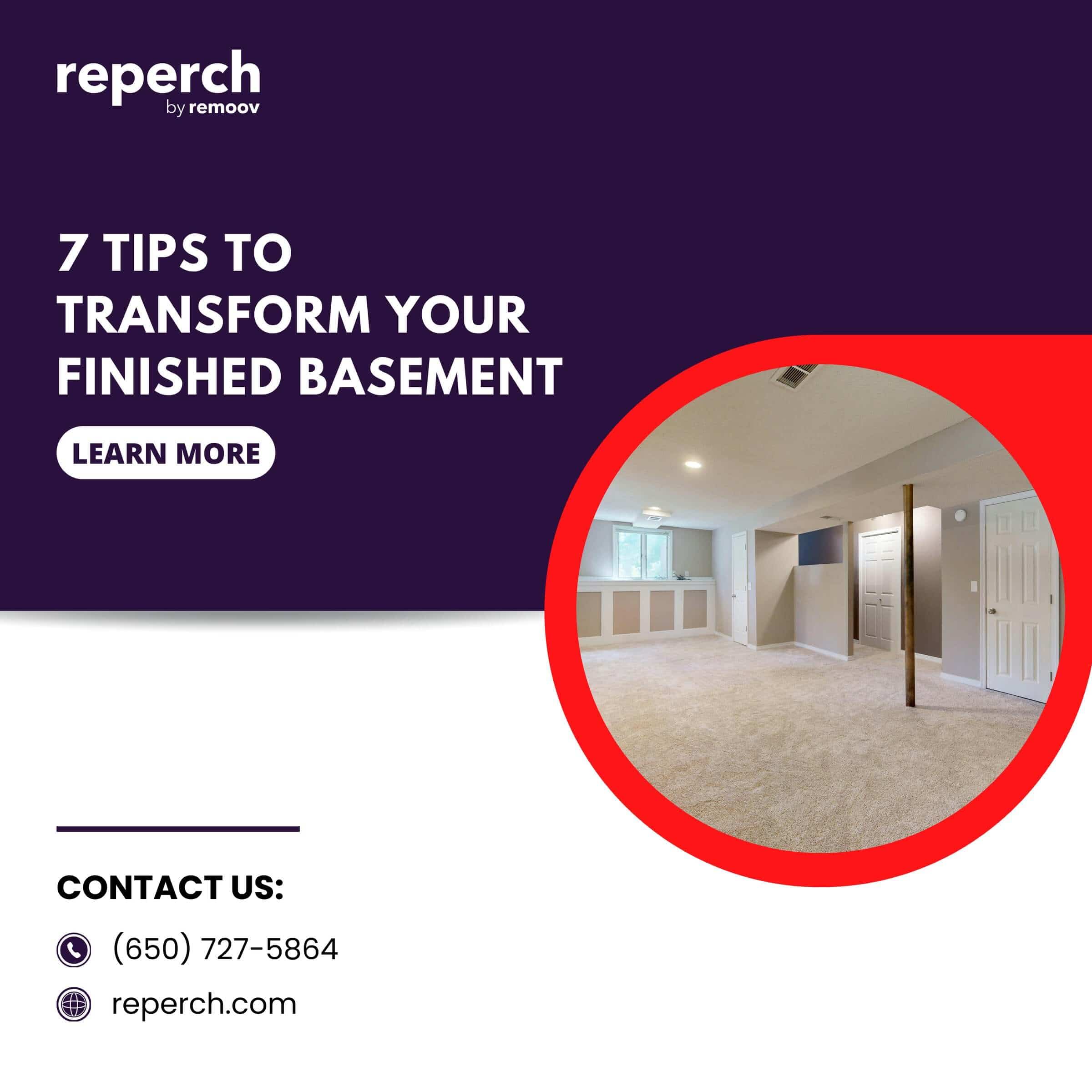
A finished basement can be one of the most useful spaces in your home, but it is also one of the easiest to overlook. Many homeowners get the drywall, flooring, and lighting in place, then stop there. The result is a room that technically works, but never quite feels finished. It becomes the place where leftover furniture lands, storage bins pile up, and the design feels disconnected from the rest of the house.
That is a missed opportunity.
A well-designed basement can become a cozy family room, a guest retreat, a game room, a reading lounge, a home office, a workout zone, or a mix of several things at once. The key is to treat it like real living space, not an afterthought. When you approach it with the same care you would give a living room or bedroom upstairs, your basement can become one of the most comfortable and flexible parts of your home.
If you have been looking for practical finished basement ideas that also make the room feel inviting, these seven tips will help you transform the space into something you will actually want to use every day.
1. Give the Basement a Clear Purpose Before You Decorate
One of the biggest mistakes people make with a finished basement is trying to make it everything all at once without deciding what matters most. That is when the room starts to feel scattered. A sofa gets pushed into one corner, a random desk lands in another, a treadmill ends up near the television, and none of it feels intentional.
Before you pick furniture, paint, or decor, decide what your finished basement needs to do for your household.
Ask yourself a few simple questions. Is this mainly a place for relaxing? Do you want it to be a spot for entertaining guests? Will it double as a home office or homework zone? Does it need to work for kids during the day and adults at night? Will overnight guests use it often enough to justify a sleeping area?
Once you know the main role of the room, every other decision becomes easier. A basement meant for movie nights needs different seating and lighting than one meant for workouts or hosting family. A guest-focused basement may need more privacy and storage. A basement for daily family use should prioritize comfort, durability, and easy cleanup.
That does not mean the room can only serve one purpose. Most basements work best when they do a few things. But there should still be one main priority guiding the layout. If your basement needs to handle more than one role, it helps to think about it the same way you would approach multipurpose rooms, where each zone is planned around how people actually live and move through the space.
A room with a clear purpose always feels more finished than one filled with good pieces that have no real direction.
2. Work With the Light You Have and Add More Warmth
Basements often struggle with one thing more than any other: light. Even a beautifully finished basement can feel dull if the lighting is flat, harsh, or simply not strong enough. Since many basements have smaller windows or less natural light than the main floor, lighting needs to be handled thoughtfully from the beginning.
The goal is not just to brighten the room. It is to make it feel warm and welcoming.
Start with your wall color and overall palette. Lighter tones can help bounce light around the room and keep the basement from feeling closed in. Soft whites, warm beige, muted taupe, pale gray, and greige often work especially well. If you like darker colors, you can absolutely use them, but they tend to work best when balanced with enough lamps, overhead lighting, and reflective surfaces.
Then layer your lighting instead of relying on one ceiling fixture to do all the work. Overhead recessed lights are useful, but they rarely create a cozy atmosphere on their own. Add floor lamps near seating, table lamps on side tables, sconces if possible, and even accent lighting around shelving or a built-in area. Multiple light sources make the room feel more natural and lived in.
Mirrors can also help if the basement has even a little natural light to reflect. Glass tables, lighter textiles, and soft metallic accents can brighten the room without making it feel cold.
If you want your finished basement to feel like a true extension of the home, lighting is one of the fastest ways to get there. A basement should never feel like a waiting room with a television. It should feel like somewhere people naturally want to settle in.
3. Create Zones Instead of Treating It Like One Big Room
A lot of finished basements are open and wide, which sounds great until you try to furnish them. Without some structure, the room can feel vague and unfinished. Furniture may float awkwardly, and the basement can end up looking more like a temporary setup than a well-designed space.
The solution is to create zones.
Even if your basement is technically one room, it can still feel more functional when broken into smaller areas with clear roles. You might have a lounge zone with a sectional and coffee table, a game corner with a table and chairs, a reading nook with a lounge chair and lamp, or a desk area for working from home. If there is enough room, you can also include a small dining or snack area, especially if the basement is used for entertaining.
Rugs are one of the easiest ways to define these zones. A large rug under the main seating area instantly tells the eye where the living space begins. A second rug under a game table or desk area helps separate that part of the room without building walls.
Furniture placement matters too. A sofa can divide a basement naturally. A console table behind it can reinforce that visual separation while adding storage or display space. Open shelving, storage cabinets, and benches can also create subtle division without making the room feel chopped up.
This kind of zoning is especially useful if your basement has to serve more than one purpose. It keeps the room organized and helps each part of the space feel intentional instead of accidental.
A basement does not need more walls to work better. It often just needs a smarter layout.
4. Choose Furniture That Feels Comfortable but Can Handle Real Life
A finished basement should feel relaxed. In many homes, it becomes the space where people sprawl out, snack during movies, host friends, or let kids spread out with games and hobbies. That makes comfort essential, but it also means the furniture has to hold up under regular use.
This is not the place for pieces that are too delicate to enjoy.
Start with seating. If your basement is meant for lounging, prioritize sofas, sectionals, and chairs that actually invite people to sit for a while. Deep seating, supportive cushions, and durable upholstery all matter here. Performance fabrics, washable covers, and easy-to-clean materials tend to make more sense than anything overly precious.
If you are building out a basement lounge area from scratch, it can help to think the same way you would when putting together living room furniture sets. Start with one strong anchor piece, then build outward with tables, lighting, and flexible seating that support how the room will actually be used.
If the room is used often by family and guests, think beyond the sofa too. Ottomans, poufs, and extra chairs can give you more flexible seating without making the space feel crowded. A large coffee table can help anchor the room, while side tables make it easier for people to set down drinks or books without constantly getting up.
Because basements can also be prone to dampness or heavier wear, material choice matters. Wood, metal, and sturdy upholstery usually hold up better than fragile finishes or furniture that was cheaply made to begin with.
This is also where secondhand furniture can be a real advantage. A basement often benefits from pieces that already have some character and durability. A solid used coffee table, a well-made media console, or a comfortable secondhand sectional can make the room feel far more grounded than buying everything new and generic.
When choosing basement furniture, think practical comfort first. The best room is the one people actually want to use.
5. Add Smart Storage So the Room Stays Useful
Even the nicest finished basement will start to feel messy fast if there is nowhere to put anything. Since basements often pull double duty as hangout zones, hobby spaces, guest areas, or playrooms, clutter tends to show up quickly. Blankets, games, toys, workout gear, books, craft supplies, and extra electronics all need a place to go.
That is why storage matters just as much as seating.
Good basement storage should support the way the room is used. If you have kids, you may need baskets, cabinets, or built-ins that make cleanup quick and realistic. If the basement is more adult-focused, closed storage can hide remotes, board games, barware, or office supplies without making the space feel busy. If guests use the room overnight, a dresser, bench, or storage ottoman can make the basement more comfortable and functional for them.
The best storage pieces are the ones that do more than one job. A media unit can hold electronics and decor. A credenza can store games, extra serving pieces, or linens. A console table can help define a zone while also catching everyday clutter. Bookcases can display decor while holding practical items in baskets below.
If you are shopping secondhand for pieces like this, it helps to use the same mindset you would with a used storage cabinet. A basement storage piece needs to be sturdy, functional, and able to handle real use, not just look good in a photo.
Try not to rely only on open storage. A few styled shelves are great, but too many visible items can make a basement feel busy and unfinished. Closed cabinets and drawers help the room stay calmer.
A finished basement often works best when it looks easy to maintain. Smart storage is what makes that possible.
6. Include One Feature That Makes the Room Feel Special
A finished basement should be functional, but that does not mean it has to be plain. One of the best ways to elevate the space is to include a feature that makes it feel distinct from the rest of the house.
That feature does not need to be expensive or dramatic. It just needs to give the room a little identity.
For one home, that might be a stylish bar area or beverage station. For another, it could be a built-in reading nook, a large gallery wall, a game table, a home theater setup, or a cozy electric or gas fireplace. In a family basement, it could be a playful corner for kids that still fits the overall look of the home. In a guest-friendly basement, it might be a small kitchenette or coffee station that makes visitors feel more at home.
What matters is that the space has something memorable. Without that, a basement can easily feel like a copy of the upstairs living room, just with less light.
Think about how you want the room to feel when someone walks in. Relaxed? Cozy? Fun? Social? Quiet? Then choose one feature that supports that mood. Even a strong design move like wallpaper on one wall, painted built-ins, a distinctive vintage cabinet, or a beautiful oversized rug can do the job.
A finished basement feels more intentional when it offers something a little different. That one feature often becomes the reason people choose to spend time there.
7. Style It Like a Real Room, Not a Backup Room
This is where many finished basements fall short. The big pieces are in place, but the room still feels unfinished because it has not been styled with the same attention as the rest of the home.
If you want the basement to feel complete, you have to finish it the same way you would finish any other room.
That means bringing in texture, softness, and personality. Add art to the walls instead of leaving large blank spaces. Layer in pillows and throws that make the seating feel more inviting. Use books, candles, trays, vases, and lamps to make surfaces feel considered. Bring in greenery if the light allows, or choose quality faux stems if it does not. Hang curtains if you have basement windows, even if they are small. Every one of these decisions helps the room feel finished.
This is also a great place to mix in secondhand decor and furniture. Basements often look better when they feel collected rather than overly matched. A vintage side table, an older wood cabinet, a unique lamp, or a secondhand mirror can all add warmth and history. If you need ideas for the kinds of finishing pieces that are actually worth hunting for, secondhand home decor is often where you get the most style and value.
Most importantly, resist the urge to dump leftovers into the room just because they fit. A finished basement deserves better than random furniture that no longer worked upstairs. It should feel connected to your home’s overall style, even if it has a more relaxed mood.
When styled thoughtfully, a basement stops feeling like a lower level and starts feeling like a destination.
Why Reperch Is a Smart Place to Shop for a Finished Basement
A finished basement often works best when it feels furnished with intention rather than filled with whatever happened to be left over from the rest of the house. That is one reason Reperch can be such a helpful place to shop. Instead of relying on random mismatched pieces, you can find secondhand furniture and decor that bring comfort, storage, and personality into the space without making it feel overly formal or expensive.
This matters especially in a basement, where furniture usually needs to do more than one job. You may need a sectional that feels relaxed enough for movie nights, a storage piece that hides clutter, a coffee table that can handle everyday use, or accent pieces that make the room feel warmer and more complete. Reperch makes it easier to find those kinds of pieces in a way that feels practical and design-conscious at the same time.
A good basement should feel like a real extension of your home, and the right mix of secondhand furniture can help create that feeling much more naturally. With the right pieces, the room becomes more inviting, more functional, and far more enjoyable to use every day.
Final Thoughts
Transforming a finished basement is not just about making it look nicer. It is about making it more useful, more comfortable, and more connected to the way you actually live. The best basement spaces are the ones that feel intentional from the start. They have a clear purpose, better lighting, smart furniture choices, real storage, and enough personality to make people want to spend time there.
If you focus on those basics, your finished basement can become far more than an extra room. It can become your family’s favorite movie spot, a better place to host guests, a flexible work zone, or simply the cozy retreat that the rest of the house was missing.
And when you furnish it with pieces that feel thoughtful rather than temporary, the whole room comes together more naturally. A basement often benefits from furniture with warmth, character, and practicality, and secondhand finds can bring all three into the space in a way that feels relaxed and real.
A good finished basement should not feel like the leftovers of your home. It should feel like one of the best parts of it.