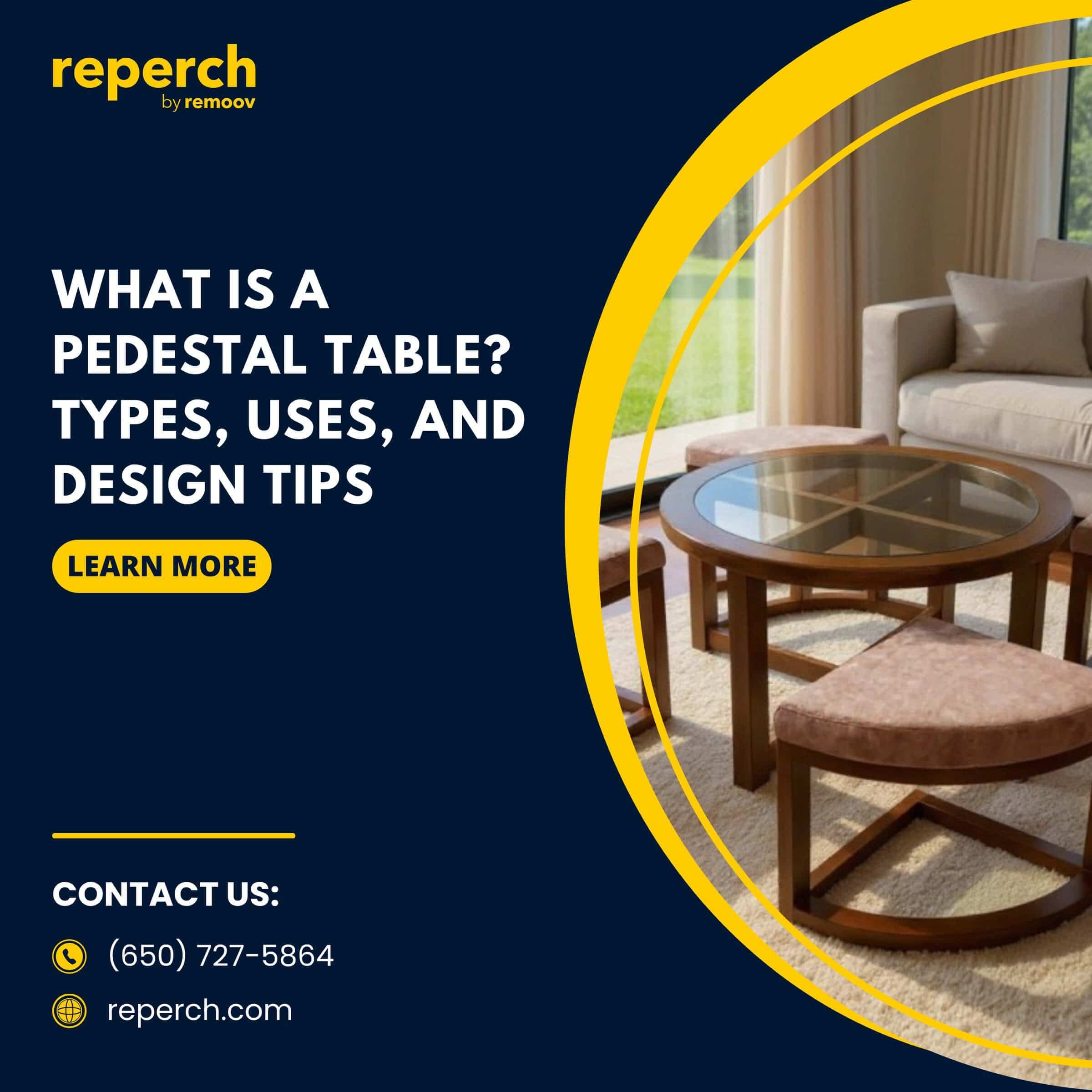
A pedestal table is a table supported by a central base instead of four legs at the corners. Sometimes it is one column, sometimes it is two pedestals on a longer table, but the idea is the same: the support sits under the center of the tabletop, leaving the perimeter open.
That one design difference changes how a table feels in real life. You get more legroom, more flexible seating, and a cleaner look in tight spaces. It is one of the easiest ways to make a dining area feel less cramped without downsizing the table itself.
If you are shopping secondhand, pedestal tables are also a smart category because older pieces are often sturdier and better built than many modern budget tables. The key is choosing the right type for your space and knowing what to check before you buy.
What Makes A Pedestal Table Different
Most tables rely on four legs for stability. A pedestal table relies on a central support that spreads into a base. That base might be round, oval, cross-shaped, or a series of feet, but its job is to keep the table balanced.
The benefits are practical:
Less “chair fighting” around table legs
Easier to slide chairs in and out
Better fit for breakfast nooks, banquettes, and smaller rooms
A lighter visual footprint, especially with round tops
The tradeoff is that stability depends heavily on the base design. A pedestal table can be rock solid, or it can feel tippy if the base is too narrow for the top.
Types Of Pedestal Tables
Pedestal tables come in a few common formats. Knowing the type helps you predict how it will sit in the room and how it will behave day to day.
Single Pedestal Tables
This is the classic look: one center column and one base.
Best for:
Round and small oval tabletops
Breakfast nooks
Small dining spaces where chair flexibility matters
Watch for:
A top that is too wide for the base, which can create tipping risk if someone leans on the edge
Double Pedestal Tables
These have two bases connected by a stretcher or hidden support system, usually used for longer rectangular or oval tables.
Best for:
Larger dining rooms
Seating 6 to 10 people comfortably
Families who want the pedestal legroom benefits without sacrificing size
Watch for:
Wobble in the center if the stretcher is loose
Leaf systems that do not lock tightly when extended
Tulip Style Pedestal Tables
This style is known for a smooth, sculptural base and a clean silhouette. It often reads more modern and minimal.
Best for:
Modern, mid-century, or contemporary spaces
Small spaces that need a visually light table
Pairing with mixed chair styles because the base acts like a neutral anchor
Watch for:
Scratches or chips on coated bases
Loose connection between the base and top
Traditional Turned Or Carved Pedestal Tables
These are often wood tables with a turned column, carved details, or a heavier base.
Best for:
Farmhouse, traditional, transitional, and vintage interiors
Adding warmth and character
Spaces where the table is meant to feel substantial
Watch for:
Cracks at the joint where the pedestal meets the base
Repairs hidden under stain or paint
Pedestal Tables With Leaves
Many pedestal tables have extension leaves, but the mechanism varies widely.
Best for:
Smaller homes that host occasionally
Families who want flexibility without keeping a huge table out every day
Watch for:
Leaves that do not sit flush
Tables that become unstable when extended
Hardware that is missing or bent
Where Pedestal Tables Work Best
A pedestal base solves common layout problems. Here are a few places it shines.
Breakfast Nooks And Banquette Seating
Pedestal tables pair extremely well with banquettes because you are not dealing with corner legs. It is easier to slide in, easier to clean, and less likely to bang knees on a leg.
Small Dining Rooms And Apartments
If your dining area is tight, corner legs can steal usable seating space. A pedestal table often lets you fit an extra chair because you have more freedom to position seating.
Open Plan Spaces
In open layouts, a pedestal table can feel less visually heavy than a four leg table, especially when you use a round top. It helps the dining zone feel defined without feeling blocked off.
Multipurpose Spaces
If your dining table also acts as a homework station, a craft table, or a work surface, the open leg area can feel more comfortable for longer sitting.
How To Choose The Right Shape And Size
Start with the room and your routine, not the listing photo.
Pick A Shape That Matches The Space
Round: best for tight spaces and conversation, easiest to walk around
Oval: similar benefits to round, but with a little more seating length
Rectangle: best when you need more seats and your room is long
Square: works well in small, symmetrical rooms, but can feel boxy if oversized
Use A Simple Clearance Rule
A good target is leaving about 30 to 36 inches of clearance for walkways around the table when possible. If the space is tighter, prioritize the most used path like the route to the kitchen or a doorway.
Keep Chair Comfort In Mind
A pedestal table gives you more freedom, but chairs still need room.
Make sure chairs can pull out without hitting a wall or cabinet
If you use armchairs, confirm the arms fit under the tabletop if needed
If you plan to mix chairs, keep seat height consistent so the table feels balanced
Design Tips To Make A Pedestal Table Look Intentional
Pedestal tables are easy to style because the base can act as a visual anchor. The key is repeating a few details so the room feels cohesive.
Match Undertones, Not Exact Wood Species
If your table is warm-toned, choose chairs and nearby furniture with warm undertones. If it is cooler or grey-washed, stick with cooler woods. Walnut is often the easiest “bridge” tone.
Repeat One Metal Finish
If the table has metal details, repeat that finish at least twice in the space, such as in the light fixture and cabinet hardware. It instantly makes the room feel designed.
Use The Base To Your Advantage
A pedestal base becomes a focal point when the room is simple. Keep the tabletop styling light so the base can show off. In a busy room, use a simpler centerpiece so the table does not feel cluttered.
Add A Rug That Fits The Table, Not Just The Room
If you use a rug, make sure chairs still sit on it when pulled out. A too small rug makes the whole setup feel awkward and unfinished.
Mix Chairs With One Consistent Thread
You do not need a matching set. A collected look can feel more modern and personal.
Pick one thread to repeat:
same upholstery color
same chair silhouette
same wood undertone
same metal finish
Then you can mix the rest without it feeling random.
What To Check When Buying A Pedestal Table Secondhand
A pedestal table can be an amazing secondhand find, but you have to check stability and the connection points.
Do The Rock Test
Press down gently on different edges of the tabletop. If it shifts or rocks easily, the base may be loose or damaged.
Inspect The Base Joint
Look where the pedestal meets the underside of the table and where the pedestal meets the feet or base. Cracks, gaps, or obvious repairs are signs the table may keep loosening over time.
Check For Water Damage On Wood Tops
Run your hand across the surface and edges. Swelling, bubbling finish, or soft spots usually mean moisture damage that is not worth the hassle unless priced very low.
If It Has Leaves, Test Them
Do the leaves sit flush?
Do the locks work?
Does the table stay stable when extended?
If it feels shaky extended, it will feel worse once it is in daily use.
Confirm The Measurements And Delivery Path
Pedestal tables can be bulky through doorways because the base is often wide. Measure the tabletop and the base diameter, and confirm it will fit through tight turns.
Where Reperch Fits In
Pedestal tables are one of those pieces that can look high-end even when bought secondhand, but only if the structure is solid and the proportions are right for your space.
Reperch makes it easier to shop pre-owned tables with more clarity, so you can focus on the details that matter, such as stability, scale, and style, instead of guessing from random listings. If you are building a dining area over time, you can start with a strong pedestal table as your anchor and then add chairs, a sideboard, or lighting that ties the look together without forcing a matching set.
Final Thoughts
A pedestal table is more than a style choice. It is a functional upgrade that can make seating easier, rooms feel less crowded, and dining spaces look more intentional.
Choose the right type for your space, prioritize stability, and use a few simple design threads to make the whole setup feel cohesive. With the right secondhand find, a pedestal table can be the piece that makes your dining area feel finished and easy to live with.