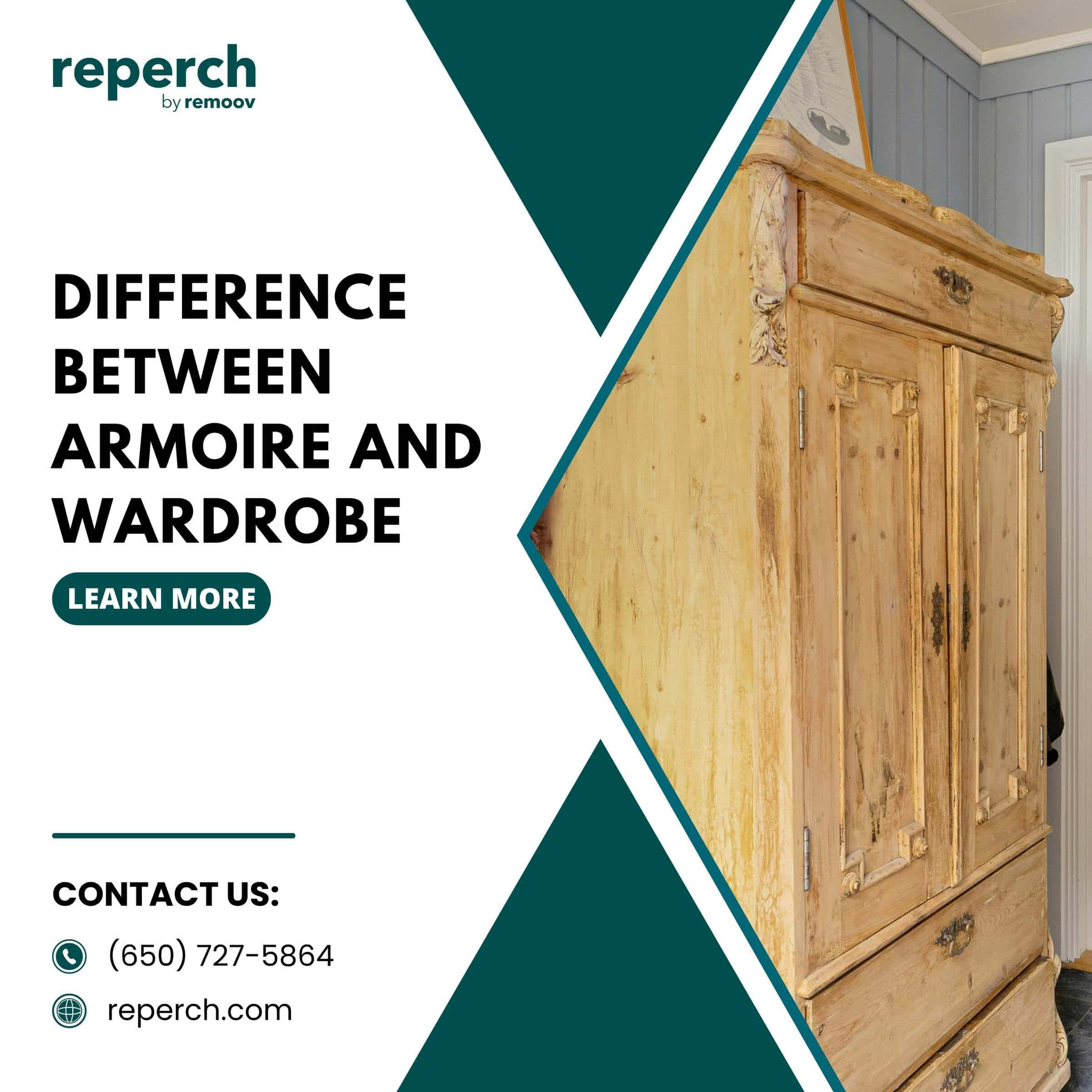
Armoires and wardrobes look similar at first glance. They are both tall storage pieces with doors, and both can function like a “closet outside the closet.” But they are not the same thing, and choosing the wrong one can lead to the classic problems: not enough hanging space, a piece that feels too bulky, or storage that does not match what you actually need day to day.
The simplest way to think about it is this: a wardrobe is primarily for hanging clothes, while an armoire is a larger, more versatile cabinet that can store clothes or many other things, often with a more decorative, furniture-like presence.
Below is a clear, practical breakdown of the differences, how each piece fits into real homes, and how to shop for secondhand.
What is a wardrobe?
A wardrobe is a freestanding clothing cabinet designed mainly for hanging garments. Think of it as a portable closet.
Most wardrobes include:
A hanging rod
One main compartment behind two doors
Sometimes a top shelf or a few small drawers
Wardrobes are usually built around simple function. They are meant to solve a problem quickly: “I need somewhere to hang clothes.”
If you are buying a wardrobe secondhand, the smartest question is not “Does it look nice?” It is “Does it give me enough hanging space for the clothes I actually own?”
What is an armoire?
An armoire is a larger cabinet that often has multiple storage zones, such as shelves, drawers, and sometimes a hanging section. Historically, armoires were not only used for clothing, which is part of why they tend to be bigger and more structured than a standard wardrobe.
Most armoires include some combination of:
Shelves
Drawers
Doors that conceal the interior
Optional hanging space
Sometimes ornate details or heavier materials
In modern homes, an armoire might be used for clothing, but it is just as common to see it used as:
Linen storage
A media cabinet
An entryway storage piece for coats and bags
A pantry-style cabinet for dining or kitchen overflow
A home office storage cabinet
When you buy secondhand, you can often get a more solid, furniture-grade piece that works in multiple rooms over time.
The quickest difference between an armoire and a wardrobe
If you want a fast way to tell which is which, use these two checks:
Check 1: What is the interior built for?
If it is mostly hanging rod space, it is likely a wardrobe.
If it is a mix of shelves, drawers, and compartments, it is likely an armoire.
Check 2: What is the intention of the piece?
Wardrobe: simple external closet
Armoire: multi-purpose storage cabinet that can be used for clothing or other storage needs
In real life, some pieces are hybrids. That is why you should judge the piece by function, not just the label a seller uses.
Size and footprint differences
Size is where the difference becomes obvious in a room.
Wardrobes are often:
Narrower
Simpler in shape
Easier to fit in smaller bedrooms
More likely to prioritize height over width
Armoires are often:
Wider and heavier
Deeper in profile
More visually dominant
Built to feel like a statement furniture piece
If you have a small room, a wardrobe often feels lighter and easier to place. If you have a blank wall and need meaningful storage that can hold more than clothing, an armoire can make the room feel finished and intentional.
A practical sizing tip before you buy
Before you shop on Reperch or anywhere secondhand, measure three things:
The wall space where the piece will sit
The depth you can afford without blocking walkways
The delivery path, especially tight turns, doorways, and staircases
A beautiful armoire is not a good buy if it cannot reach the room.
Design differences you can actually see
Wardrobes usually lean toward:
Minimal panels
Straightforward doors
Clean lines and simple trim
Lightweight or modern materials in many newer styles
Armoires often lean toward:
Decorative panels
Heavier doors and thicker frames
More detailed moldings
A furniture look that reads more “formal” or “traditional,” though modern armoires exist too
This does not mean every armoire is ornate. But if you are choosing between two secondhand pieces, armoires tend to have more visual presence and more “built-in furniture” character.
If you want the room to feel calm and minimal, a wardrobe often fits better. If you want a focal piece that adds warmth and structure, an armoire tends to do that more naturally.
Storage differences that matter day to day
Storage is the biggest functional difference.
Wardrobe storage
Most wardrobes are designed for:
Hanging clothes
Light accessories
Some folded items if there is a shelf
Best for:
Dresses, coats, shirts, suits
Seasonal hanging storage
Guest room clothing storage
Not ideal for:
Heavy mixed storage like linens, books, or electronics unless it has shelves designed for that
Armoire storage
Armoires are designed for variety:
Hanging space if included
Shelves for folded items or bins
Drawers for smaller items
Sometimes deeper compartments that can hold bulkier storage
Best for:
Mixed clothing storage
Bedroom overflow, especially when you need drawers and shelves
Multi-room storage, like dining linens or board games
Media storage, especially in homes that want to hide screens
If you are shopping secondhand, this is where Reperch can help. Listings that include interior photos, shelf layouts, and measurements make it easier to choose based on what you actually need, not what you hope it can do.
Door type and daily usability
The door type affects how the piece works in your space.
Hinged doors
Most wardrobes and many armoires use hinged doors. This is fine, but you must account for swing clearance.
If your room is tight, hinged doors can be annoying because you need extra space to open them fully.
Sliding doors
Some armoires or wardrobe-style cabinets use sliding doors, which can be helpful in smaller rooms. Sliding doors also make it easier to access the interior without needing as much clearance.
Mirrored doors
Some wardrobes include mirrors on the doors. This can be practical in a bedroom, but it is also a design choice. If your room already has a mirror, you may not want the extra reflection.
When buying secondhand, check the door alignment. Doors that stick, sag, or scrape are usually a sign of poor construction or damage.
Where each one fits best in a home
This is where the decision becomes easy.
Best rooms for a wardrobe
Bedrooms with limited closet space
Guest rooms where you want a simple hanging solution
Apartments where you may move again and want a lighter piece
Kids’ rooms where hanging storage helps reduce clutter
If you are building a budget-friendly bedroom setup, a wardrobe is often the fastest upgrade because it acts like an instant closet.
Best rooms for an armoire
Primary bedrooms where you need mixed storage
Entryways for coats, bags, and shoes
Dining rooms for linens and serveware
Living rooms as concealed storage or even a media cabinet
Home offices for files, printers, and supplies
This is one reason armoires are a favorite in secondhand shopping. They solve more than one storage problem, and you can repurpose them later.
How to choose the right one
Instead of asking “Which is better?” ask these three questions:
1) Do I need hanging space or mixed storage?
Mostly hanging space: wardrobe
Mix of shelves, drawers, and storage zones: armoire
2) Do I want the piece to blend in or stand out?
Blend in: wardrobe usually feels simpler
Stand out: armoire often adds a stronger furniture presence
3) Will I repurpose this later?
If yes, an armoire is usually the more flexible long-term buy.
If you are shopping on Reperch, it helps to decide your “non-negotiables” before browsing:
Minimum hanging width
Minimum shelf count
Maximum depth
Door type preference
That way, you filter with purpose instead of scrolling and guessing.
What to inspect when buying secondhand
Secondhand storage pieces can be an excellent value, but only if the structure is solid. Here is what to check before you commit.
Check stability first
Lightly push the piece from the front and sides. If it rocks or twists, the frame may be loose or the base may be uneven.
Inspect the back and underside
Look for:
Warping
Water staining
Signs of swelling or soft spots
Loose backing panels
Moisture damage is one of the most common reasons large storage pieces fail over time.
Test doors, drawers, and shelves
Open and close everything.
Doors should align and close smoothly.
Drawers should slide without sagging.
Shelves should feel secure and not bow under light pressure.
Smell matters more than people admit
Musty odors, smoke smell, or strong pet odor can cling to wood and interiors. If it smells bad now, you will notice it more at home.
Confirm interior layout matches your plan
Do not assume a wardrobe has enough rod space or that an armoire has usable shelves. Always confirm:
Hanging height
Shelf spacing
Drawer depth
Where Reperch fits in
Choosing between an armoire and a wardrobe is easier when you can shop by function, not just by appearance.
Reperch helps in a few practical ways:
You can compare pieces side by side with measurements so you know what will fit.
You can shop for storage furniture that fits your style while still making smart secondhand decisions.
You can find pieces that feel curated, not random, which matters when the storage item is also a major visual element in the room.
If you are trying to build a home that looks pulled together without overspending, starting with one great storage piece is often a smarter move than buying several smaller items that never fully solve the clutter.
Final thoughts
A wardrobe and an armoire can both solve storage problems, but they solve different ones.
Choose a wardrobe when you need straightforward hanging space and a simpler footprint. Choose an armoire when you want a more flexible storage piece that can handle shelves, drawers, and multi-room use over time.
If you shop with a plan, measure before you buy, and inspect structure before style, you can find a secondhand piece that works better than many new options and makes your space feel more intentional from day one.