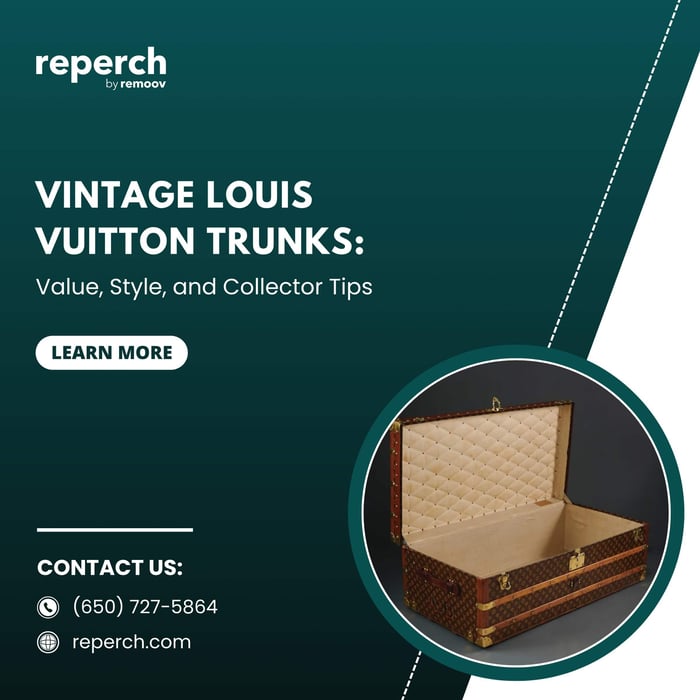
Vintage Louis Vuitton trunks are more than old pieces of luggage. They represent the development of luxury travel, skilled craftsmanship, and design that has remained recognizable for generations. From early flat-top travel trunks to wardrobe models and rare custom commissions, these pieces continue to attract collectors, interior designers, and buyers interested in historic luxury goods.
Their appeal comes from several qualities at once. A trunk may offer decorative value, practical storage, brand heritage, and long-term collectibility. However, the market can be difficult to navigate. Age alone does not make a trunk valuable, and a familiar monogram pattern does not automatically confirm authenticity.
Canvas type, hardware, model, provenance, originality, condition, interior fittings, and restoration history can all influence value. Anyone interested in collecting antique furniture and decorative objects should understand these factors before purchasing a vintage Louis Vuitton trunk for a collection or home.
Why Vintage Louis Vuitton Trunks Remain Collectible
Louis Vuitton began as a maker of travel trunks during a period when rail and steamship travel were changing how people moved. Early luggage often had rounded tops, which helped rain run off but made the pieces difficult to stack.
The introduction of flat-topped trunks created a more practical design for modern travel. The rectangular form could be stacked in train compartments, ships, and storage areas, helping establish the shape now associated with classic luxury trunks.
Louis Vuitton continued adapting its products as travel habits changed. The company created wardrobe trunks, cabin trunks, shoe trunks, hat cases, library trunks, and highly specialized pieces designed to carry particular objects.
Collectors value these trunks because they reflect both craftsmanship and social history. A trunk may reveal how people traveled, what they carried, and how luxury brands responded to new forms of transportation.
Antique or Vintage: Why the Difference Matters
The words antique and vintage are often used interchangeably, but they do not always describe the same age category. Understanding the distinction between antique vs. vintage can help buyers interpret listings more carefully and avoid relying on vague seller descriptions.
A trunk’s age should be supported by its canvas type, hardware, label, lock, construction, and available documentation. A seller calling a trunk antique does not prove that it comes from a particular production period.
The distinction can also affect buyer expectations. An early antique trunk may show significant wear while remaining desirable because of its rarity and originality. A later vintage example may have less historical age but offer better condition, easier styling, and a more accessible purchase price.
Recognizable Louis Vuitton Trunk Styles
Understanding the major canvas and construction styles can help buyers estimate age and identify the character of a trunk.
Trianon Canvas
Some of the earliest Louis Vuitton trunks used a plain gray canvas often called Trianon. Its understated appearance differs significantly from the patterns most buyers associate with the brand today.
Authentic early examples can be highly desirable, particularly when the canvas, hardware, and interior remain original. Their age also means condition varies considerably.
Striped Canvas
Louis Vuitton introduced striped canvas designs before developing its better-known checked and monogram patterns. Red-and-white and beige-and-brown striped trunks may appeal to collectors who want an earlier and less common visual style.
The beige-and-brown version is often associated with late nineteenth-century travel luggage. Buyers should inspect the stripes for consistent age, wear, and alignment.
Damier Canvas
Damier canvas uses a checkerboard design that became one of the brand’s most recognizable patterns. Antique Damier trunks may feature brown tones, though rarer color combinations also exist.
The canvas should be evaluated alongside the hardware, interior label, lock, and construction. Pattern alone is not enough to confirm authenticity.
Monogram Canvas
The LV Monogram pattern combines the initials with floral and geometric motifs. It is the most familiar Louis Vuitton trunk style and remains popular among buyers who want an immediately recognizable piece.
Because monogram trunks were produced across many decades, prices and collectibility can vary widely. Model, size, condition, interior, hardware, and provenance are often more important than the pattern by itself.
Vuittonite Trunks
Vuittonite trunks may use solid-colored surfaces rather than repeating patterns. Colors can include black, brown, orange, green, or yellow.
These pieces can work especially well in interiors because they offer a bold color while maintaining the shape and hardware of a classic travel trunk. Rarer colors and unusual models may attract specialist collectors.
What Determines Vintage Louis Vuitton Trunk Value?
The value of a vintage Louis Vuitton trunk depends on several connected factors.
Model and Function
Certain models are more sought after because of their design, rarity, or historical purpose. Wardrobe trunks, library trunks, steamer trunks, cabin trunks, and special-order examples may attract different types of buyers.
A standard travel trunk may still be valuable, but a rare configuration with original compartments can command greater interest.
Age
Older trunks can be important, but age does not automatically produce high value. A later trunk in excellent original condition may be more desirable than an earlier piece with extensive replacement parts.
The production period should be considered together with condition, rarity, and authenticity.
Originality
Collectors often prefer trunks that retain their original canvas, hardware, lock, interior lining, handles, labels, and trays.
Natural wear can be acceptable and even attractive. A trunk that shows consistent aging may be more desirable than one that combines old surfaces with newly replaced sections.
Condition
Condition affects both appearance and structural value. Buyers should look for torn or heavily patched canvas, damaged wooden structure, broken locks, missing hardware, loose corners, weakened handles, strong odors, mold, water stains, and missing interior fittings.
A trunk does not need to look new. Honest wear is expected, but the structure should remain stable and the condition should match the asking price.
Rarity
Special orders, unusual materials, limited editions, rare colors, and distinctive interiors can increase collector demand.
A rare trunk may retain strong value even when it shows age, provided the important identifying features remain intact.
Provenance
Documentation linking a trunk to a notable owner, retailer, estate, event, or original purchase can add value.
Provenance should be supported by records rather than an unverified story. Receipts, labels, photographs, auction records, and family documents may help establish a clear history.
How to Authenticate Vintage Louis Vuitton Trunks
Authentication should involve the entire object rather than one logo or label.
Examine the Canvas
Look at the canvas quality, pattern placement, surface wear, color, and how it is attached to the structure.
The pattern should appear appropriate for the trunk’s claimed age. Wear should also look consistent across the main surfaces, corners, edges, and areas around the hardware.
Inspect the Lock and Hardware
Original locks, buckles, corner protectors, and nails can provide useful dating and authenticity clues.
Check for engraved markings, matching lock numbers, and consistent aging. Bright replacement hardware on an otherwise heavily aged trunk may indicate later work.
Aged brass often develops a natural patina. Heavy corrosion, missing pieces, or mismatched components should be evaluated carefully.
Check the Interior Label
Many trunks contain a label inside the lid or on an interior surface. The address, typography, wording, and layout may help identify the period of manufacture.
Retailer and workshop addresses changed over time, making labels useful for dating. However, labels can also be copied, so they should be assessed alongside the rest of the trunk.
Review the Construction
Examine the wooden body, edging, rivets, nails, hinges, lining, and tray construction.
An authentic vintage trunk should show materials and workmanship consistent with its age. Poor-quality materials, modern fasteners, or inconsistent construction may indicate extensive rebuilding or imitation.
Request Expert Review
For an expensive purchase, professional authentication is worth considering. A specialist can assess the trunk’s period, originality, repairs, hardware, and likely market position.
Original Condition Versus Restoration
Restoration can improve appearance and stability, but it may also affect collector value.
Light conservation work, such as careful cleaning or stabilizing loose materials, may help preserve a trunk. More extensive work can include replacing canvas, refinishing hardware, rebuilding interiors, or changing leather trim.
Collectors often prefer original surfaces, even when they show scratches, fading, or stains. Replacement canvas or heavily polished hardware may remove the historic character that makes the trunk desirable.
A restored trunk can still be attractive and useful as furniture. The key is transparency. Buyers should know exactly what was changed and whether the price reflects the level of restoration.
Using Vintage Louis Vuitton Trunks in Home Decor
Many vintage trunks are now used as decorative furniture rather than travel luggage.
A low trunk can function as a coffee table, while a smaller piece may work as a side table or bedside surface. Larger wardrobe trunks can become statement storage in bedrooms, dressing rooms, or entryways.
When decorating your living room with vintage finds, a trunk can serve as the main historical piece rather than competing with several other highly decorative antiques. Its aged canvas, leather trim, and brass hardware can add warmth and visual character to a simpler room.
Before using a trunk as furniture, consider its height, stability, surface condition, and interior odor. Avoid placing drinks directly on old canvas, as moisture can cause staining or further deterioration.
Glass tops are sometimes added to protect the surface, but any modification should be removable if maintaining collector value is important.
A trunk can also help homeowners mix antique and modern furniture by creating contrast with a contemporary sofa, simple lighting, or a clean-lined rug. The surrounding pieces do not need to match the trunk’s age. A restrained modern setting may help its materials and history stand out more clearly.
Where to Buy a Vintage Louis Vuitton Trunk
Buyers may find vintage trunks through antique dealers, auction houses, luxury resale specialists, estate sales, and online marketplaces.
Specialized dealers may offer more detailed descriptions and authentication support, though prices can be higher. Auction houses can provide access to rare pieces, but buyers should account for premiums, shipping, taxes, and condition limitations.
Online marketplaces offer broader selection and easier comparison. When shopping through a curated secondhand marketplace such as Reperch, review the photographs, measurements, condition details, delivery information, and return terms before purchasing.
Ask for close-up images of the lock, serial number, label, corners, handles, interior, bottom, and any repaired areas.
Calculate the Complete Purchase Cost
The listed price is only one part of buying a collectible trunk.
Additional expenses may include:
Purchase price + buyer’s premium + taxes + shipping + insurance + authentication + restoration
Large trunks can be expensive to transport because of their weight, size, and need for careful handling. International shipping may also involve customs charges.
Before making an offer, calculate the full delivered cost and compare it with similar trunks in comparable condition.
Collector Tips Before Buying
Confirm the model and likely period before focusing on price. Ask for detailed photographs and written information about repairs. Compare the canvas, hardware, label, and interior rather than relying on the exterior pattern alone.
It is also wise to buy the best condition you can reasonably afford. A cheaper trunk with major structural problems may cost more after restoration than a better example with a higher initial price.
Most importantly, choose a trunk you genuinely appreciate. Market value matters, but a collectible piece should also fit your personal taste, space, and long-term plans.
Final Thoughts
Vintage Louis Vuitton trunks combine luxury design, travel history, skilled construction, and decorative appeal. Their value depends on much more than age or a recognizable monogram.
Model, canvas, condition, hardware, originality, rarity, interior fittings, provenance, and restoration history all shape collector demand. Careful inspection is essential, especially when buying through an online seller or auction.
By researching the trunk’s period, reviewing every component, and calculating the complete purchase cost, buyers can choose a piece that offers both visual impact and lasting collector interest.