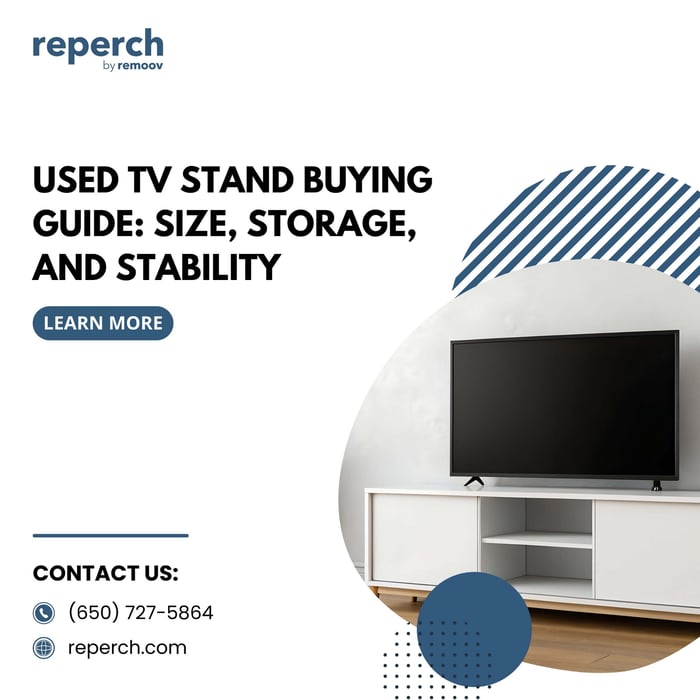
Buying a TV stand seems easy until you live with the wrong one. The stand is too narrow, shelves do not fit your devices, cables look messy, and the whole setup feels unstable. The good news is that a used TV stand can be a smart upgrade if you know what to measure, what to check, and what to avoid.
This guide focuses on three things that matter most: size, storage, and stability, so you can buy secondhand with confidence and avoid daily regret.
Why a Used TV Stand Is Often the Better Deal
A TV stand is one of the best items to buy used because many are sold for reasons that have nothing to do with quality. People wall mount their TVs, move homes, redecorate, or upgrade screen size. That creates plenty of solid secondhand options that cost far less than buying new.
If you want to shop used without guessing through random listings, Reperch makes it easier to find pre-owned furniture that fits your space and feels reliable for everyday life.
Step 1: Measure Your TV the Right Way
TVs are marketed by diagonal size, but stands depend on real dimensions. Measure your TV before you shop.
Measure:
Full width edge to edge (including bezel)
Depth of the TV feet or base
Room depth so the stand does not block walkways
Most mistakes happen when someone buys a stand that matches the diagonal number but ends up too narrow for the actual width.
Step 2: Use the Width Rule That Keeps Things Balanced and Safe
A TV stand should be wider than the TV. This improves stability and makes the setup look intentional, not cramped.
Use this simple rule:
Minimum: 2 inches of extra stand width on each side
Better: 4 to 6 inches on each side, especially if you have kids or pets
That extra width also gives you space for a soundbar, décor, and breathing room so the TV does not look like it is teetering.
Step 3: Get the Height Right for Comfortable Viewing
Height affects comfort more than people realize. If the stand is too tall, you tilt your chin up. If it is too low, you slouch.
The goal is simple: the center of the screen should be close to seated eye level.
Quick method:
Sit where you watch most often and measure from the floor to your eyes
Measure your TV height and divide by two
Stand height target equals your eye level minus half the TV height
Your seating matters. Recliners often work better with slightly lower stands, while tall sectionals may feel better with a slightly higher stand.
Step 4: Choose the Right Stand Type for Your Room
Picking the right format makes used shopping easier because you know what will actually work in your layout.
Console
A long rectangle with shelves, drawers, or cabinets. This is the safest choice for most living rooms because it balances storage, placement, and cable management.
Corner TV stand
Great for small rooms and awkward layouts, but often narrower, so you must confirm TV width and weight capacity.
Entertainment center
A larger unit with extra shelving. It can be an amazing used deal, but it is harder to move and harder to fit through doors, so measure your path before buying.
Wall-mounted TV with a console below
Even if your TV is mounted, a console still adds storage and visual balance. It also helps keep cables and devices organized.
Step 5: Storage Checks That Matter in Real Life
A stand can look perfect in photos and still fail your setup if the storage is wrong.
Before you buy, check:
Shelf depth and width for consoles, routers, and receivers
Drawer space for controllers, remotes, chargers
Cabinet doors if you want clutter hidden
Ventilation if you store devices inside cabinets
Cable management is part of storage. Look for rear cutouts or open backs that allow easy routing without bending cords or forcing power bricks into tight spaces.
Step 6: Stability Checks You Must Do Before Paying
When buying used, stability is not something you assume. It is something you verify.
Wobble test
Place the stand on a flat surface and press lightly on corners. It should feel solid and even.
Twist test
Hold opposite corners and apply gentle pressure like you are trying to twist it. A sturdy stand stays square. A weak one creaks, shifts, or flexes at joints.
Back and base check
Look for cracked screw holes, warped panels, swelling from moisture, or missing hardware. If you see swelling or bowing, treat it as a dealbreaker unless you plan to rebuild and reinforce.
Step 7: Materials Guide for Smarter Used Buying
Materials help you predict durability and how the stand handles wear over time.
Solid wood
Heavy, stable, and refinishable. Often the best long-term choice.
Veneer over plywood
A strong value option when well built. Stable and lighter than solid wood.
MDF or particle board
Can work if thick and supported well, but edges chip easily and moisture can cause swelling.
Metal and glass
Modern look with strong frames, but glass shows fingerprints and can feel less kid-friendly. Check hardware tightness and look closely for chips.
Quick Checklist Before You Buy
Confirm these before you commit:
Stand is wider than the TV with breathing room on both sides
Height keeps screen center near seated eye level
Shelves fit your devices with space for cables
No wobble, no twist, no flex
No swelling, bowing, or cracked joints
Hardware is complete and tight
Where Reperch Fits In
If you want to buy a used TV stand without second-guessing condition, sizing, or stability, Reperch helps simplify the process. Instead of scrolling through random listings and hoping the stand is solid, you can focus on finding a piece that fits your measurements, matches your space, and supports real everyday use.
Reperch is especially helpful when you are trying to:
Save money on a solid, good-looking TV stand without paying new furniture prices
Upgrade storage with cabinets or drawers that hide clutter and keep cables under control
Buy more confidently by choosing secondhand furniture that feels practical, not risky
Build a matching setup by pairing a TV stand with other pre-owned living room pieces over time
If your goal is a cleaner, safer living room setup on a realistic budget, checking Reperch first is a smart move.
Final Thoughts: Buy Used, But Buy Once
A TV stand is not just furniture. It is the foundation of your living room setup. When you choose the right used stand, you get better comfort, cleaner storage, and safer stability without paying full price.
Start with measurements, follow the width and height rules, then do the stability checks before you hand over money. That one-minute wobble test is often the difference between a great used find and a stand you regret every time you sit down to watch something.