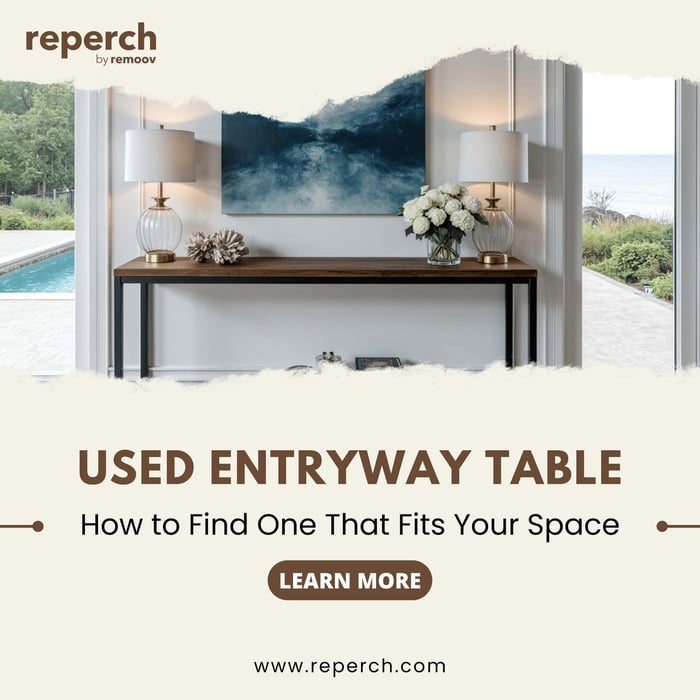
A good entryway table does a lot more than hold keys and mail. It helps set the tone for the entire home. It is often the first furniture piece you or your guests notice when walking in, so it affects both how the space functions and how it feels.
That is why finding the right one matters.
A used entryway table can be one of the smartest secondhand buys for your home. It can add character, give you a practical landing spot for daily essentials, and help an entry feel finished without the cost of buying new. But not every table that looks nice in a photo will work once it is in your home. Some are too deep for a narrow hallway. Some are too small to feel intentional. Others offer no useful storage at all.
The best choice is not just the prettiest table you find. It is the one that fits your entryway, supports the way you live, and still leaves the space feeling open and easy to move through.
If you are shopping for a used entryway table, here is how to find one that actually works in your space.
Why the Entryway Table Matters So Much
Entryways are often small, but they work hard. This is where bags get dropped, keys get misplaced, shoes pile up, and mail starts to collect. It is also where your home makes its first impression.
That is why an entryway table can be so useful. It creates structure in a place that can otherwise feel messy or forgotten. Even a simple table can turn an awkward wall or empty corner into a useful zone that feels intentional.
The nice thing about buying one secondhand is that you can often find more interesting materials and better proportions than you would get from a lower-cost new piece. An older wood console, a slim painted table, or a narrow vintage piece with drawers may bring much more charm than a brand-new table made to look decorative but not do much else.
A Narrow Hallway Needs a Different Table Than an Open Foyer
One of the biggest mistakes people make when buying an entryway table is choosing it based only on looks without thinking enough about the actual shape of the space.
A narrow hallway needs a much slimmer profile than a larger entry. A table that works beautifully in a wide foyer may feel intrusive and frustrating in a tighter layout. If the table sticks out too far, people will brush against it constantly, and the whole entry may start to feel cramped.
On the other hand, if you have a larger or more open entryway, a table that is too small can look lost and underwhelming. It may leave the space feeling unfinished instead of grounded.
That is why proportion matters so much here. The table should feel connected to the room, not squeezed into it or floating without purpose.
Depth Is Often the Most Important Measurement
When people think about furniture fit, they often focus on width first. With entryway tables, depth can matter even more.
A table that is too deep takes away walking space immediately. That is a real problem in an entry, where people are already moving in and out with bags, shoes, coats, and everything else that comes through the door. The last thing you want is a piece that makes the area harder to use every day.
This is why many of the best entryway tables are long and relatively shallow. They give you enough surface space for practical use without pushing too far into the room. In smaller spaces, even a few inches make a difference.
Before buying, measure the wall and also think about how much clearance is needed for people to pass comfortably. The best used entryway table is one that helps the space work better, not one that becomes something everyone has to walk around carefully.
Shape Changes How the Space Feels
Not all entryway tables work in the same way, even when the measurements are close.
A simple open console table can make the entry feel lighter and more spacious because you can see through and around it more easily. A piece with drawers or a lower shelf may offer better function while still keeping the space visually open. A chest-style table or small dresser can add much more storage, but it also brings more visual weight into the area.
That does not mean one is always better than another. It depends on what your home needs.
If your entryway tends to collect clutter, drawers can make a huge difference. If the space already feels tight, an open-frame design may be the better choice. If you want the entry to feel more grounded and substantial, a piece with some weight and presence might work better than a minimal skinny table.
The right shape should solve the problem your entryway actually has.
Think About What You Need It to Hold
A used entryway table should not just fit the wall. It should fit your daily routine.
Some people need a simple surface for keys, a lamp, and a decorative tray. Others need storage for dog leashes, hats, reusable shopping bags, or incoming mail. Some need a place to set down a purse and shoes at the end of the day. Others mainly want the entry to feel more polished and complete.
This is where being honest about how you use the space helps.
If you know clutter builds up quickly, a table with drawers, shelves, or room for baskets underneath will probably serve you much better than a delicate decorative piece with nowhere to hide anything. If the table is mostly about visual impact, you may care more about the lines, finish, and shape.
Used furniture works especially well when it matches real life. The best find is not just attractive. It makes your day a little easier every time you walk through the door.
Style Should Connect With the Rest of the Home
An entryway table introduces the home, so it should feel like it belongs with what comes next.
That does not mean everything has to match exactly. In fact, homes often look better when furniture feels collected instead of bought in a single set. But there should still be some connection between the entryway piece and the overall style of the house.
A warm wood table can make a home feel inviting right away. A painted vintage piece can add softness and personality. A darker console with clean lines can feel more modern and structured. Metal details, curved legs, lower shelves, and drawer hardware all help shape the look.
The table should not feel like a random object that just happened to fit the wall. It should feel like part of the same design story as the rest of the home.
That is one reason secondhand entryway tables can work so well. They often have more character than lower-cost new ones, and that character can help the entrance feel more natural and more memorable.
Storage Can Be the Difference Between Calm and Clutter
The entryway is where clutter tends to gather fast. Keys, wallets, sunglasses, chargers, unopened mail, and receipts can pile up before you even notice it. That is why storage matters so much in this part of the house.
A table with one or two drawers can make a big difference if you want the surface to stay clean. A lower shelf can hold baskets for shoes or daily grab-and-go items. Even a very slim table can become much more practical if it gives you a place to hide the things that usually land in a messy pile.
This is where many used entryway tables have an advantage. Older pieces often combine function and design better than low-cost new ones that are mostly decorative. A vintage console with drawers, a narrow writing table, or a small sideboard can all work beautifully in an entry if the size is right.
Good storage does not just make the entry look better. It makes the whole home feel calmer the moment you walk in.
What to Check Before You Buy a Used Entryway Table
Once you find a table that seems like a good fit, condition matters.
Check that it feels stable. A used entryway table should not wobble, lean, or shift too easily when touched. Look at the legs, joints, and underside. If it has drawers, open and close them fully. Make sure they sit properly and slide reasonably well. If there is a lower shelf, check for sagging or weakness.
Then look at the surface. Minor scratches and normal wear are often perfectly fine, especially on a secondhand piece that already has some character. But swelling from water damage, peeling veneer, cracked corners, or structural weakness are much more serious.
Also think about how much work you actually want to do. A great table with a few cosmetic flaws may still be worth it. A table that needs repair, refinishing, new hardware, and cleaning before it can even come inside may not be the best value, even at a low price.
The Wall Above It Matters Too
A good entryway table usually does not work alone. It is often part of a larger entry moment that includes a mirror, artwork, lamp, tray, or basket underneath.
That means the table should be chosen with the full setup in mind. If you already know you want a mirror above it, think about how the shape and width of the table will work with that. If you plan to add a lamp, make sure the surface is deep enough to hold one without feeling crowded. If you want baskets underneath, check the open space below before buying.
This helps you avoid buying a table that technically fits but still does not support the look or function you want from the entryway.
The best entry tables create a foundation that styling can build on easily.
Why Reperch Is a Smart Place to Shop for a Used Entryway Table
Shopping for a used entryway table can sound simple until you start looking. Then you realize how many pieces are either the wrong depth, the wrong condition, too bulky, too flimsy, or just not worth the effort.
That is where Reperch can make the process easier.
Instead of digging through endless random options, Reperch gives you access to secondhand furniture that feels more considered and more worth bringing home. That matters with entryway tables because they need to strike a very specific balance. They need to fit the space, work with the style of the home, offer the right amount of function, and still feel inviting from the moment you walk in.
A strong secondhand entryway table can do a surprising amount of work. It can turn a blank wall into a useful landing zone, make the entry feel more polished, and add warmth and personality to a part of the house that often gets overlooked. Reperch fits that kind of decorating well because it helps you find pieces that feel practical, stylish, and lasting all at once.
Final Thoughts
A used entryway table should do more than fill a wall near the front door. It should fit the space well, support the way you live, and make the entry feel more finished and more useful every day.
That means paying close attention to depth, proportion, storage, and condition, not just style. The right table will leave enough room to move comfortably, hold the things you actually need near the door, and still feel connected to the rest of the home.
When you choose carefully, a secondhand entryway table can become one of the smartest furniture buys in the house. It helps organize the day-to-day mess, improves the look of the entrance, and gives your home a stronger first impression from the moment anyone walks in.