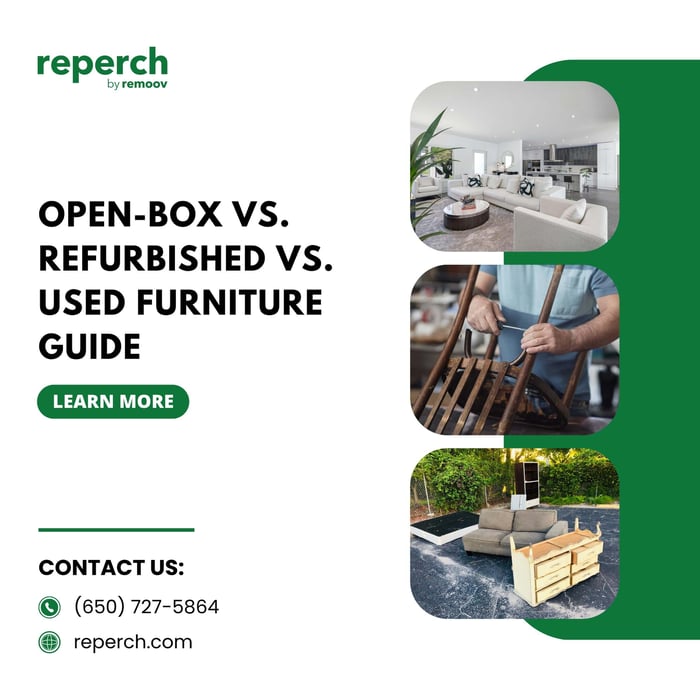
Buying furniture below its original retail price can be a smart way to furnish a home, but the label attached to an item matters. Open-box, refurbished, and used furniture may all cost less than new pieces, yet they can differ greatly in condition, repair history, warranty coverage, and overall risk.
An open-box dining table may have been returned because it did not fit the buyer’s room. A refurbished dresser may have undergone structural repairs and refinishing. A used sofa may have served a family for several years before being listed for resale. These pieces should not be evaluated or priced in the same way.
Understanding open-box vs. refurbished vs. used furniture helps you look beyond the discount and determine what you are actually receiving. When browsing furniture through Reperch or another secondhand source, the goal should be to match the item’s condition and history with a fair price, not simply choose the category that sounds safest.
Why These Furniture Labels Can Be Misleading
Furniture condition labels are not always standardized. One retailer may describe a showroom chair as open-box, while another may call it a floor model. A seller may use “refurbished” for a professionally restored cabinet, while someone else may apply the same term to a table that was lightly sanded and painted.
Used furniture is even broader. It can include a nearly untouched guest-room chair, a heavily worn sectional, or a vintage table that has remained structurally sound for decades.
Because sellers may interpret these terms differently, the label should be treated as a starting point. Photographs, condition notes, repair details, measurements, seller credibility, and return terms provide a more accurate picture of the purchase.
Open-Box Furniture: Close to New, but Not Automatically Perfect
Open-box furniture is generally an item that can no longer be sold as brand new because its packaging has been opened, damaged, or removed. It may have been returned, displayed in a showroom, assembled for photography, or refused during delivery.
This category often appeals to buyers who want newer furniture at a reduced price. The piece may have little or no household use, and original accessories, instructions, hardware, and manufacturer labels may still be included.
However, open-box does not guarantee unused condition.
A display sofa may have been tested by many shoppers. A returned desk could have assembly marks or missing hardware. A dining set may have been rejected because one chair arrived damaged. Even when the main piece appears new, packaging damage can lead to scratches, dents, or chipped corners.
Before purchasing, ask why the furniture is classified as open-box. Confirm whether it was returned by a customer, used as a display model, or damaged during shipping. You should also verify whether the item was inspected after being returned and whether all original components are present.
Open-box furniture offers the strongest value when the discount is meaningful, the damage is clearly disclosed, and the item still includes reasonable buyer protection.
Refurbished Furniture: Focus on the Work, Not the Word
Refurbished furniture has been repaired, restored, refinished, reupholstered, or otherwise improved before resale.
The work may be minor, such as polishing a scratched tabletop or replacing drawer handles. It may also involve significant changes, including stabilizing joints, replacing cushion foam, repairing a reclining motor, refinishing wood, or installing new upholstery.
This category can provide excellent value, especially when a well-built piece has been restored by someone with the right skills. A solid wood dresser with repaired drawers and a properly sealed finish may have more useful life than a new dresser made from lower-quality materials.
The main issue is that refurbishment quality varies.
Fresh paint can improve appearance while hiding swelling, cracks, or water damage. New fabric can cover a weak sofa frame. Replacement hardware may function correctly but reduce the originality of an antique or designer piece.
A good refurbished listing should explain what was done rather than simply claiming that the item was restored. Look for information about the repaired areas, replaced components, materials used, and person or business that completed the work.
Before paying a premium for refurbished furniture, determine whether the improvements are structural, cosmetic, or both. Professional repairs that extend the life of the piece may justify a higher price. Basic cleaning or surface touch-ups may not.
Used Furniture: The Widest Range of Condition and Price
Used furniture has been previously owned and is usually sold in its current condition. It may not have received professional inspection, cleaning, or repairs before being listed.
This category offers the greatest variety. Buyers can find current furniture, discontinued collections, designer pieces, vintage designs, and well-made items that are no longer available through traditional retailers.
Used furniture also tends to offer the deepest discounts, but pricing and condition can vary widely.
A sofa used for six months in a formal living room may still look nearly new. Another sofa of the same age may show stains, sagging cushions, pet damage, or frame movement. A decades-old wood table may remain sturdy, while a much newer table may already have loose joints.
The age of an item alone does not determine its value. Materials, construction, maintenance, usage, and storage conditions all affect how well furniture lasts.
Used furniture can be an excellent option when the seller provides detailed photographs and an honest description. It is less suitable when important information is missing or when the item cannot be inspected before a final sale.
Open-Box vs. Refurbished vs. Used Furniture at a Glance
Factor | Open-Box | Refurbished | Used |
Previous use | Usually limited | Varies | Previously owned and used |
Typical condition | Close to new with possible flaws | Repaired or restored | Ranges from excellent to heavily worn |
Repair history | Usually little or none | Work should be documented | May include informal or unknown repairs |
Warranty | Sometimes available | May cover completed work | Usually limited or unavailable |
Price | Moderate discount | Depends on restoration quality | Often the lowest |
Main concern | Missing parts or an unclear return reason | Poor or incomplete restoration | Unknown wear and maintenance history |
The table provides a general comparison, but the actual piece should always guide the decision.
Which Category Fits Your Buying Priorities?
Open-box furniture is often the best match when you want a current design, minimal wear, and a possible return policy. It can be especially appealing for dining sets, office furniture, bed frames, storage pieces, and newer sofas.
Refurbished furniture suits buyers who value craftsmanship and are comfortable purchasing a piece that has been repaired. It is often worth considering for solid wood tables, vintage dressers, antique cabinets, designer seating, and furniture with strong underlying construction.
Used furniture is usually the right direction when price, uniqueness, or access to discontinued designs matters most. It can also work well for guest rooms, first apartments, rental properties, or buyers prepared to complete cleaning and minor repairs.
The strongest choice is not determined by the category alone. A well-maintained used chair may be a better purchase than an open-box chair with missing parts. A professionally restored cabinet may provide better long-term value than both.
Calculate the Real Cost Before Calling It a Deal
The advertised price is only one part of the purchase.
Furniture may also require delivery, assembly, professional cleaning, refinishing, new hardware, replacement cushions, or mechanical repairs. These costs can quickly reduce the savings offered by a lower asking price.
Consider the full investment:
Purchase price + transportation + cleaning + repairs + replacement parts + assembly
A low-priced used sectional may become expensive after deep cleaning and cushion replacement. A refurbished sectional that costs more initially may already include those improvements.
The same logic applies to open-box furniture. A small discount may not be worthwhile if the item is missing proprietary hardware, has a shorter return period, or requires difficult repairs.
Compare the complete cost with the price of a similar new item. The remaining savings should reflect the condition, inconvenience, and risk you are accepting.
Inspect Furniture Based on Its Material and Construction
Different materials and furniture types develop different problems over time. Inspecting each piece according to how it is built can help you identify damage, weak construction, and possible repair costs before buying.
Wood Furniture
Check wood furniture for loose joints, cracks, peeling veneer, swelling, refinishing marks, and signs of moisture damage. Open every drawer and door to confirm that they move smoothly and remain properly aligned.
Examine the underside and back of the piece as well. These less visible areas may reveal maker labels, previous repairs, missing hardware, or damage that is not noticeable from the front.
Upholstered Furniture
Inspect sofas, armchairs, and other upholstered pieces for sagging cushions, damaged seams, stains, odors, fading, and frame movement. Sit in every available seat rather than testing only one section, as wear may be uneven.
Recliners, sleeper sofas, adjustable headrests, and other moving components should be operated several times to confirm that they open, close, and lock correctly.
Glass and Stone Furniture
Examine glass and stone surfaces for chips, scratches, repaired cracks, and damaged edges. Pay particular attention to corners and attachment points, where damage is more likely to affect stability.
Custom glass tops and stone surfaces may be costly or difficult to replace, so even minor damage should be considered when evaluating the price.
Powered Furniture
Powered furniture requires a complete function test before purchase. Check motors, switches, remotes, transformers, charging ports, lighting, heating, massage features, and any adjustable sections.
Ask for the model number and manufacturer information so you can confirm whether replacement motors, controls, and electrical parts are still available.
Look Closely at the Protections Behind the Purchase
Open-box furniture is the most likely to retain a retailer warranty or return option, but those protections may be shorter than the terms provided with a new item. Some discounted pieces are final sale.
Refurbished furniture may include a limited warranty when the work was completed by a professional seller or restoration business. Confirm whether coverage applies to parts, labor, finishes, upholstery, or only the repaired area.
Used furniture is commonly sold as-is, particularly when purchased from an individual seller. In that case, the inspection and condition description become especially important.
Return policies, delivery damage procedures, and warranty promises should be available in writing. Clear terms reduce confusion if the piece arrives in a different condition than expected.
Signs That a Listing Deserves More Scrutiny
A trustworthy seller should be able to explain the furniture’s condition without relying on vague phrases such as “like new” or “fully restored.”
Be cautious when a listing does not show damaged areas, omits measurements, avoids discussing previous use, or fails to explain completed repairs. Pressure to purchase quickly, a price close to retail, and refusal to demonstrate moving parts are also reasons to slow down.
For refurbished pieces, polished surfaces and new upholstery should not distract from checking the frame and construction. For open-box furniture, confirm why the item was returned. For used pieces, request photographs of the back, underside, corners, and high-contact areas.
Transparency is often a better indicator of a good purchase than a flawless description.
Frequently Asked Questions
Is open-box furniture considered used?
Open-box furniture may have been returned or displayed, so it cannot always be considered completely new. However, it usually has less previous use than traditional secondhand furniture.
Is refurbished furniture better than used furniture?
Refurbished furniture may be a safer choice when repairs were completed professionally and clearly documented. A poorly refurbished piece can still be less reliable than well-maintained used furniture.
Which option usually offers the lowest price?
Used furniture commonly has the lowest asking price. The final value depends on cleaning, repairs, delivery, and how much useful life remains.
Can open-box furniture be returned?
Some retailers allow returns on open-box furniture, while others classify it as final sale. Always check the written policy before purchasing.
What should I ask when buying refurbished furniture?
Ask what was repaired, who completed the work, whether original parts were replaced, and whether the repairs include any warranty.
Is it safe to buy upholstered furniture secondhand?
It can be, but the piece should be inspected for stains, odors, moisture, pests, damaged seams, and weak support before purchase.
Final Thoughts
Open-box, refurbished, and used furniture each offer a different route to saving money.
Open-box pieces generally provide the closest experience to buying new. Refurbished furniture can offer lasting value when quality repairs extend the life of a well-made item. Used furniture provides the widest selection and greatest potential savings but usually requires more careful evaluation.
The label should never make the decision for you. Condition, construction, repair history, total cost, seller transparency, and buyer protection matter more.
Explore Reperch to compare distinctive secondhand furniture, review detailed condition information, and find pieces that deliver the right balance of quality, character, and value for your home.