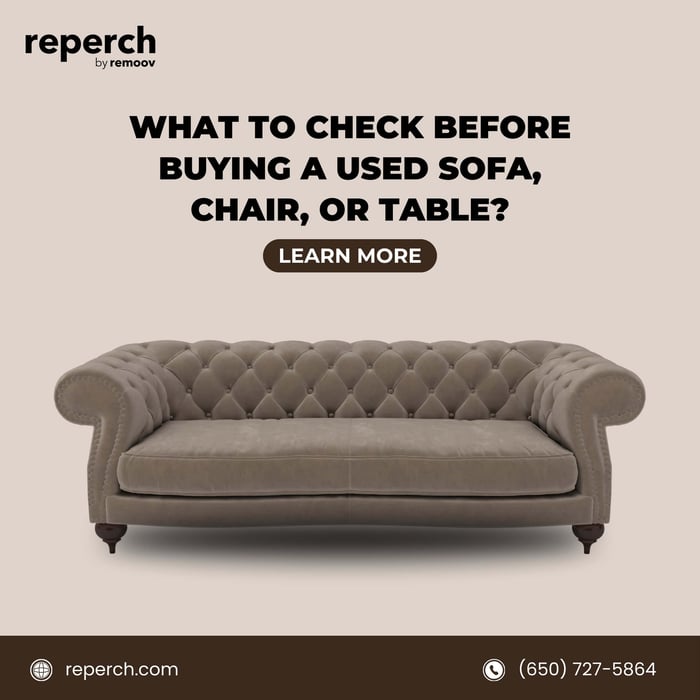
Buying used furniture can be one of the smartest ways to upgrade your home for less, especially for big pieces like a sofa, a dining table, or a pair of chairs. The problem is that photos hide the most important details. A piece can look perfect online and still wobble, smell, or fall apart after a few weeks.
This guide gives you a practical inspection checklist for the three most common used buys: sofas, chairs, and tables. You will know what to test, what to ask, and which red flags should make you walk away.
The 60-second scan before you get emotionally attached
Do this quick check first. It prevents wasted time.
Wobble test: push lightly on corners or the backrest. If it rocks or twists, the structure may be compromised.
Odor check: smell the seating area and underside. Smoke, mildew, and pet odor can be nearly impossible to remove.
Damage scan: look for cracks, stains, chips, swelling, and loose hardware.
Pest check: use a phone flashlight on seams and undersides for dark spotting, shed skins, or anything that looks like residue.
If the piece fails two or more of these quickly, skip it.
What to bring with you
You do not need tools, just a few basics:
phone flashlight
measuring tape
a cloth or paper towel
a small magnet for metal checks
optional: thin gloves
What to check on every used piece
Before we get into sofa vs. table specifics, these are universal.
1) Structure first, looks second
If the structure is weak, cosmetic fixes do not matter. Look for:
joints that shift when you press
cracks near corners, legs, or supports
uneven legs that cause rocking
repairs that look improvised or unstable
2) Signs of moisture damage
Moisture is one of the most expensive “hidden” problems.
Watch for:
swelling at edges
warped panels
bubbling or lifting surfaces
soft spots when you press
3) Hardware and moving parts
Anything that opens, closes, folds, or slides should work smoothly.
Test:
drawers, hinges, latches
extension leaves
adjustable parts
screws and bolts for tightness
4) Fit and logistics
A great deal is not a deal if it does not fit your space or your doorway.
Confirm:
the room footprint
the delivery path, including tight turns
door swings that reduce clearance
Used sofa checklist: how to inspect it like a pro
A sofa is comfort plus structure. You need both.
1) Start with the frame and the “lift test”
Lift one front corner of the sofa a few inches. A solid frame lifts evenly. A weak frame twists.
Good signs:
rigid frame with little flex
stable arms that do not sway
no loud creaks when weight shifts
Red flags:
frame twists before the opposite corner lifts
arms feel loose
loud repetitive creaking
2) Check seat support and springs
Press down along the seat base, not just the cushions.
You want:
firm, even resistance
no sagging zones
no squeaks that repeat every press
Avoid:
deep dips in the seat base
“hammock” feel from weak support
sharp spring pressure through padding
3) Cushion test
Sit in multiple spots and then stand up.
A good sofa:
supports you evenly
does not feel lumpy
cushions recover shape after a few seconds
If you can feel the frame through the cushion, the sofa is likely near the end of its life.
4) Upholstery and seam inspection
Look where wear shows first:
seat centers
front edge of cushions
inside arms
back cushions
Check:
thinning fabric
pulled threads
seam stress at corners
stains under cushions, not just on top
5) Odor is a real deal breaker
Smells hide in foam.
Be cautious with:
smoke smell
mildew or damp odor
heavy pet odor
If you smell it now, you will smell it more at home.
6) Quick comfort test that saves regret
Spend a full minute on it:
sit upright
lean back
sit on each end
lie down if you plan to nap
If the seller rushes you, treat that as a red flag.
Used chair checklist: stability and comfort are everything
Chairs fail at joints and legs.
1) The flat floor wobble test
Put the chair on a hard flat surface. Press gently on each corner.
You want:
all legs stable
no rocking
no shifting at joints
2) The twist test
Hold the backrest and gently twist side to side.
A strong chair feels like one solid unit.
If you hear creaks or feel the seat move separately from the legs, the joints are loosening.
3) The lean back test
Sit and lean back slightly as you would during a long meal.
Avoid chairs where:
the backrest shifts
legs flex outward
the chair “walks” on the floor
4) Upholstered chairs need extra checks
Look underneath the seat:
sagging webbing
loose staples
damaged dust cover
foam that does not rebound
If the frame is excellent but fabric is worn, reupholstery can still be worth it, but price should reflect that.
Used table checklist: look past the top surface
Tables get stress at legs, joints, and the underside.
1) Rock test at corners
Press down on each corner and then push gently from the side.
A good table should not shift.
2) Joint and apron inspection
Look where legs meet the table and where the apron connects.
Red flags:
cracks at leg joints
gaps that widen when you press
repaired legs that still feel unstable
3) Check the tabletop for warping and swelling
Run your hand across the surface and edges.
Look for:
raised grain
bubbling finish
uneven tabletop
swelling near edges
Minor scratches are fine. Warping and swelling usually are not.
4) Extension tables and leaves
If it extends, test it.
Confirm:
the leaf fits flush
hardware locks correctly
the table stays stable when extended
5) Glass tables
Check edges and corners closely.
Avoid:
chips on edges
cracks
loose hardware at connection points
Questions to ask the seller before you buy
Use simple direct questions:
How long have you owned it?
Why are you selling it?
Any repairs or issues I should know about?
Pets or smokers in the home?
Has it been stored in a garage or outdoors?
Can I inspect the underside and test it?
Good sellers answer clearly. Evasive answers usually mean risk.
Common “looks fine in photos” problems to watch for
These are the ones people regret most:
musty odor trapped in cushions
swollen wood from moisture
wobble from loose joints
fabric worn thin on seat edges
sagging seat base on sofas
chairs that feel stable until you lean back
Where Reperch fits in
Buying used is a value win, but the hardest part is uncertainty. That is where Reperch helps.
Instead of guessing through random listings, Reperch makes it easier to shop pre owned furniture with more clarity so you can focus on pieces that actually fit your home and feel solid for daily use. It is especially helpful when you are buying bigger items like a used sofa, dining chairs, or tables where comfort, stability, and condition matter most.
Quick recap: your used furniture checklist
Before you buy, confirm:
structure is solid, no major wobble
no moisture swelling or warping
upholstery is clean enough to live with
no strong odor
moving parts work smoothly
measurements fit your room and delivery path
If the frame is solid, most cosmetic issues are manageable. If the frame is weak, walk away.
If you want, paste the seller photos or listing description here and I will mark any likely red flags and what questions to ask before you go pick it up.