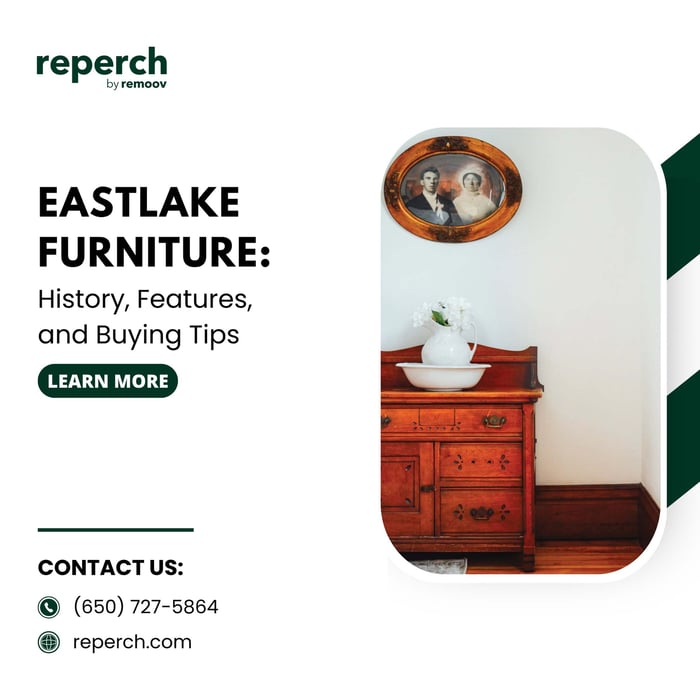
Eastlake furniture has a way of standing out without trying too hard. It is decorative, but not overdone. It has detail, but it usually feels more controlled than many of the heavier Victorian styles that came before it. If you have ever seen an antique dresser, bed, or side table with crisp lines, geometric carving, wooden pulls, and just enough ornament to feel special, there is a good chance you were looking at an Eastlake piece.
That balance is exactly why Eastlake furniture still appeals to so many people today.
It offers old-world craftsmanship and visual interest, but it often feels easier to live with than highly ornate Victorian furniture. It can work in traditional interiors, layered vintage spaces, and even homes that mix old and new. For secondhand shoppers, it also opens the door to furniture with real personality and better materials than many lower-cost new pieces.
If you are curious about Eastlake style or thinking about buying a secondhand Eastlake piece, it helps to know what the style actually is, where it came from, and what details matter most when you shop.
What Is Eastlake Furniture?
Eastlake furniture is a late 19th century furniture style associated with the design ideas of Charles Eastlake, an English architect and writer who promoted simpler, more honest furniture design. His ideas stood apart from the heavier and more excessive decoration that dominated much of the Victorian period.
Instead of deep carving, thick proportions, and dramatic curves everywhere, Eastlake style favored a cleaner and more structured look. Pieces often featured straight lines, shallow carving, geometric detail, incised patterns, turned elements, and practical forms that still felt attractive.
That does not mean Eastlake furniture is plain. It is still decorative. The difference is in the kind of decoration it uses. Rather than trying to overwhelm the eye, Eastlake furniture usually relies on repeated shapes, modest carved details, and solid craftsmanship to create interest. When comparing older pieces, understanding antique vs. vintage key differences can also help you separate truly antique furniture from later vintage or revival pieces.
In that sense, it sits in an important middle ground. It is more restrained than earlier Victorian furniture, but still richer in detail than later minimalist styles.
The History Behind the Eastlake Style
To understand Eastlake furniture, it helps to understand what it was reacting against.
By the mid to late 1800s, a lot of furniture had become increasingly elaborate. Victorian interiors often embraced dark wood, rich upholstery, curving silhouettes, and heavy ornament. Charles Eastlake pushed back against that trend. In his writing, he argued for furniture that looked better made, more practical, and more thoughtful in its design.
His ideas encouraged furniture makers to move toward pieces that felt more architectural and more disciplined. Instead of relying on large-scale carving and decorative excess, Eastlake-style furniture leaned into structure, proportion, and smaller carved details.
In England, Eastlake’s ideas were tied to a broader conversation about craftsmanship and household taste. In the United States, those ideas gained enormous traction and influenced furniture production during the late Victorian period. American manufacturers began producing furniture inspired by Eastlake’s preferences, and the style quickly became popular in bedrooms, parlors, dining rooms, and entryways.
That is why many surviving Eastlake pieces today are found in the form of dressers, washstands, bedsteads, side chairs, and cabinets. The style was widely produced and widely used in everyday homes, which is also part of what makes it so interesting for secondhand buyers today.
Why Eastlake Furniture Still Appeals Today
One of the biggest reasons Eastlake furniture still works in modern homes is that it has detail without feeling too fragile or too theatrical.
Some antique styles are beautiful but hard to place. They may feel too formal, too ornate, or too tied to one kind of room. Eastlake furniture tends to be easier to mix in. The lines are often straighter, the scale is usually practical, and the carved decoration is more controlled.
That makes it appealing if you want antique furniture with character but do not want your home to feel stuck in the past.
A well-chosen Eastlake dresser can add warmth to a bedroom. An Eastlake side chair can bring texture to an entryway. A washstand or marble-top cabinet can become a statement piece in a hallway or living room. The style has enough presence to feel special, but enough restraint to work with other furnishings.
It also helps that many Eastlake pieces were built from solid wood and made to last. That kind of quality still matters.
Key Features That Help Identify Eastlake Furniture
When you are trying to recognize Eastlake furniture, a few details come up again and again. Not every piece will have all of them, but taken together they help create the look.
Straight Lines and Angular Shapes
Eastlake furniture usually favors straighter, more geometric forms than earlier Victorian styles. You will often see rectangular case pieces, squared corners, and an overall shape that feels more structured than curvy.
This is one of the quickest ways Eastlake furniture differs from highly ornate Victorian furniture. The silhouette feels more disciplined.
Low Relief Carving
Eastlake pieces often include carved details, but they are usually flatter and more restrained than the deep carving found on more dramatic Victorian furniture. The ornament tends to sit closer to the surface.
You may see incised lines, stylized floral touches, abstract leaf forms, or repeated patterns that feel decorative without becoming too heavy.
Geometric Decoration
One of the hallmarks of Eastlake style is its use of geometric motifs. Depending on the piece, this may show up as linear carvings, notched corners, paneled surfaces, or repeated shapes across drawer fronts, cabinet doors, and chair backs.
This gives the style a slightly architectural quality that helps it feel cleaner and more orderly.
Turned Spindles and Applied Detail
Many Eastlake pieces include turned wood elements such as spindles, knobs, or trim pieces. These details add texture and craftsmanship without changing the overall structure of the furniture.
You may also find applied moldings or small decorative blocks that help frame drawers, mirrors, or cabinet panels.
Wooden Pulls and Knobs
Eastlake furniture often features wooden drawer pulls rather than highly decorative metal hardware. These pulls are typically small, round, turned, or slightly shaped to coordinate with the rest of the piece.
That detail matters because it reinforces the style’s preference for a more unified, wood-forward look.
Marble Tops
On some Eastlake dressers, washstands, and side cabinets, you will find marble tops. These were especially common on bedroom and washroom furniture of the era.
The marble adds contrast and elegance while still feeling practical, which fits the Eastlake mindset well.
Common Woods
Eastlake furniture is often made from woods like oak, cherry, walnut, or other hardwoods. Some pieces may also include ebonized finishes or darker stains, depending on the maker and period.
Because these woods age well, Eastlake furniture often develops a rich surface character over time.
The Difference Between Eastlake and Victorian Furniture
People often group Eastlake furniture under the larger Victorian umbrella, and that makes sense because it was produced during the Victorian era. But visually, Eastlake has its own identity.
Traditional Victorian furniture often leans heavier, curvier, and more ornate. It may include deep carving, dramatic scrollwork, tufting, and richer visual mass. Eastlake furniture, by contrast, tends to simplify those effects. It still has decoration, but it usually feels flatter, straighter, and more intentional in its restraint.
That difference matters when shopping secondhand because Eastlake can be a good choice for people who like antique furniture but want something a little easier to integrate into everyday spaces.
If full Victorian feels too formal for your home, Eastlake may be the more comfortable middle ground.
Where Eastlake Furniture Works Best in the Home
Eastlake furniture is surprisingly flexible when used thoughtfully.
In bedrooms, Eastlake dressers, washstands, and beds feel especially natural because so many original pieces were designed for that setting. In entryways, a narrow Eastlake table or chair can bring charm and structure without taking over the space. In living rooms, a cabinet or side table can add visual weight and craftsmanship, especially if the rest of the room needs something with texture and age.
Because many Eastlake pieces are case goods rather than oversized upholstered furniture, they are often easier to mix into homes one piece at a time.
That is one of the smartest ways to use antique furniture in general. You do not need to recreate a whole period room. Often, one well-chosen piece does more than a full matching set.
What to Check Before Buying Eastlake Furniture Secondhand
Like any antique or vintage furniture, Eastlake pieces should be evaluated carefully before you bring them home. Knowing how to spot quality in secondhand furniture before you buy can make it easier to judge whether a piece is simply aged or actually well made.
Check the Structure First
Make sure the piece feels solid. Look at the legs, base, corners, joints, and back. A cabinet or dresser should not rock excessively, lean forward, or feel unstable.
With older furniture, some wear is expected. Structural weakness is more serious.
Test Drawers and Doors
If the piece has drawers, open and close each one. They should slide reasonably well and sit properly when closed. If it has cabinet doors, check whether they align and latch correctly.
Sticking drawers can happen in old furniture, but severe warping or badly misaligned components may point to a bigger issue.
Inspect for Missing Decorative Elements
Eastlake furniture often relies on smaller carved or turned details to create its character. Missing pulls, broken spindles, cracked trim, or removed decorative parts can affect both the look and the value of the piece.
A small missing detail is not always a deal breaker, but it is worth noticing before you buy.
Look Closely at the Wood Surface
Surface wear is normal on antique furniture. Small scratches, finish variation, and age-related marks are part of the story. What you want to watch for are deeper problems such as major cracks, veneer loss, water damage, or sections that have been heavily sanded or poorly repaired.
Original character is a good thing. Structural and finish damage require a closer look.
Check Marble Tops Carefully
If the Eastlake piece has marble, inspect it for cracks, major chips, and repairs. Small edge wear may be manageable. Larger damage can be harder to overlook and harder to restore well.
Smell the Interior
If you are buying a dresser, cabinet, or washstand, open it and check the inside. Strong musty odor, mold, smoke smell, or signs of damp storage can turn a beautiful piece into a frustrating one.
Interior condition matters more than people expect, especially with antique storage furniture.
How to Style Eastlake Furniture in a Modern Home
Eastlake furniture usually works best when it is allowed to stand out rather than compete with too many other ornate pieces.
A single Eastlake dresser looks beautiful against simpler bedding and wall color. An Eastlake chair or washstand can feel fresh next to softer modern textiles. A dark wood Eastlake cabinet pairs nicely with neutral walls, vintage rugs, brass accents, and natural light.
The key is balance.
Because Eastlake furniture already has detail, it often looks strongest when paired with cleaner surroundings. That helps the carving, wood grain, and form read clearly instead of getting lost in visual clutter.
You can also mix Eastlake with other antique and vintage styles as long as there is some shared rhythm in wood tone, scale, or mood. Homes usually feel more layered and interesting when furniture looks collected over time, especially when you understand how to mix antique and modern furniture in a way that feels intentional instead of mismatched.
Is Eastlake Furniture Worth Buying?
In many cases, yes.
Eastlake furniture can be a very smart secondhand purchase if you want antique pieces with craftsmanship, practical scale, and enough style to make a room feel more distinctive. It often offers stronger materials and more personality than lower-cost new furniture, and it can bring depth to a room in a way mass-produced pieces usually do not.
The best Eastlake purchases are the ones that still function well, feel structurally sound, and fit your actual home and routine. A beautiful antique that does not fit your room or that needs major restoration may not be the right buy. But a solid Eastlake piece in good condition can absolutely be worth the investment.
Why Eastlake Furniture Fits Reperch So Well
Eastlake furniture reflects a lot of what makes secondhand shopping worthwhile in the first place. It combines quality, practicality, and character in a way that newer furniture often struggles to match.
That makes it a natural fit for Reperch.
A good Eastlake piece does more than fill a space. It gives a room a stronger sense of identity. It adds history, texture, and craftsmanship while still being genuinely useful. That is the kind of furniture that makes secondhand shopping feel exciting, not like a compromise.
When you buy a piece like that through Reperch, you are not just saving it from being overlooked. You are giving it a new life in a home that values what makes it special. If you prefer browsing before seeing a piece in person, learning how to shop for vintage furniture online with confidence can help you look more carefully at condition, measurements, materials, and authenticity details.
Final Thoughts
Eastlake furniture sits in a really appealing place in design history. It is decorative, but not too much. Historic, but not impossible to live with. Detailed, but still grounded in practical design.
That combination is a big part of why it continues to attract collectors, antique lovers, and everyday homeowners who want furniture with more personality and substance.
If you are shopping for Eastlake furniture, pay attention to structure, proportion, carved detail, materials, and how the piece will actually live in your home. The best Eastlake finds are not just beautiful antiques. They are pieces that still work hard, still tell a story, and still make a room feel better the moment they arrive.