Stickley furniture has earned a lasting reputation for craftsmanship, solid wood construction, and designs that remain attractive generations after they were made. You might encounter an oak Morris chair at an estate sale, a wooden bookcase with exposed joints, or a dining table that looks unusually sturdy for its age. These pieces often have recognizable characteristics, but identifying their exact origin can take some investigation.
Knowing how to identify Stickley furniture involves more than finding the manufacturer's name. Different members of the Stickley family operated furniture businesses, and their markings changed over time. Some pieces are genuine early twentieth-century antiques, while others belong to later collections or modern reproductions inspired by the same designs.
Understanding the differences matters when buying secondhand furniture. Whether you're examining an inherited cabinet or comparing wooden furniture on Reperch, the maker's mark, construction details, and overall condition can help reveal what you're looking at and whether the asking price makes sense.
History of Stickley Furniture
The Stickley name became closely associated with American furniture during the Arts and Crafts movement of the late nineteenth and early twentieth centuries. Gustav Stickley was particularly influential in popularizing furniture that emphasized simple forms, visible construction, and natural materials.
His designs offered an alternative to the heavily decorated Victorian furniture that had dominated American interiors. Instead of elaborate carvings and excessive ornamentation, Stickley promoted practical furniture that allowed the beauty of the wood and the skill of the furniture maker to stand out.
Gustav wasn't the only member of the family involved in furniture manufacturing. His brothers, including Leopold and John George Stickley, established related businesses that developed their own designs and identification marks. This explains why older furniture may carry different versions of the Stickley name.
The business known as L. & J.G. Stickley continued beyond the original Arts and Crafts period, producing traditional furniture and eventually reintroducing classic Mission designs. Consequently, a Stickley label can appear on furniture made many decades apart.
How to Identify Authentic Stickley Furniture
Authenticating Stickley furniture starts with examining the piece rather than relying entirely on its appearance. Mission-style furniture became widely popular, and numerous manufacturers produced similar designs using oak, straight wooden supports, and exposed joinery.
An original maker's mark is one of the strongest identification clues, particularly when its appearance matches the furniture's construction and estimated age.
Where to Find Stickley Maker's Marks
Stickley manufacturers placed identification marks in several locations, depending on the furniture type and production period. Tables often have markings underneath their tops, while cabinets may carry labels inside drawers or on their back panels.
Chairs can have marks beneath the seat or along the wooden frame. Bookcases and storage cabinets may feature stamps near structural supports or on otherwise hidden wooden surfaces.
When inspecting a possible Stickley piece, check these areas carefully:
- Underneath tabletops, seats, and wooden frames
- Inside drawers and behind cabinet doors
- Along back panels and interior supports
- Near original joints or wooden stretchers
Use a flashlight when necessary, but avoid aggressive cleaning around faded markings. Original paper labels and decals can be fragile, particularly on furniture that has survived more than a century.
Learning to recognize different vintage furniture maker's marks can also help distinguish a manufacturer's original identification from later inventory numbers or ownership labels.
Understanding Stickley Furniture Marks and Labels
One reason Stickley identification can be confusing is that the different family businesses used several shop marks. Some included the company name, while others featured symbols, signatures, or workshop information.
Gustav Stickley's Compass Mark
Gustav Stickley's furniture is closely associated with a joiner's compass symbol and the phrase "Als Ik Kan," meaning "to the best of my ability."
This motto reflected his commitment to craftsmanship and became an important part of the company's identity.
Early United Crafts and Craftsman Workshops markings included variations of the compass, sometimes accompanied by Gustav Stickley's signature. The design changed over time, making differences in lettering, placement, and surrounding details useful when estimating a production period.
However, the presence of a compass symbol doesn't automatically make a piece an early Gustav Stickley antique. Related symbols have appeared on later Stickley furniture, including reproductions and reissued collections.
L. & J.G. Stickley Marks
The furniture business operated by Leopold and John George Stickley developed its own identifying symbols.
Early examples used an Onondaga Shops mark, while furniture from the Handcraft period commonly featured a handscrew clamp design. Later markings included metal plates, heat brands, and simpler company names.
These distinctions matter because furniture attributed to Gustav Stickley and furniture made by L. & J.G. Stickley aren't necessarily from the same workshop or period.
A mark reading L. & J.G. Stickley should be researched within that company's history rather than automatically classified as an original Gustav Stickley design.
Burned-In Brands, Paper Labels, and Metal Tags
Stickley furniture may carry a mark burned directly into the wood, a printed paper label, a decal, or an attached metal plate.
Burned-in markings are generally durable, although sanding and refinishing can make them difficult to read. Paper labels may provide more specific information but can deteriorate or disappear with age.
Metal tags are particularly useful when their design matches documented examples from the manufacturer's history.
No single marking method guarantees authenticity. Compare the mark with the furniture's materials, construction, and known production styles before making a final identification.
How to Date Stickley Furniture by Era
Understanding Stickley's manufacturing periods helps distinguish valuable early antiques from later furniture made in similar styles.
Early Arts and Crafts Period: 1900–1916
Furniture from Gustav Stickley's early manufacturing years is especially associated with the American Arts and Crafts movement.
Many pieces feature quarter-sawn oak, substantial wooden frames, straight lines, and exposed construction details. Morris chairs, library tables, bookcases, and writing desks are recognizable examples.
Early labels may include United Crafts or Craftsman Workshops markings, along with variations of Gustav's compass symbol.
These pieces attract collector interest because of their historical connection to the development of American Mission furniture. However, accurately assigning an early production date requires more than matching the overall style.
L. & J.G. Stickley and the Early Twentieth Century
Leopold and John George Stickley's business produced Mission furniture while also developing other styles.
During the early twentieth century, the company used several different markings, including the Onondaga Shops and Handcraft labels.
Its production eventually expanded beyond the straightforward forms associated with classic Mission furniture. Some designs incorporated more traditional decorative features while retaining careful woodworking and sturdy construction.
This period illustrates why the Stickley name shouldn't be treated as one continuous collection with identical design characteristics.
Mid-Century Stickley Furniture
By the middle of the twentieth century, L. & J.G. Stickley was producing substantial amounts of traditional furniture, including pieces associated with its Cherry Valley collection.
These designs drew inspiration from American Colonial furniture and often featured cherry wood, shaped drawer fronts, decorative hardware, and traditional proportions.
A mid-century Stickley dresser may therefore look very different from an early Mission bookcase. Both can be authentic, even though they represent separate periods and design preferences.
Modern Stickley Furniture and Mission Reissues
Stickley continued manufacturing furniture through the later twentieth century and into the present.
A major development came in 1989, when the company reintroduced its Mission collection. These pieces drew on historical designs while benefiting from contemporary production methods.
Modern Stickley furniture can still feature solid hardwood construction, exposed joinery, and traditional craftsmanship.
The important distinction is between an original antique and a later piece manufactured in an earlier style. Both may be desirable, but they shouldn't be represented as having the same age or historical significance.
Recognizable Features of Stickley Furniture
Although Stickley produced different furniture styles, several construction characteristics are particularly associated with its Arts and Crafts designs.
Quarter-Sawn Oak and Natural Wood Grain
Quarter-sawn white oak is one of the best-known materials used in Mission-style Stickley furniture.
This cutting method can reveal distinctive ray flecks in the wood, sometimes creating patterns that resemble small ribbons or shimmering stripes.
The appearance is especially noticeable on flat surfaces such as tabletops, cabinet doors, and chair components.
However, quarter-sawn oak isn't exclusive to Stickley, and not every Stickley piece is made from oak. Cherry and other hardwoods also appear throughout the company's history.
Mortise-and-Tenon Joinery
Traditional Stickley furniture often uses mortise-and-tenon joints, where a projecting wooden section fits into a corresponding opening.
This construction method provides strong connections and can remain durable when properly fitted and maintained.
On some Mission furniture, the joints are intentionally visible, becoming part of the design rather than being concealed.
When examining a piece, look for tightly fitted joints, stable supporting rails, and consistent workmanship. Loose joints or obvious repairs don't necessarily disprove authenticity, but they affect condition and potential restoration costs.
Simple Shapes and Functional Details
Classic Mission furniture typically avoids unnecessary ornamentation.
Straight legs, exposed rails, vertical wooden slats, and substantial rectangular surfaces are common features. Many pieces also use restrained hardware that complements the wood rather than dominating the appearance.
However, these characteristics should be evaluated together. An oak chair with vertical slats isn't automatically Stickley simply because it resembles furniture from the Arts and Crafts period.
Understanding how to spot quality in secondhand furniture is useful when evaluating whether these construction details represent genuine craftsmanship or merely imitate its appearance.
How Much Is Stickley Furniture Worth?
The value of Stickley furniture varies considerably depending on its age, maker, rarity, condition, and historical significance. An early Gustav Stickley piece with documented provenance may attract serious collectors, while a later production cabinet may be valued primarily for its materials, construction, and usefulness.
Originality is particularly important for antique examples. Furniture that retains its original hardware, distinctive joinery, and well-preserved finish may be more desirable than a piece that has undergone extensive alterations. However, careful professional restoration doesn't automatically eliminate collectible value, especially when it preserves the original materials and design.
Condition also influences pricing. Cracked legs, damaged joints, missing hardware, and substantial wood deterioration can reduce what buyers are willing to pay. Before comparing prices, consider the furniture's actual condition and whether repairs would be necessary. Reperch's secondhand furniture pricing guide explains how to evaluate asking prices in relation to materials, quality, and repairs.
Rather than relying on a general Stickley price range, compare completed sales of pieces from the same manufacturer, period, and collection. For rare early furniture, a qualified appraiser can provide a more informed assessment.
What to Check Before Buying Used Stickley Furniture
Buying secondhand Stickley furniture requires attention to both authenticity and everyday usability. A well-known manufacturer's name is appealing, but it shouldn't distract from damage or repairs that could affect the furniture's condition.
Start by examining the frame and supporting joints. A dining chair should feel stable when seated, while tables and cabinets shouldn't rock noticeably or shift under normal pressure. Check wooden surfaces for deep cracks, water damage, or evidence of previous repairs.
Next, inspect the finish. Older furniture naturally develops scratches and changes in color, but uneven sanding or thick modern coatings may suggest refinishing. For antique pieces, these alterations may influence collectible value, particularly when they obscure original details.
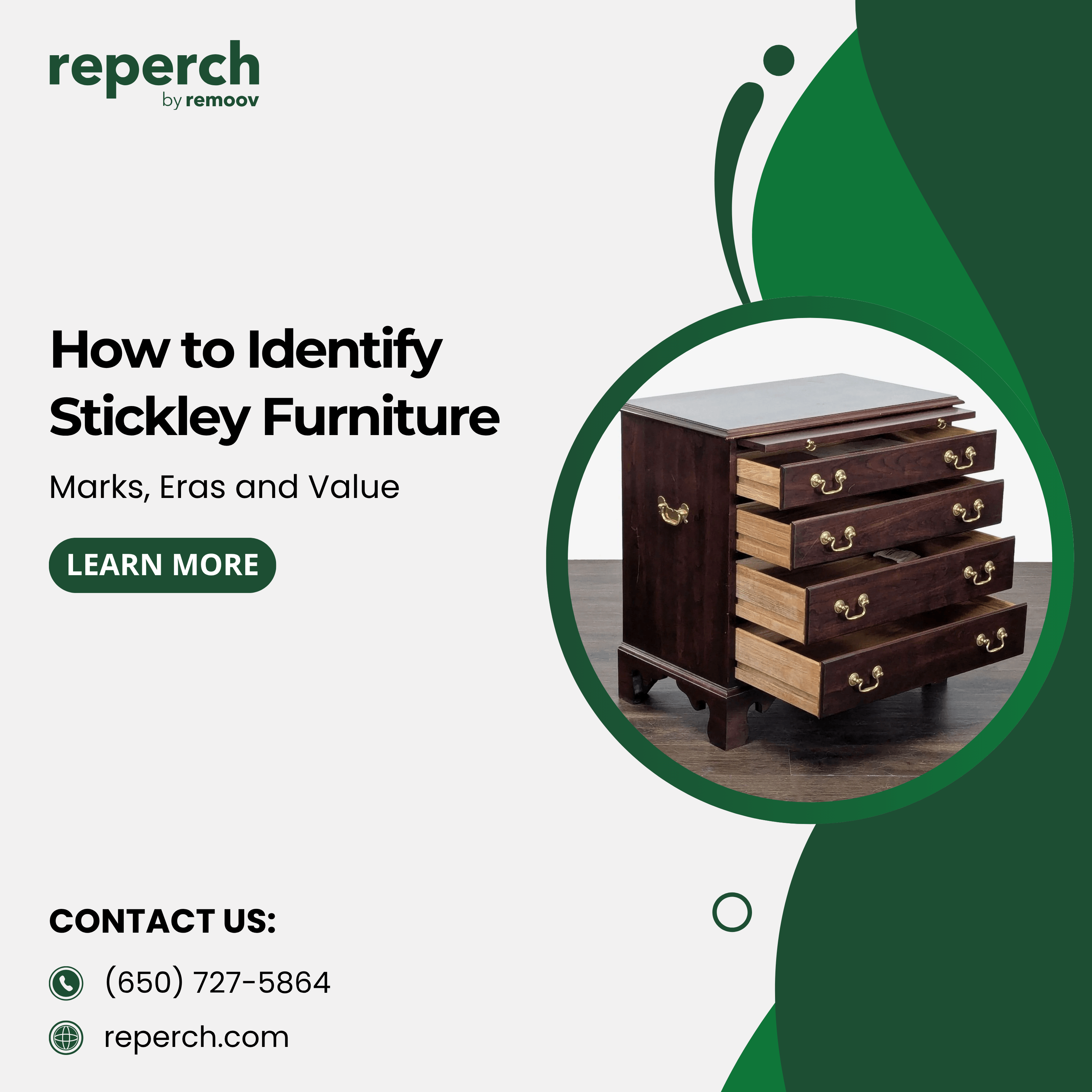
When comparing used furniture on Reperch, look closely at the listed manufacturer, measurements, photographs, and condition information. A Stickley four-drawer nightstand, for example, illustrates how traditional styling can differ significantly from the company's better-known Mission designs. The manufacturer's name alone doesn't establish the piece's production date.
For purchases made online, reviewing photographs of markings, drawer interiors, and structural details is especially important. The same principles covered in shopping for vintage furniture online can help you make more informed comparisons before purchasing.
Can Stickley Furniture Be Restored?
Many Stickley pieces can be restored, although the appropriate approach depends on their age, condition, and historical importance.
For a relatively modern cabinet, repairing loose joints or treating surface scratches may be straightforward. An early twentieth-century antique requires more caution because original finishes, hardware, and construction details can contribute to its collectible value.
Aggressive sanding is particularly risky on furniture with original surfaces or decorative veneers. Replacing distinctive hardware with modern alternatives can also change the appearance and historical character of a piece.
If you're considering restoration, first determine whether the furniture needs structural repairs or merely cosmetic attention. For potentially valuable antiques, consulting a specialist before refinishing is generally the safer choice.
When comparing older cabinets and storage furniture, the same practical considerations apply. Sound construction, usable storage space, and manageable maintenance requirements matter just as much as decorative appearance.
Final Thoughts
Learning how to identify Stickley furniture becomes easier once you understand the differences between its manufacturers, historical periods, and construction methods. Gustav Stickley's early Mission designs, L. & J.G. Stickley's traditional furniture, and modern Mission reissues all belong to the broader Stickley story, but they shouldn't be treated as interchangeable.
Maker's marks provide important clues, while wood selection, joinery, proportions, and original details help support identification. For secondhand buyers, examining condition alongside authenticity is essential because even beautifully made furniture can develop problems after decades of use.
A little research before buying or restoring a piece can help preserve its character, avoid unnecessary expense, and better appreciate the craftsmanship behind it.
Frequently Asked Questions
How can you tell if Stickley furniture is authentic?
Look for documented Stickley maker's marks, original construction details, and materials consistent with the suspected production period. Compare the piece with historical examples, and seek expert authentication when its identity remains uncertain.
Does all Stickley furniture have a maker's mark?
Not necessarily. Some original markings may have been removed, damaged, or obscured during refinishing. Furniture without a surviving mark can still be authentic, but additional evidence is needed.
What does the Stickley compass logo mean?
The compass symbol is associated with Gustav Stickley's craftsmanship philosophy and the motto "Als Ik Kan," meaning "to the best of my ability." Variations of the symbol appeared during different manufacturing periods.
Is all Stickley furniture antique?
No. Stickley has manufactured furniture across multiple generations, including modern pieces and reissued historical designs. A traditional appearance doesn't automatically indicate antique age.
Is Stickley furniture made of solid wood?
Many Stickley pieces use substantial hardwood construction, including oak and cherry. However, materials vary by model and period, and some components may incorporate veneers or other construction materials.
Is vintage Stickley furniture valuable?
Certain early and historically significant pieces can be highly collectible. However, actual resale value depends on the maker, age, originality, condition, rarity, and demand.