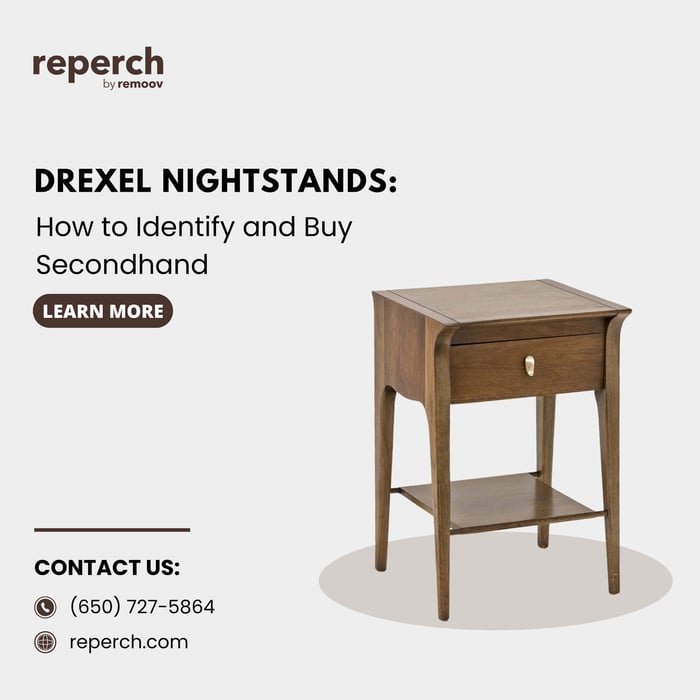
Drexel nightstands have become a favorite among secondhand furniture shoppers for a simple reason. They usually offer more quality, better proportions, and more lasting style than a lot of newer bedside tables at a similar price point. A good pair can make a bedroom feel more finished right away.
That is especially true if you are drawn to mid-century or traditional American furniture.
Drexel built a strong reputation for well-made case goods, thoughtful design, and furniture that was meant to last. Even now, decades after many of its best-known pieces were made, Drexel nightstands are still widely sought after in vintage shops, estate sales, online marketplaces, and secondhand furniture stores.
But not every Drexel nightstand is equally valuable, equally collectible, or equally practical for your home.
Some pieces belong to highly desirable lines and hold their value well. Others are attractive but more modest in demand. Some retain original labels and hardware, while others have been refinished, altered, or repaired in ways that affect both style and price. If you are buying secondhand, it helps to know what to look for before you commit.
If you have been thinking about adding a pair to your bedroom, this guide will walk through how to identify Drexel nightstands, what makes them worth considering, and what to check before you buy.
Why Drexel Nightstands Are So Popular Secondhand
A lot of secondhand furniture is appealing because it costs less than buying new. Drexel is a little different. People do not only buy it to save money. They buy it because the furniture itself often feels better.
Older Drexel pieces tend to have stronger construction, better materials, and more thoughtful design than many mass-produced bedside tables made today. The drawers usually feel more substantial. The wood tones often have more warmth. The proportions are cleaner. Even simple nightstands can look far more grounded and intentional than many generic modern alternatives.
There is also a wide style range.
Some Drexel nightstands lean strongly mid-century, especially pieces from well-known lines like Declaration or Profile. Others feel more traditional, formal, or decorative. That variety makes Drexel appealing to more than one kind of buyer. You do not have to be building a strict mid-century bedroom to consider one.
And because nightstands are smaller than dressers, credenzas, or dining tables, they are often one of the easiest ways to bring a quality vintage brand into your home.
A Brief Background on Drexel Furniture
Drexel Furniture Company was founded in North Carolina in the early 1900s and later became widely known as Drexel Heritage after merging with Heritage Furniture. Over the decades, the brand built a strong reputation for producing quality furniture in both traditional and later more contemporary styles.
For many secondhand buyers, Drexel’s most desirable period is its mid-century era, especially from the 1950s through the 1970s. During that time, the company produced some of its most recognizable collections, many of which are still respected for their design and build quality. Understanding mid-century modern furniture style can make it easier to recognize the clean lines, warm woods, and practical proportions that define many sought-after Drexel pieces.
That does not mean only mid-century pieces are worth buying.
Traditional Drexel nightstands can also be excellent secondhand finds, especially if you want something better made than many new bedside tables. But if you are trying to understand the resale appeal of Drexel, the mid-century lines tend to attract the most attention.
How to Identify Drexel Nightstands
If you are shopping in person or online, identification usually starts with three things: labels, construction, and design line.
Check for a Label or Stamp
Many Drexel pieces have a paper label, ink stamp, or branded mark somewhere on the piece. On nightstands, the label is often found inside a drawer, on the back panel, or underneath the furniture. The label may say DREXEL, Drexel Heritage, or name a specific line such as Declaration.
If you find a clear label, that is one of the easiest ways to confirm what you are looking at.
Some pieces also have identification numbers or serial numbers. Later Drexel pieces may use a standardized numeric format, while older pieces may show a different stamp system. These numbers can sometimes help date the piece or at least narrow the production period. Learning how to read vintage furniture maker marks can also make it easier to identify labels, stamps, and other brand details before buying.
Look at the Construction
Even without a label, construction can tell you a lot.
Well-made Drexel nightstands usually feel solid. Drawers often have dovetail joints, and the case itself tends to feel more substantial than lower-end furniture. Visible surfaces may use solid walnut or quality veneer, while interior parts and drawer boxes may use secondary woods such as poplar or basswood.
You are looking for consistency and craftsmanship.
A real Drexel piece should not feel flimsy, hollow, or cheaply assembled. If it does, either something is wrong with the piece or it may not be Drexel at all.
Pay Attention to the Hardware
Original hardware can be a strong clue. Different Drexel lines used different pulls, recessed handles, carved wood details, or metal hardware, but in general the pieces tend to look cohesive and intentional.
If the hardware looks mismatched, awkwardly replaced, or much newer than the rest of the piece, ask questions. Replacement hardware does not always ruin a nightstand, but it does affect both authenticity and value.
Drexel Lines You May Come Across
Not every Drexel nightstand comes from a line that is equally known or equally collectible. A few names show up more often than others.
Drexel Declaration
This is probably the best-known Drexel line among mid-century buyers. Designed by Kipp Stewart and Stewart MacDougall, Declaration pieces are especially admired for their walnut, clean proportions, and bookmatched veneers.
Declaration nightstands are sought after because they have the refined look buyers want from American mid-century furniture without feeling overdesigned. If you find a genuine pair in good condition, they are often worth serious attention.
Drexel Profile
Profile pieces lean more horizontal and graphic in their overall design. They often have a strong visual simplicity and a lower, wider look than some other Drexel collections. These can be especially appealing if you want nightstands that feel distinctly mid-century but still understated.
Drexel Precedent
Precedent is often associated with important design names and tends to carry more collector interest. If you come across a piece clearly marked as part of this line, it is worth a closer look.
Drexel Parallel and Other Lines
Some Drexel collections are less famous but still beautifully made. Parallel, for example, is often appreciated for its clean minimal look. There are also many traditional Drexel lines that may not attract the same collector energy as Declaration but can still be excellent choices for a well-made bedroom.
The line matters most if you care about resale value, historical design interest, or collecting. If you are buying primarily for your home, condition and fit may matter even more.
What Makes a Drexel Nightstand Worth Buying
A Drexel label alone is not enough. The best secondhand buy is the one that combines good construction, useful size, attractive design, and solid condition.
Strong Materials
Drexel nightstands often use walnut, mahogany, or other quality woods and veneers, depending on the line and era. The finish should have warmth and depth. Even if there are small marks from age, the overall surface should still feel rich rather than flat.
Good Drawer Function
Nightstands need to work. Open and close the drawers. They should move reasonably well, even if not perfectly. If the drawers stick badly, sit unevenly, or feel loose at the joints, inspect more closely.
Practical Size
Some vintage nightstands are lower or smaller than people expect. That is not necessarily a problem, but it matters in relation to your bed height and the amount of storage you actually need. A beautiful nightstand that is too low or too narrow can become frustrating in daily use.
Original Character
Original hardware, an intact finish, and a label or stamp all add to the appeal. A refinished piece can still be worth buying, but the quality of the work matters. Some refinishing improves a damaged piece. Other refinishing strips away too much of what made it special in the first place.
What to Check Before Buying Secondhand
A Drexel nightstand may look great in a listing photo and still be a weak buy once you inspect it. Before bringing one home, check the details that matter most. Knowing the basics of buying quality secondhand furniture can help you judge drawers, veneer, frame stability, surface condition, and overall construction more carefully.
Inspect the Veneer
Many Drexel pieces use quality veneer beautifully, but veneer can lift, bubble, chip, or peel if the furniture has been exposed to moisture or rough handling. Look closely at corners, drawer fronts, and top surfaces.
Small issues can sometimes be repaired. Extensive veneer damage is a bigger concern.
Look for Water Rings and Surface Damage
Nightstands get used hard. Lamps, water glasses, alarm clocks, and daily handling all leave marks. Some wear is normal. Deep staining, swelling, or rough patches on the top surface deserve closer attention.
Check the Frame for Stability
Make sure the piece does not wobble and that the drawer structure feels solid. Small bedside tables sometimes get moved frequently, and loose joints can develop over time.
Confirm That a Pair Actually Matches
This matters more than people think. Many sellers describe pieces as a pair when they are only similar. Check dimensions, hardware, drawer layout, finish tone, and line name if available. A true pair should match clearly.
Ask About Refinishing or Repairs
A refinished Drexel nightstand is not automatically a bad purchase. Sometimes it is exactly what makes the piece practical for another generation of use. But it helps to know what was done. Was the finish lightly refreshed or fully stripped? Was hardware changed? Were repairs made to the drawers or frame?
The better you understand the changes, the better you can judge the price.
How Much Should You Pay?
There is no single answer because price depends on the line, condition, local market, and whether you are buying a single nightstand or a matched pair.
A pair from a highly desirable line like Declaration will usually cost more than an unmarked traditional Drexel pair. Excellent condition, original hardware, strong finish, and a verified label all tend to push the price up. Poor condition, missing hardware, refinishing, or heavy wear tend to bring it down.
In general, you are not just paying for bedside storage. You are paying for brand recognition, quality construction, and design.
That said, secondhand pricing can vary wildly. Some sellers know exactly what they have. Others simply list a piece as old furniture and move on. That is why it helps to do some homework before you buy. Understanding secondhand furniture pricing can help you decide whether a Drexel nightstand is fairly priced based on condition, line, originality, and local demand.
Where Drexel Nightstands Work Best
The most obvious place is beside the bed, but Drexel nightstands are flexible.
A good pair can add warmth and balance to a guest room. A single one can work beautifully next to a reading chair, in a hallway, or even as a compact end table in a living room. Mid-century styles especially can move between rooms quite easily because their scale and lines tend to be versatile.
If you are using them in a bedroom, think about bed height, lamp placement, and drawer access. Function matters just as much as style.
Why Secondhand Is the Best Way to Shop for Them
Drexel nightstands are a good example of why secondhand shopping can be so satisfying. You are often getting a piece with better materials and more lasting design than many new options, but without the premium pricing that comes with buying from a current luxury brand.
You also get variety.
Instead of choosing between a few generic bedside tables in whatever finishes are trending right now, you can find pieces with real depth, history, and individuality. Even within Drexel alone, the range is broad enough that you can find something much more personal than a basic new set.
That matters in a bedroom, where furniture tends to be seen and used every single day.
Why Reperch Is a Smart Place to Find Nightstands
Drexel nightstands are exactly the kind of secondhand piece that feels worth searching for. They are practical, but they also bring a stronger sense of design into the room.
That makes them a natural fit for Reperch.
Shopping secondhand through Reperch makes it easier to find furniture with more presence, more quality, and more personality than a lot of new bedroom furniture. A good Drexel nightstand can help a bedroom feel warmer, more finished, and more thoughtful without making the space feel overdesigned.
That is the sweet spot a lot of people are looking for.
Final Thoughts
Drexel nightstands remain popular secondhand because they offer something many buyers still want: strong construction, good design, and a look that lasts. Whether you are drawn to iconic mid-century lines like Declaration or simply want a well-made bedside table with more character than something new, Drexel is a name worth paying attention to.
The key is to buy carefully.
Check for labels, inspect the construction, test the drawers, examine the finish, and make sure the size works for your room. If you are buying a pair, confirm that they truly match. And if a piece has been refinished or altered, make sure the work supports the look rather than taking away from it.
When you get it right, a Drexel nightstand is not just a practical bedside piece. It is one of those secondhand finds that makes the whole room feel better.